Division of Medical Genetics, Department of Medicine, University of Washington School of Medicine, Seattle, WA, United States.
Department of Genome Sciences, University of Washington School of Medicine, Seattle, WA, United States.
Front Immunol. 2024 Jun 14;15:1387253. doi: 10.3389/fimmu.2024.1387253. eCollection 2024.
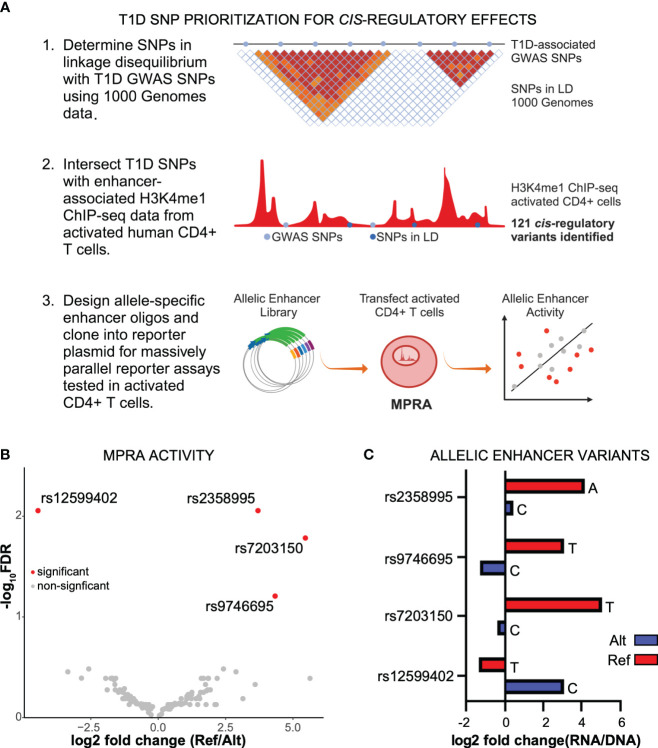
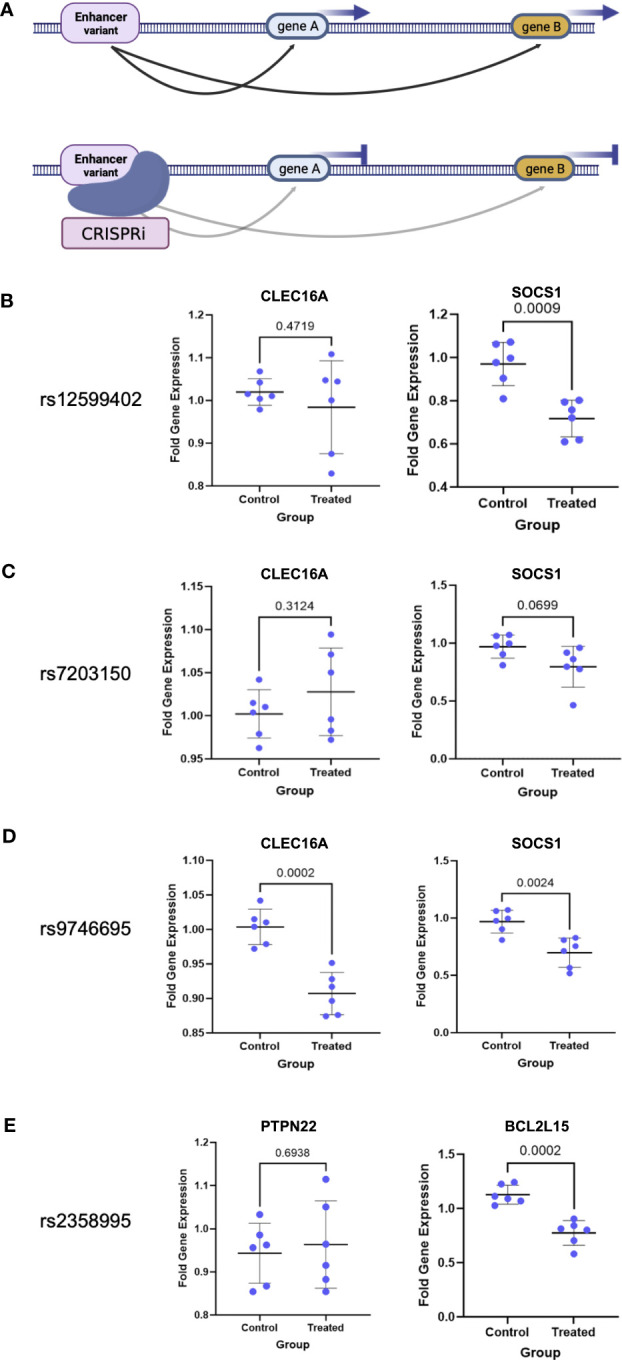
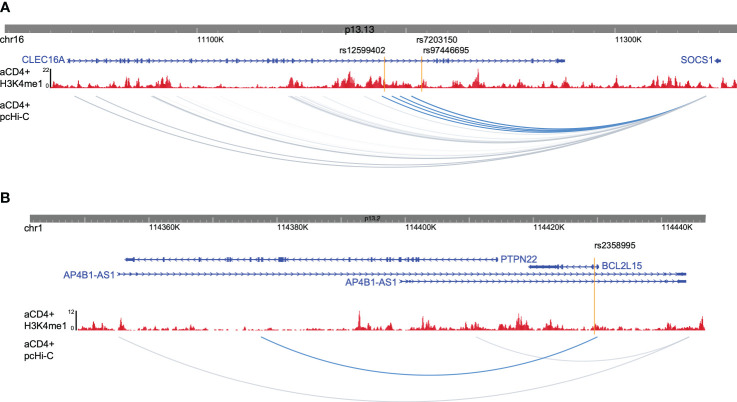
Type I diabetes is an autoimmune disease mediated by T-cell destruction of β cells in pancreatic islets. Currently, there is no known cure, and treatment consists of daily insulin injections. Genome-wide association studies and twin studies have indicated a strong genetic heritability for type I diabetes and implicated several genes. As most strongly associated variants are noncoding, there is still a lack of identification of functional and, therefore, likely causal variants. Given that many of these genetic variants reside in enhancer elements, we have tested 121 CD4+ T-cell enhancer variants associated with T1D. We found four to be functional through massively parallel reporter assays. Three of the enhancer variants weaken activity, while the fourth strengthens activity. We link these to their cognate genes using 3D genome architecture or eQTL data and validate them using CRISPR editing. Validated target genes include and While these genes have been previously implicated in type 1 diabetes and other autoimmune diseases, we show that enhancers controlling their expression harbor functional variants. These variants, therefore, may act as causal type 1 diabetic variants.
1 型糖尿病是一种由 T 细胞破坏胰腺胰岛中的β细胞引起的自身免疫性疾病。目前尚无已知的治愈方法,治疗方法包括每天注射胰岛素。全基因组关联研究和双胞胎研究表明,1 型糖尿病具有很强的遗传遗传性,并涉及到几个基因。由于大多数相关的变异是非编码的,因此仍然缺乏对功能的识别,因此也缺乏可能的因果变异。鉴于这些遗传变异大多存在于增强子元件中,我们已经测试了与 T1D 相关的 121 个 CD4+T 细胞增强子变体。通过大规模平行报告基因检测,我们发现其中四个是功能性的。这三个增强子变体削弱了活性,而第四个增强了活性。我们使用 3D 基因组结构或 eQTL 数据将这些变体与其同源基因联系起来,并使用 CRISPR 编辑进行验证。经过验证的靶基因包括和。虽然这些基因以前曾与 1 型糖尿病和其他自身免疫性疾病有关,但我们表明,控制其表达的增强子含有功能变体。因此,这些变体可能是 1 型糖尿病的因果变体。