• 文献检索
  • 文档翻译
  • 深度研究
  • 学术资讯
  • Suppr Zotero 插件Zotero 插件
  • 邀请有礼
  • 套餐&价格
  • 历史记录
应用&插件
Suppr Zotero 插件Zotero 插件浏览器插件Mac 客户端Windows 客户端微信小程序
定价
高级版会员购买积分包购买API积分包
服务
文献检索文档翻译深度研究API 文档MCP 服务
关于我们
关于 Suppr公司介绍联系我们用户协议隐私条款
关注我们

Suppr 超能文献

核心技术专利:CN118964589B侵权必究
粤ICP备2023148730 号-1Suppr @ 2026

文献检索

告别复杂PubMed语法,用中文像聊天一样搜索,搜遍4000万医学文献。AI智能推荐,让科研检索更轻松。

立即免费搜索

文件翻译

保留排版,准确专业,支持PDF/Word/PPT等文件格式,支持 12+语言互译。

免费翻译文档

深度研究

AI帮你快速写综述,25分钟生成高质量综述,智能提取关键信息,辅助科研写作。

立即免费体验

大规模平行鉴定未诊断罕见病患者中具有功能意义的非编码遗传变异。

Massively parallel identification of functionally consequential noncoding genetic variants in undiagnosed rare disease patients.

机构信息

Genomic Medicine Center, Children's Mercy Kansas City, Kansas City, MO, 64108, USA.

Children's Mercy Research Institute, Children's Mercy Kansas City, Kansas City, MO, 64108, USA.

出版信息

Sci Rep. 2022 May 9;12(1):7576. doi: 10.1038/s41598-022-11589-8.

DOI:10.1038/s41598-022-11589-8
PMID:35534523
原文链接:https://pmc.ncbi.nlm.nih.gov/articles/PMC9085742/
Abstract

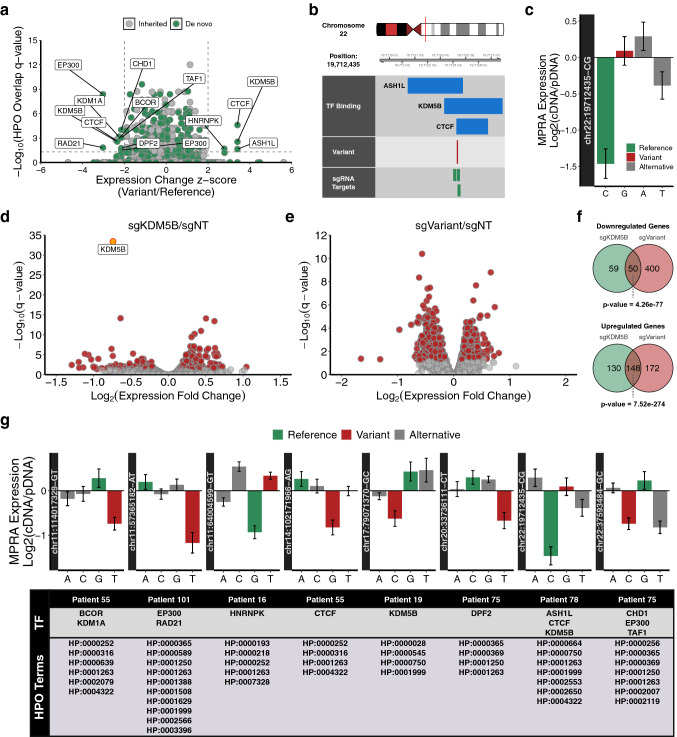
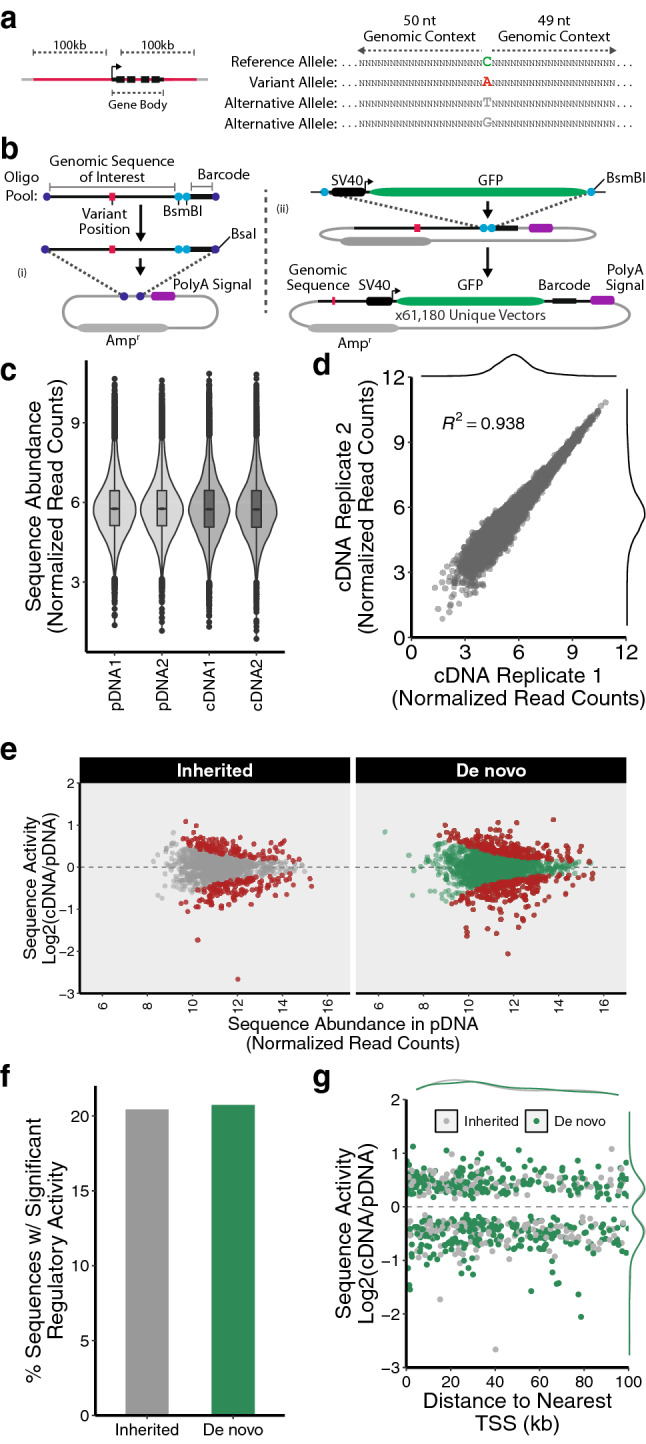
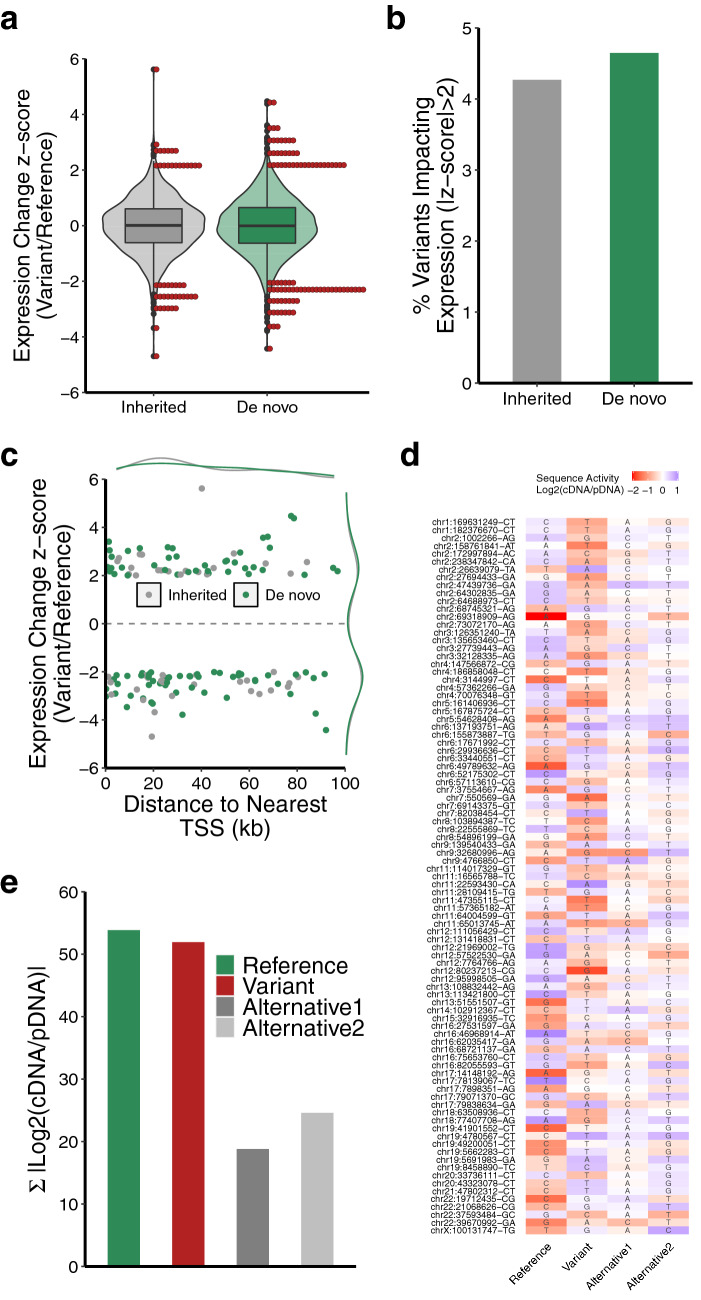
Clinical whole genome sequencing has enabled the discovery of potentially pathogenic noncoding variants in the genomes of rare disease patients with a prior history of negative genetic testing. However, interpreting the functional consequences of noncoding variants and distinguishing those that contribute to disease etiology remains a challenge. Here we address this challenge by experimentally profiling the functional consequences of rare noncoding variants detected in a cohort of undiagnosed rare disease patients at scale using a massively parallel reporter assay. We demonstrate that this approach successfully identifies rare noncoding variants that alter the regulatory capacity of genomic sequences. In addition, we describe an integrative analysis that utilizes genomic features alongside patient clinical data to further prioritize candidate variants with an increased likelihood of pathogenicity. This work represents an important step towards establishing a framework for the functional interpretation of clinically detected noncoding variants.

摘要

临床全基因组测序使得能够在先前遗传检测阴性的罕见病患者的基因组中发现潜在致病的非编码变异。然而,解释非编码变异的功能后果并区分那些导致疾病病因的变异仍然是一个挑战。在这里,我们通过使用大规模平行报告基因检测在一个未确诊的罕见病患者队列中对罕见非编码变异的功能后果进行了规模化的实验分析,从而解决了这一挑战。我们证明,这种方法可以成功地识别出改变基因组序列调控能力的罕见非编码变异。此外,我们还描述了一种综合分析方法,该方法利用基因组特征以及患者临床数据,进一步优先考虑具有更高致病性可能性的候选变异。这项工作是朝着建立临床检测到的非编码变异的功能解释框架迈出的重要一步。
https://cdn.ncbi.nlm.nih.gov/pmc/blobs/32d5/9085742/e821038f7106/41598_2022_11589_Fig4_HTML.jpg
https://cdn.ncbi.nlm.nih.gov/pmc/blobs/32d5/9085742/089b4ac62ec1/41598_2022_11589_Fig1_HTML.jpg
https://cdn.ncbi.nlm.nih.gov/pmc/blobs/32d5/9085742/c1f66ea26fe2/41598_2022_11589_Fig2_HTML.jpg
https://cdn.ncbi.nlm.nih.gov/pmc/blobs/32d5/9085742/ae1a86bcc75b/41598_2022_11589_Fig3_HTML.jpg
https://cdn.ncbi.nlm.nih.gov/pmc/blobs/32d5/9085742/e821038f7106/41598_2022_11589_Fig4_HTML.jpg
https://cdn.ncbi.nlm.nih.gov/pmc/blobs/32d5/9085742/089b4ac62ec1/41598_2022_11589_Fig1_HTML.jpg
https://cdn.ncbi.nlm.nih.gov/pmc/blobs/32d5/9085742/c1f66ea26fe2/41598_2022_11589_Fig2_HTML.jpg
https://cdn.ncbi.nlm.nih.gov/pmc/blobs/32d5/9085742/ae1a86bcc75b/41598_2022_11589_Fig3_HTML.jpg
https://cdn.ncbi.nlm.nih.gov/pmc/blobs/32d5/9085742/e821038f7106/41598_2022_11589_Fig4_HTML.jpg

相似文献

1
Massively parallel identification of functionally consequential noncoding genetic variants in undiagnosed rare disease patients.大规模平行鉴定未诊断罕见病患者中具有功能意义的非编码遗传变异。
Sci Rep. 2022 May 9;12(1):7576. doi: 10.1038/s41598-022-11589-8.
2
Copy-number variants in clinical genome sequencing: deployment and interpretation for rare and undiagnosed disease.临床基因组测序中的拷贝数变异:在罕见病和不明原因疾病中的应用和解读。
Genet Med. 2019 May;21(5):1121-1130. doi: 10.1038/s41436-018-0295-y. Epub 2018 Oct 8.
3
Diagnostic and clinical utility of whole genome sequencing in a cohort of undiagnosed Chinese families with rare diseases.在中国一组未确诊的罕见病家系中全基因组测序的诊断和临床效用。
Sci Rep. 2019 Dec 18;9(1):19365. doi: 10.1038/s41598-019-55832-1.
4
Limitations of exome sequencing in detecting rare and undiagnosed diseases.外显子组测序在检测罕见病和不明原因疾病方面的局限性。
Am J Med Genet A. 2020 Jun;182(6):1400-1406. doi: 10.1002/ajmg.a.61558. Epub 2020 Mar 19.
5
Matching whole genomes to rare genetic disorders: Identification of potential causative variants using phenotype-weighted knowledge in the CAGI SickKids5 clinical genomes challenge.将全基因组与罕见遗传疾病相匹配:在 CAGI SickKids5 临床基因组挑战中使用表型加权知识鉴定潜在的致病变异。
Hum Mutat. 2020 Feb;41(2):347-362. doi: 10.1002/humu.23933. Epub 2019 Nov 15.
6
Identifying digenic disease genes via machine learning in the Undiagnosed Diseases Network.通过机器学习在未确诊疾病网络中鉴定双基因疾病基因。
Am J Hum Genet. 2021 Oct 7;108(10):1946-1963. doi: 10.1016/j.ajhg.2021.08.010. Epub 2021 Sep 15.
7
Experience of the first adult-focussed undiagnosed disease program in Australia (AHA-UDP): solving rare and puzzling genetic disorders is ageless.澳大利亚首个成人聚焦的未确诊疾病计划(AHA-UDP)的经验:解决罕见和疑难遗传疾病是不分年龄的。
Orphanet J Rare Dis. 2024 Aug 2;19(1):288. doi: 10.1186/s13023-024-03297-5.
8
Expediting rare disease diagnosis: a call to bridge the gap between clinical and functional genomics.加速罕见病诊断:呼吁弥合临床与功能基因组学之间的差距。
Mol Med. 2020 Nov 25;26(1):117. doi: 10.1186/s10020-020-00244-5.
9
A guide for the diagnosis of rare and undiagnosed disease: beyond the exome.罕见病和不明原因疾病诊断指南:超越外显子组。
Genome Med. 2022 Feb 28;14(1):23. doi: 10.1186/s13073-022-01026-w.
10
Case for genome sequencing in infants and children with rare, undiagnosed or genetic diseases.对患有罕见、未确诊或遗传性疾病的婴儿和儿童进行基因组测序的案例。
J Med Genet. 2019 Dec;56(12):783-791. doi: 10.1136/jmedgenet-2019-106111. Epub 2019 Apr 25.

引用本文的文献

1
Multiplexed assays of variant effect for clinical variant interpretation.用于临床变异解读的变异效应多重检测。
Nat Rev Genet. 2025 Jul 21. doi: 10.1038/s41576-025-00870-x.
2
MIRACN: a residual convolutional neural network for predicting cell line specific functional regulatory variants.MIRACN:一种用于预测细胞系特异性功能调控变异的残差卷积神经网络。
Brief Bioinform. 2025 Mar 4;26(2). doi: 10.1093/bib/bbaf196.
3
Identification of functional enhancer variants associated with type I diabetes in CD4+ T cells.鉴定与 CD4+T 细胞中 1 型糖尿病相关的功能增强子变异。

本文引用的文献

1
Genomic answers for children: Dynamic analyses of >1000 pediatric rare disease genomes.儿童基因组学解答:对 1000 多个儿科罕见病基因组的动态分析。
Genet Med. 2022 Jun;24(6):1336-1348. doi: 10.1016/j.gim.2022.02.007. Epub 2022 Mar 16.
2
The Human Phenotype Ontology in 2021.2021 年人类表型本体论。
Nucleic Acids Res. 2021 Jan 8;49(D1):D1207-D1217. doi: 10.1093/nar/gkaa1043.
3
Locally acting transcription factors regulate p53-dependent cis-regulatory element activity.局部作用的转录因子调节 p53 依赖性顺式调控元件活性。
Front Immunol. 2024 Jun 14;15:1387253. doi: 10.3389/fimmu.2024.1387253. eCollection 2024.
4
Transcriptome analysis provides critical answers to the "variants of uncertain significance" conundrum.转录组分析为“意义不明的变异”难题提供了关键答案。
Hum Mutat. 2022 Nov;43(11):1590-1608. doi: 10.1002/humu.24394. Epub 2022 May 18.
Nucleic Acids Res. 2020 May 7;48(8):4195-4213. doi: 10.1093/nar/gkaa147.
4
Biological relevance of computationally predicted pathogenicity of noncoding variants.计算预测的非编码变异的致病性的生物学相关性。
Nat Commun. 2019 Jan 18;10(1):330. doi: 10.1038/s41467-018-08270-y.
5
Paternally inherited cis-regulatory structural variants are associated with autism.父系遗传的顺式调控结构变异与自闭症有关。
Science. 2018 Apr 20;360(6386):327-331. doi: 10.1126/science.aan2261.
6
De novo mutations in regulatory elements in neurodevelopmental disorders.神经发育障碍中调控元件的新生突变。
Nature. 2018 Mar 29;555(7698):611-616. doi: 10.1038/nature25983. Epub 2018 Mar 21.
7
Fast, scalable prediction of deleterious noncoding variants from functional and population genomic data.基于功能和群体基因组数据对有害非编码变异进行快速、可扩展的预测。
Nat Genet. 2017 Apr;49(4):618-624. doi: 10.1038/ng.3810. Epub 2017 Mar 13.
8
A systematic comparison reveals substantial differences in chromosomal versus episomal encoding of enhancer activity.一项系统比较揭示了增强子活性在染色体编码与附加体编码方面存在显著差异。
Genome Res. 2017 Jan;27(1):38-52. doi: 10.1101/gr.212092.116. Epub 2016 Nov 9.
9
Systematic Functional Dissection of Common Genetic Variation Affecting Red Blood Cell Traits.影响红细胞性状的常见遗传变异的系统功能剖析
Cell. 2016 Jun 2;165(6):1530-1545. doi: 10.1016/j.cell.2016.04.048.
10
Direct Identification of Hundreds of Expression-Modulating Variants using a Multiplexed Reporter Assay.使用多重报告基因检测直接鉴定数百个表达调控变异体
Cell. 2016 Jun 2;165(6):1519-1529. doi: 10.1016/j.cell.2016.04.027.