Hamlin Rebecca E, Pienkos Shaun M, Chan Leslie, Stabile Mikayla A, Pinedo Kassandra, Rao Mallika, Grant Philip, Bonilla Hector, Holubar Marisa, Singh Upinder, Jacobson Karen B, Jagannathan Prasanna, Maldonado Yvonne, Holmes Susan P, Subramanian Aruna, Blish Catherine A
Department of Medicine, Stanford University School of Medicine; Stanford, CA, USA.
Stanford Immunology Program, Stanford University School of Medicine; Stanford, CA, USA.
bioRxiv. 2024 Jun 19:2024.06.18.599612. doi: 10.1101/2024.06.18.599612.
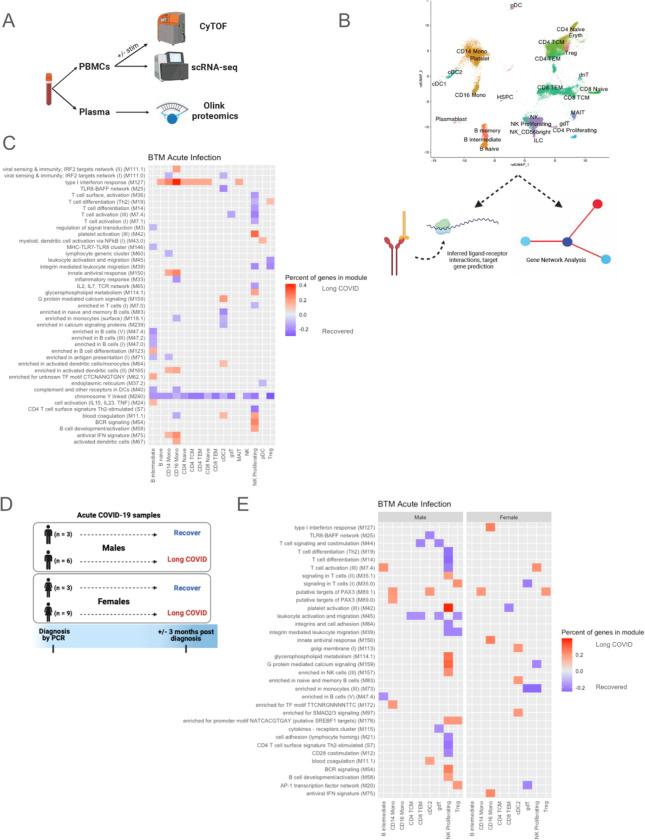
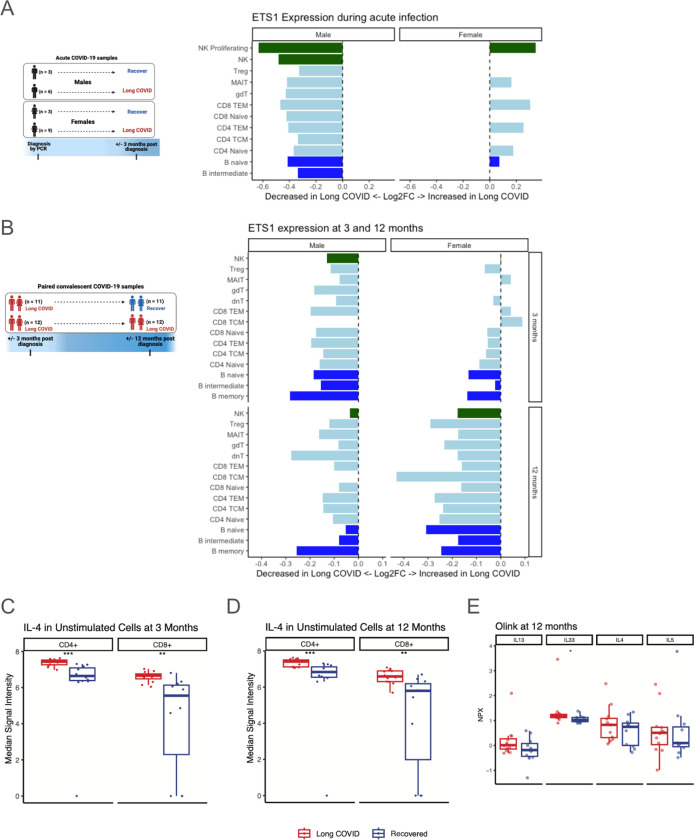
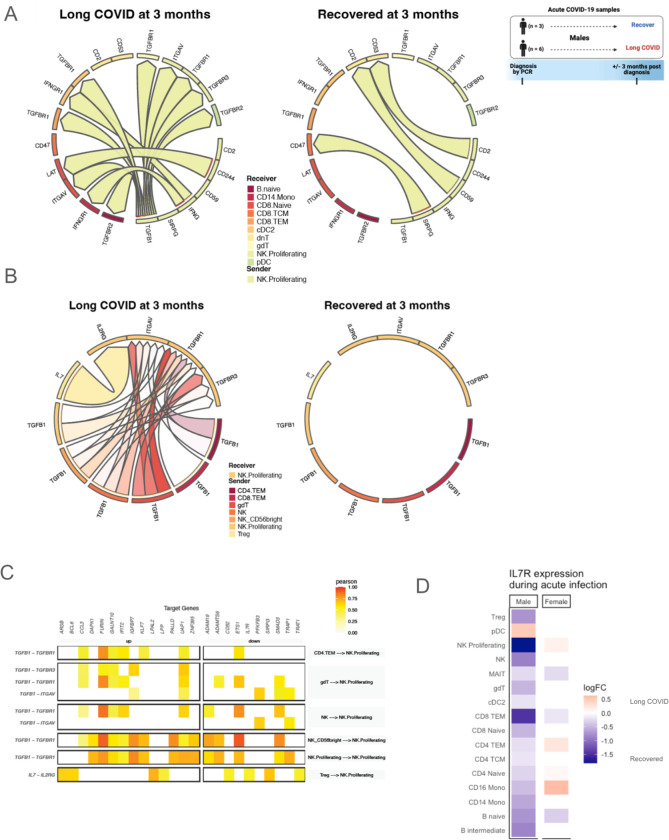
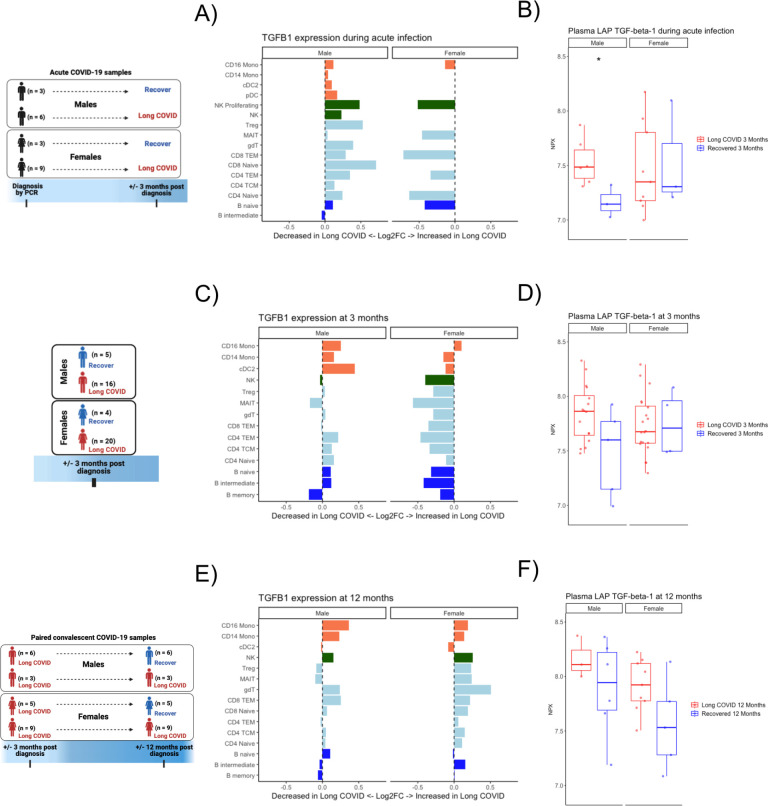
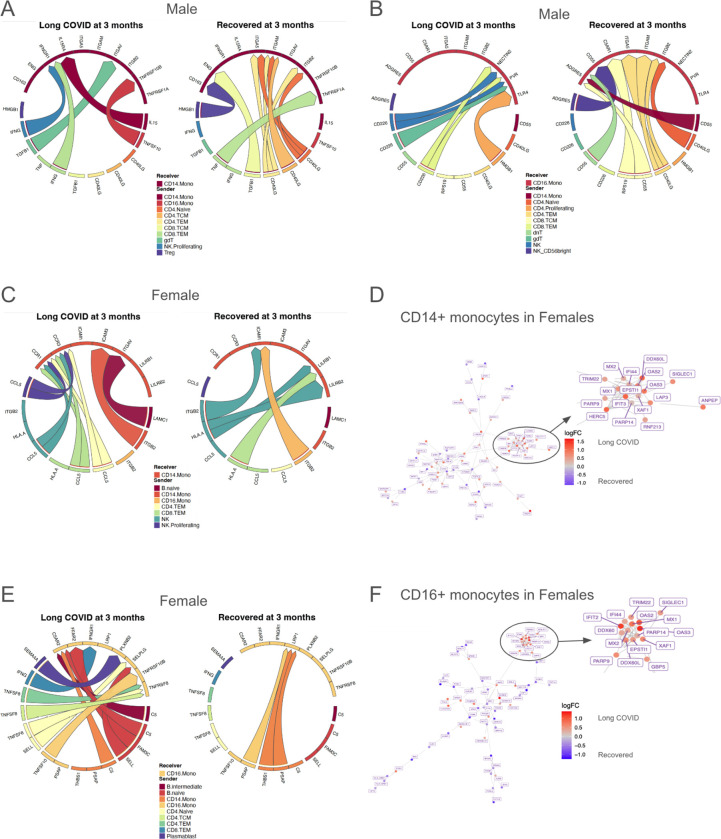
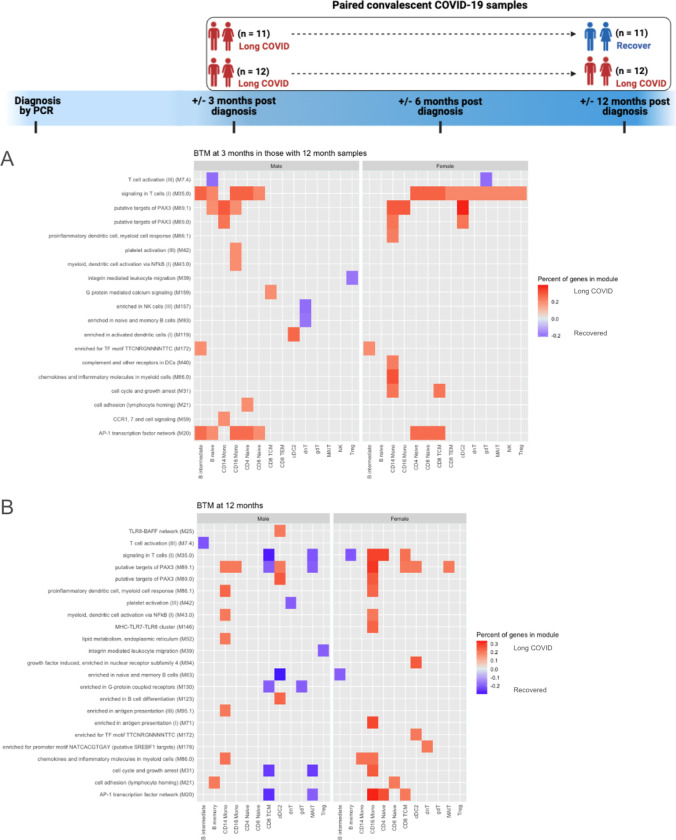
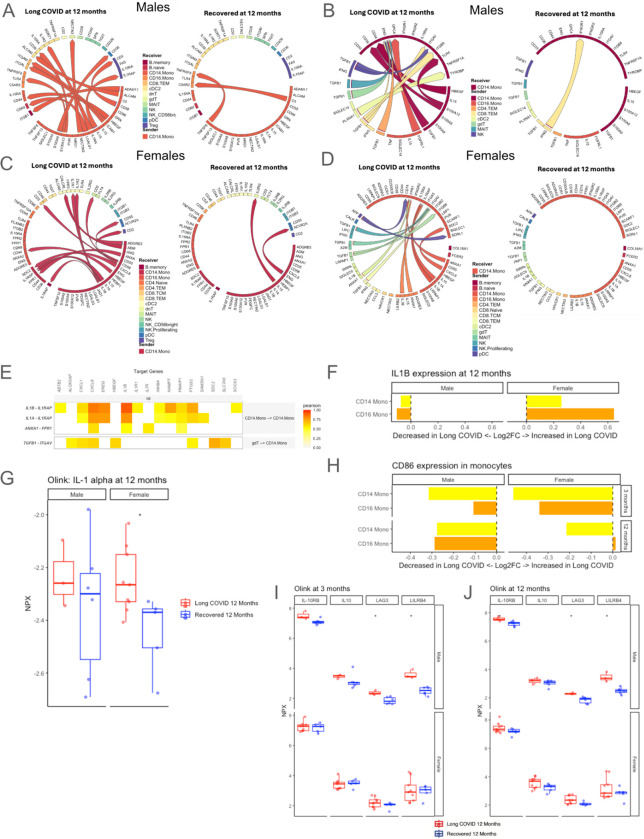
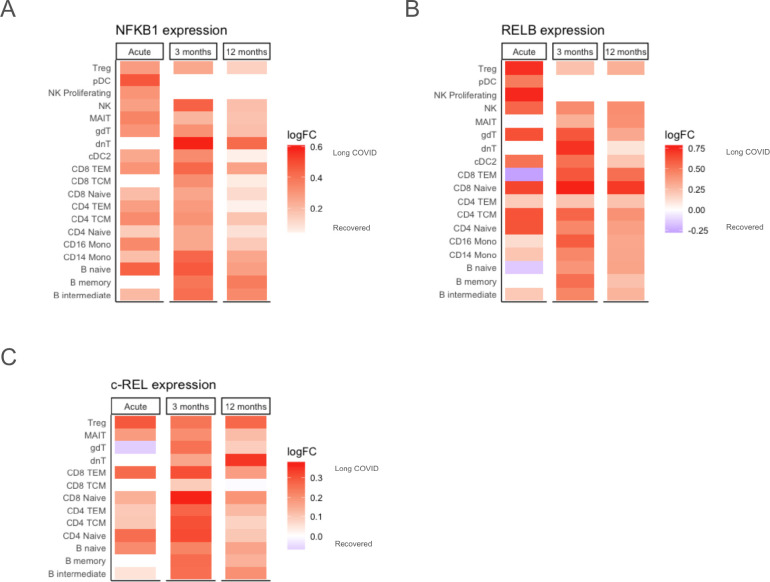
Sex differences have been observed in acute COVID-19 and Long COVID (LC) outcomes, with greater disease severity and mortality during acute infection in males and a greater proportion of females developing LC. We hypothesized that sex-specific immune dysregulation contributes to the pathogenesis of LC. To investigate the immunologic underpinnings of LC development and persistence, we used single-cell transcriptomics, single-cell proteomics, and plasma proteomics on blood samples obtained during acute SARS-CoV-2 infection and at 3 and 12 months post-infection in a cohort of 45 patients who either developed LC or recovered. Several sex-specific immune pathways were associated with LC. Specifically, males who would develop LC at 3 months had widespread increases in signaling during acute infection in proliferating NK cells. Females who would develop LC demonstrated increased expression of , an RNA gene implicated in autoimmunity, and increased signaling in monocytes at 12 months post infection. Several immune features of LC were also conserved across sexes. Both males and females with LC had reduced co-stimulatory signaling from monocytes and broad upregulation of transcription factors. In both sexes, those with persistent LC demonstrated increased LAG3, a marker of T cell exhaustion, reduced transcription factor expression across lymphocyte subsets, and elevated intracellular IL-4 levels in T cell subsets, suggesting that ETS1 alterations may drive an aberrantly elevated Th2-like response in LC. Altogether, this study describes multiple innate and adaptive immune correlates of LC, some of which differ by sex, and offers insights toward the pursuit of tailored therapeutics.
在新冠病毒急性感染和新冠长期症状(LC)的结果中观察到了性别差异,男性在急性感染期间疾病严重程度和死亡率更高,而女性患LC的比例更大。我们假设性别特异性免疫失调促成了LC的发病机制。为了研究LC发生和持续存在的免疫学基础,我们对45名患者(包括发展为LC的患者和康复患者)在急性SARS-CoV-2感染期间以及感染后3个月和12个月采集的血样进行了单细胞转录组学、单细胞蛋白质组学和血浆蛋白质组学分析。有几种性别特异性免疫途径与LC相关。具体而言,在3个月时会发展为LC的男性在急性感染期间增殖性自然杀伤细胞中的信号传导普遍增加。会发展为LC的女性在感染后12个月时表现出与自身免疫有关的RNA基因 表达增加,以及单核细胞中信号传导增加。LC的一些免疫特征在两性中也具有共性。患有LC的男性和女性单核细胞的共刺激信号均减少,且 转录因子广泛上调。在两性中,患有持续性LC的患者均表现出T细胞耗竭标志物LAG3增加,淋巴细胞亚群中 转录因子表达减少,以及T细胞亚群中细胞内白细胞介素-4水平升高,这表明ETS1改变可能在LC中驱动异常升高的类似Th2的反应。总之,本研究描述了LC的多种先天性和适应性免疫相关因素,其中一些因性别而异,并为寻求量身定制的治疗方法提供了见解。