Consejo Nacional de Investigaciones Científicas y Técnicas (CONICET), Buenos Aires, Argentina.
Universidad de Buenos Aires, Facultad de Ciencias Exactas y Naturales, Departamento Biodiversidad y Biología Experimental, Buenos Aires, Argentina.
PeerJ. 2024 Jun 28;12:e17305. doi: 10.7717/peerj.17305. eCollection 2024.
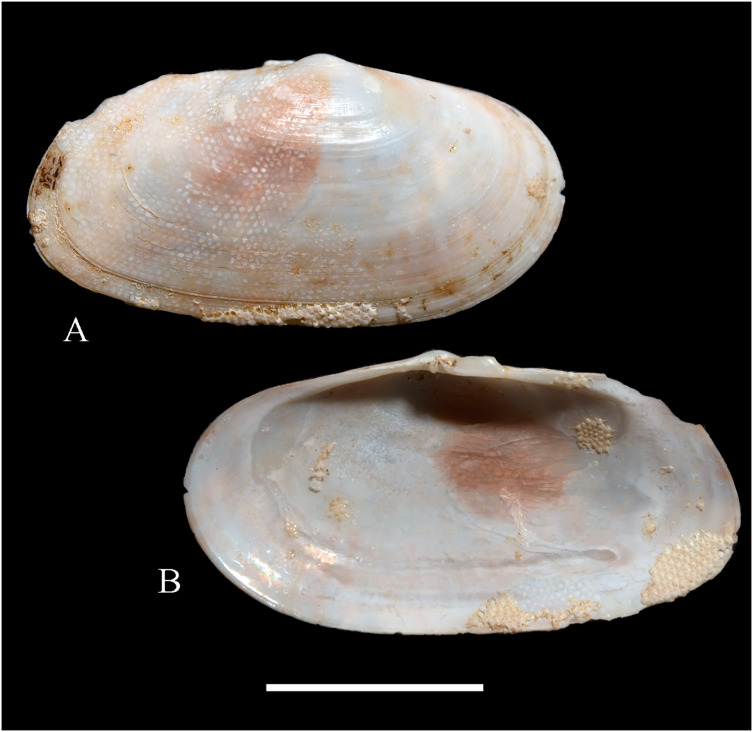
Juan Fernández and Desventuradas are two oceanic archipelagos located in the southeastern Pacific Ocean far off the Chilean coast that received protected status as marine parks in 2016. Remoteness and access difficulty contributed to historically poor biodiversity sampling and limited associated research. This is particularly noticeable for bivalves, with most prior regional publications focused on single taxa or un-illustrated checklists. This study investigates marine bivalves collected between the intertidal and 415 m depth during (1) the 1997 expedition aboard the M/V , with special focus on scuba-collected micro-mollusks of both archipelagos, (2) two expeditions by the R/V (Cruise 12/1965 and Cruise 17/1966), and (3) Cruise 21 of USNS under the United States Antarctic Program, which sampled at Juan Fernández in 1965. Also, relevant historical material of the British (1873-1876), the (1916-1917), and by German zoologist Ludwig H. Plate (1893-1895) is critically revised. A total of 48 species are recognized and illustrated, including 19 new species (described herein) and six other potentially new species. The presence of two species mentioned in the literature for the region ( and ) could not be confirmed. The genera and are reported for the first time from the Eastern Pacific, as are and from Chilean waters. Lectotypes are designated for and . These findings double the number of extant bivalve species known from the Juan Fernández and Desventuradas archipelagos, highlighting the lack of attention these islands groups have received in the past. A high percentage of species endemic to one or both archipelagos are recognized herein, accounting for almost 78% of the total. The newly recognized level of bivalve endemism supports the consideration of Juan Fernández and Desventuradas as two different biogeographic units (Provinces or Ecoregions) of the Eastern Pacific Ocean.
胡安·费尔南德斯群岛和德斯温图拉达斯群岛位于东南太平洋,远离智利海岸,2016 年被划为海洋公园,享有保护地位。由于地理位置偏远,难以到达,历史上对生物多样性的采样工作一直很差,相关研究也很有限。双壳类动物的情况尤其明显,大多数先前的区域出版物都集中在单一分类群或未说明的清单上。本研究调查了在(1)1997 年 M/V 号考察船考察期间采集的潮间带至 415 米深处的海洋双壳类动物,特别关注两个群岛的水肺采集微型软体动物,(2)两次 R/V 号考察(1965 年 12 月 19 日和 1966 年 17 日),以及(3)美国南极计划下的 USNS 号 21 次考察,这些考察于 1965 年在胡安·费尔南德斯群岛进行。此外,还对英国(1873-1876 年)、德国动物学家路德维希·H·普拉特(1893-1895 年)的相关历史材料进行了批判性修订。共鉴定并图示了 48 种双壳类动物,包括 19 种新种(本文描述)和 6 种其他可能的新种。该地区文献中提到的两个物种(和)的存在无法得到证实。属和首次报道来自东太平洋,智利水域也有和。和的模式标本被指定。这些发现使已知的胡安·费尔南德斯群岛和德斯温图拉达斯群岛的现存双壳类动物物种数量增加了一倍,突显了这些岛屿群过去受到的关注不足。本文识别出近 78%的双壳类动物物种具有一个或两个群岛的特有种,这些特有种的比例很高。新认识到的双壳类动物特有种水平支持将胡安·费尔南德斯群岛和德斯温图拉达斯群岛视为东太平洋两个不同的生物地理单元(省或生态区)的观点。