Li Qinghua, Shan Yongzhi, Wei Penghu, Zhao Guoguang
Department of Neurosurgery, Xuanwu Hospital, Capital Medical University, Beijing, China.
Clinical Research Center for Epilepsy Capital Medical University, Beijing, China.
Front Hum Neurosci. 2024 Jun 19;18:1429223. doi: 10.3389/fnhum.2024.1429223. eCollection 2024.
Neuromodulation has been proven to be a promising alternative treatment for adult patients with drug-resistant epilepsy (DRE). Deep brain stimulation (DBS) and responsive neurostimulation (RNS) were approved by many countries for the treatment of DRE. However, there is a lack of systematic studies illustrating the differences between them. This meta-analysis is performed to assess the efficacy and clinical characteristics of DBS and RNS in adult patients with DRE.
PubMed, Web of Science, and Embase were retrieved to obtain related studies including adult DRE patients who accepted DBS or RNS. The clinical characteristics of these patients were compiled for the following statistical analysis.
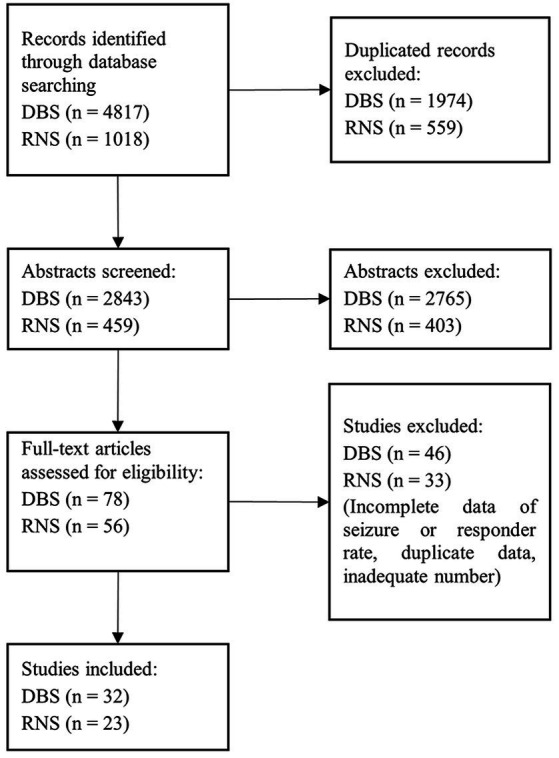
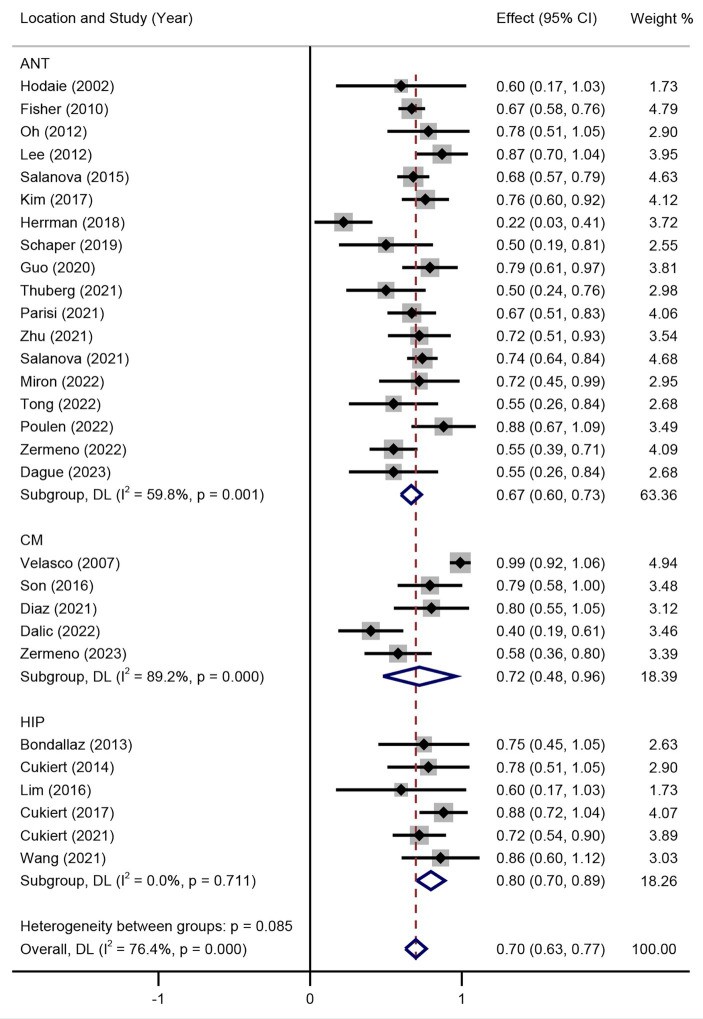
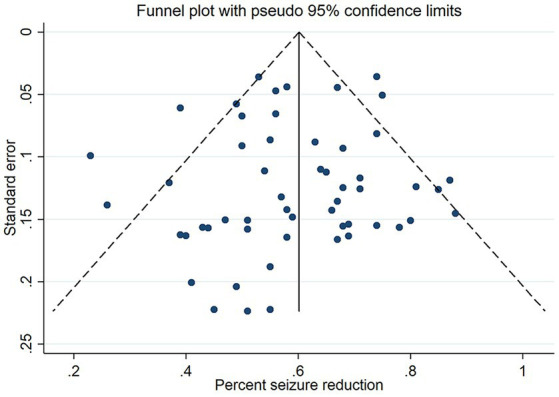
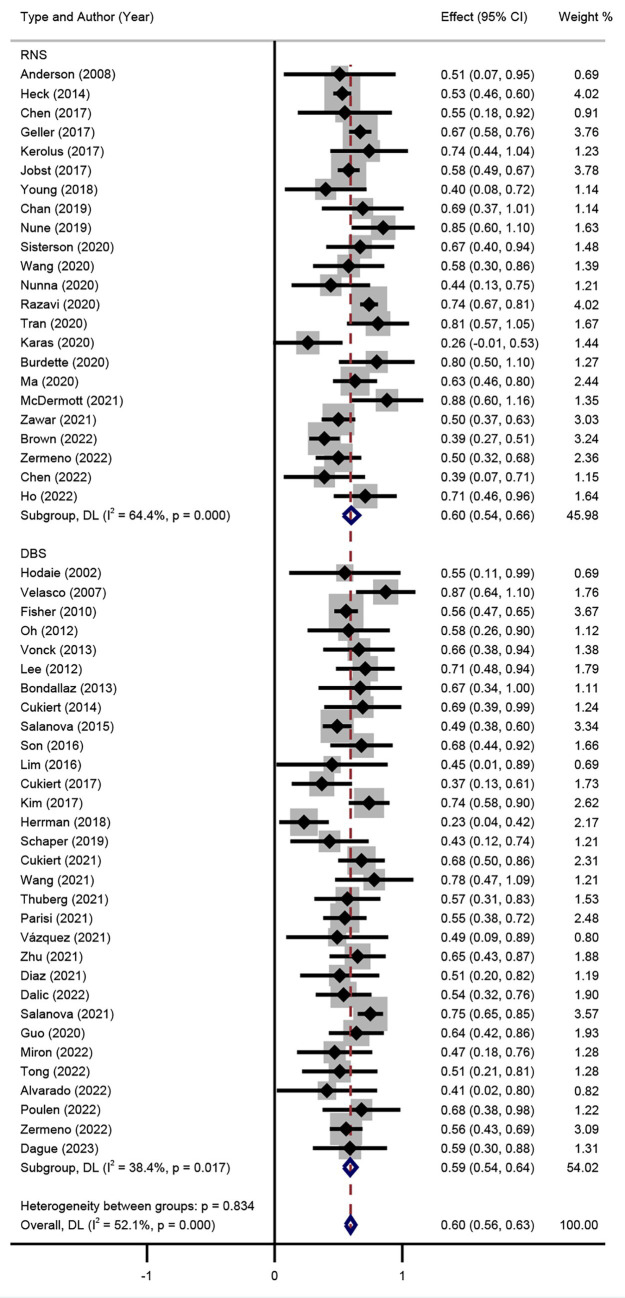
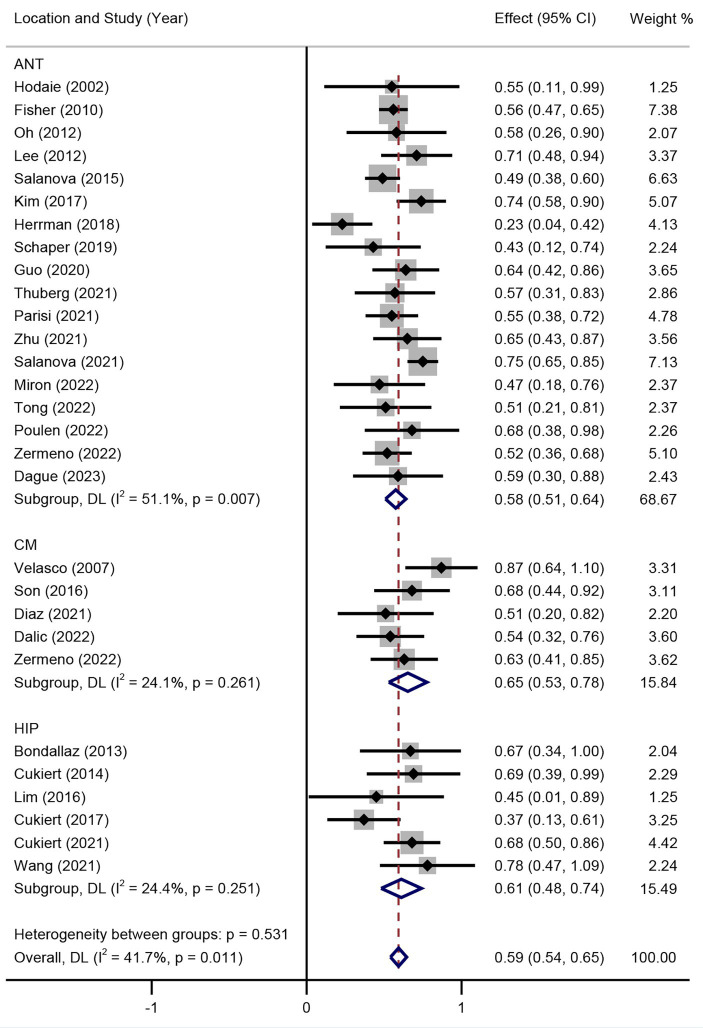
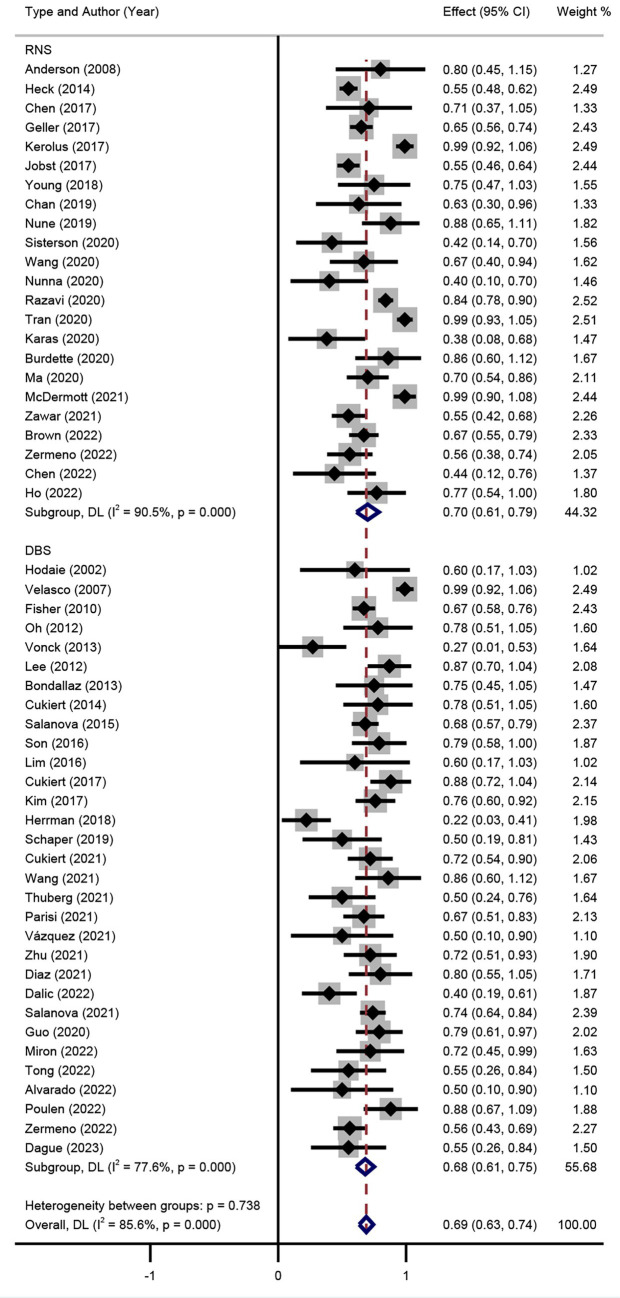
A total of 55 studies (32 of DBS and 23 of RNS) involving 1,568 adult patients with DRE were included in this meta-analysis. There was no significant difference in seizure reduction and responder rate between DBS and RNS for DRE. The seizure reduction of DBS and RNS were 56% (95% CI 50-62%, > 0.05) and 61% (95% CI 54-68%, > 0.05). The responder rate of DBS and RNS were 67% (95% CI 58-76%, > 0.05) and 71% (95% CI 64-78%, > 0.05). Different targets of DBS did not show significant effect on seizure reduction ( > 0.05). Patients with DRE who accepted DBS were younger than those of RNS (32.9 years old vs. 37.8 years old, < 0.01). The mean follow-up time was 47.3 months for DBS and 39.5 months for RNS ( > 0.05).
Both DBS and RNS are beneficial and alternative therapies for adult DRE patients who are not eligible to accept resection surgery. Further and larger studies are needed to clarify the characteristics of different targets and provide tailored treatment for patients with DRE.
神经调节已被证明是成年耐药性癫痫(DRE)患者一种有前景的替代治疗方法。脑深部电刺激(DBS)和反应性神经刺激(RNS)已获许多国家批准用于治疗DRE。然而,缺乏系统研究阐述它们之间的差异。进行这项荟萃分析以评估DBS和RNS在成年DRE患者中的疗效和临床特征。
检索PubMed、科学网和Embase以获取相关研究,包括接受DBS或RNS的成年DRE患者。汇总这些患者的临床特征以进行以下统计分析。
这项荟萃分析共纳入55项研究(32项DBS研究和23项RNS研究),涉及1568例成年DRE患者。DBS和RNS在DRE患者的癫痫发作减少和缓解率方面无显著差异。DBS和RNS的癫痫发作减少率分别为56%(95%CI 50 - 62%,P>0.05)和61%(95%CI 54 - 68%,P>0.05)。DBS和RNS的缓解率分别为67%(95%CI 58 - 76%,P>0.05)和71%(95%CI 64 - 78%,P>0.05)。DBS的不同靶点对癫痫发作减少未显示出显著效果(P>0.05)。接受DBS的DRE患者比接受RNS的患者年轻(32.9岁对37.8岁,P<0.01)。DBS的平均随访时间为47.3个月,RNS为39.5个月(P>0.05)。
DBS和RNS都是不适于接受切除手术的成年DRE患者的有益替代疗法。需要进一步开展更大规模的研究以阐明不同靶点的特征,并为DRE患者提供个性化治疗。