Feng Zhiying, Du Zhonghai, Liang Yan, Zhou Juyue
Graduate Institute, Shandong University of Traditional Chinese Medicine, Jinan, Shandong, China.
Department of Oncology, Weifang Hospital of Traditional Chinese Medicine, Weifang, Shandong, China.
Front Oncol. 2024 Jun 19;14:1388982. doi: 10.3389/fonc.2024.1388982. eCollection 2024.
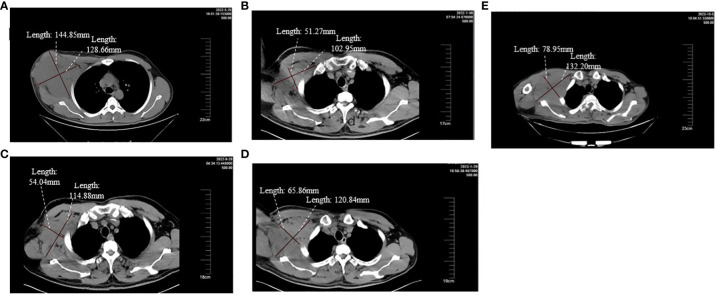
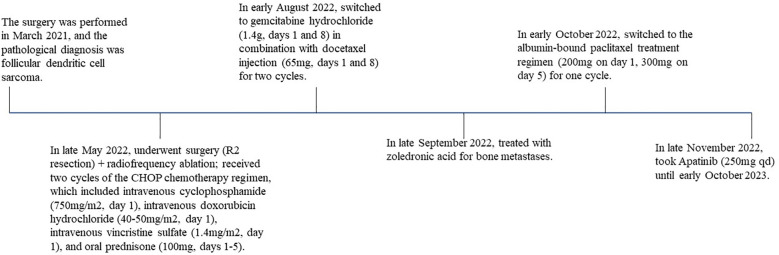
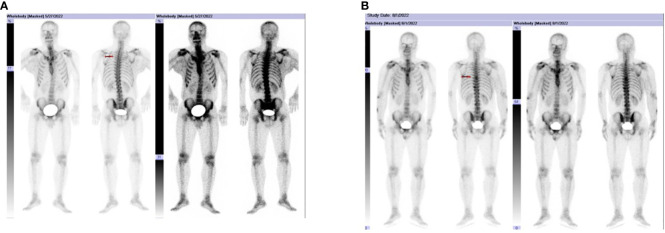
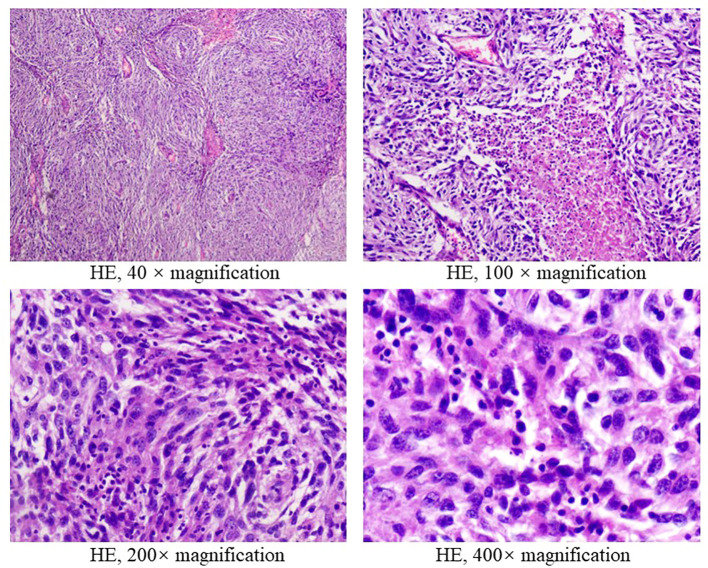
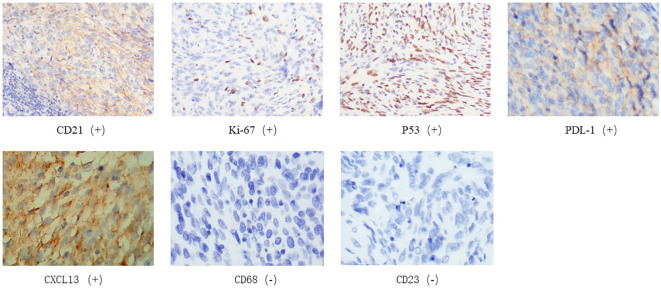
We present a case of follicular dendritic cell sarcoma in the axillary lymph node, which unexpectedly showed favorable outcomes after the application of apatinib. Follicular Dendritic Cell Sarcoma (FDCS) exhibits a rare incidence and an unclear pathogenic mechanism, contributing to the limited breakthroughs in its treatment to date within the medical field. The current mainstream therapeutic approaches include surgery, CHOP(cyclophosphamide, doxorubicin, vincristine, prednisone), ICE(ifosfamide, carboplatin, etoposide), ABVD(doxorubicin, bleomycin, vinblastine, dacarbazine), and immune checkpoint inhibitors. A 38-year-old male patient was admitted to the hospital due to a lump in the right axilla and underwent surgical treatment. Postoperative pathology confirmed the diagnosis of follicular dendritic cell sarcoma. Two months post-surgery, he faced a recurrence, prompting a subsequent surgical intervention complemented by tumor radiofrequency ablation. Despite these interventions, the treatment response was suboptimal. Subsequently, the patient was treated with the CHOP regimen, but after two cycles, he developed bone metastasis. Due to the patient's limited financial resources and refusal of immunotherapy, we switched to a regimen of gemcitabine and docetaxel, but the disease progressed again after two cycles. A one-cycle trial of albumin-bound paclitaxel yielded unsatisfactory results. Ultimately, the patient was treated with Apatinib, achieving a 10-month progression-free survival. Due to the patient's limited financial circumstances, we, in the absence of guideline recommendations and evidence from evidence-based medicine, achieved a 10-month progression-free survival (PFS) solely based on experiential use of the anti-angiogenic drug, Apatinib. The purpose of this case report is to provide additional therapeutic options for FDCS treatment and to pave the way for exploring the mechanism of action of Apatinib in FDCS.
我们报告一例腋窝淋巴结滤泡性树突状细胞肉瘤,应用阿帕替尼后意外取得了良好疗效。滤泡性树突状细胞肉瘤(FDCS)发病率罕见,致病机制不明,导致目前医学领域对其治疗的突破有限。当前的主流治疗方法包括手术、CHOP(环磷酰胺、阿霉素、长春新碱、泼尼松)、ICE(异环磷酰胺、卡铂、依托泊苷)、ABVD(阿霉素、博来霉素、长春碱、达卡巴嗪)以及免疫检查点抑制剂。一名38岁男性患者因右腋窝肿块入院并接受了手术治疗。术后病理确诊为滤泡性树突状细胞肉瘤。术后两个月,他出现复发,随后进行了手术干预并辅以肿瘤射频消融。尽管采取了这些干预措施,治疗反应仍不理想。随后,患者接受了CHOP方案治疗,但两个周期后出现了骨转移。由于患者经济资源有限且拒绝免疫治疗,我们改用吉西他滨和多西他赛方案,但两个周期后疾病再次进展。白蛋白结合型紫杉醇的一个周期试验结果也不尽人意。最终,患者接受阿帕替尼治疗,实现了10个月的无进展生存期。由于患者经济情况有限,在缺乏指南推荐和循证医学证据的情况下,我们仅基于抗血管生成药物阿帕替尼的经验性使用,使患者获得了10个月的无进展生存期(PFS)。本病例报告的目的是为FDCS治疗提供更多治疗选择,并为探索阿帕替尼在FDCS中的作用机制铺平道路。