Pediatric Department, Minia University Children Hospital, Faculty of Medicine, Minia University, El-Minya, 61111, Egypt.
Medical Microbiology and Immunology Department, Faculty of Medicine, Minia University, El-Minya, Egypt.
Sci Rep. 2024 Jul 7;14(1):15634. doi: 10.1038/s41598-024-65609-w.
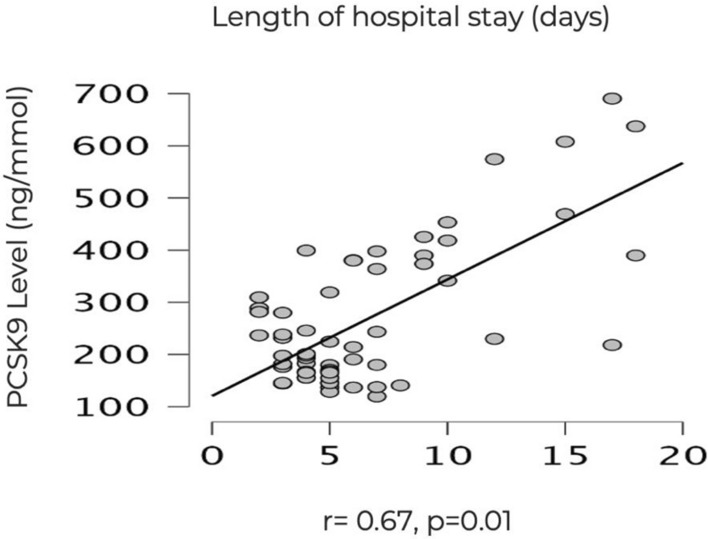
Sepsis is a life-threatening condition that arises when the body's response to infection causes injury to its tissues and organs. Proprotein convertase subtilisin/kexin type 9 (PCSK9) is an enzyme released in response to the drop in cholesterol level occurring in sepsis. Our study aimed to evaluate the prognostic role of serum Proprotein convertase subtilisin/kexin type 9 (PCSK9) level in children with sepsis and severe sepsis. Sixty children were included in this study. They were divided into two groups: 30 children in the sepsis group and 30 in the severe sepsis group. Another 30 apparently healthy children were included as a control group. Blood samples were withdrawn from all included children for complete blood count (CBC), renal function tests (RFT), liver function tests (LFT), LDL-cholesterol (LDL-C), blood culture, and serum PCSK9. In this study, PCSK9 and LDL-C were higher in the two sepsis groups than in the control group (p < 0.05). They were also higher in the severe sepsis group than the sepsis group and in the non-survivors than in the survivors (p < 0.05). PCSK9 was positively correlated with length of hospital stay in surviving children (r = 0.67, p = 0.001) and had predicted significant hematological dysfunction (adjusted B = - 96.95, p = 0.03). In conclusion, the PCSK9 assay can be used as a biomarker for bad prognosis in children suffering from clinical sepsis.
脓毒症是一种危及生命的病症,当身体对感染的反应导致其组织和器官受损时就会发生。脯氨酰肽链内切酶/糜蛋白酶 9 型(PCSK9)是一种在脓毒症中胆固醇水平下降时释放的酶。我们的研究旨在评估血清脯氨酰肽链内切酶/糜蛋白酶 9 型(PCSK9)水平在脓毒症和严重脓毒症患儿中的预后作用。本研究纳入了 60 名儿童。他们被分为两组:30 名脓毒症患儿和 30 名严重脓毒症患儿。另外 30 名明显健康的儿童被纳入对照组。从所有纳入的儿童中抽取血样进行全血细胞计数(CBC)、肾功能检查(RFT)、肝功能检查(LFT)、低密度脂蛋白胆固醇(LDL-C)、血培养和血清 PCSK9 检查。在本研究中,两组脓毒症患儿的 PCSK9 和 LDL-C 均高于对照组(p<0.05)。严重脓毒症组也高于脓毒症组,非幸存者高于幸存者(p<0.05)。PCSK9 与存活儿童的住院时间呈正相关(r=0.67,p=0.001),并预测了显著的血液功能障碍(调整 B= -96.95,p=0.03)。总之,PCSK9 测定可作为预测儿童临床脓毒症不良预后的生物标志物。