Almeida-Nunes Diana Luísa, Nunes Mariana, Osório Hugo, Ferreira Verónica, Lobo Cláudia, Monteiro Paula, Abreu Miguel Henriques, Bartosch Carla, Silvestre Ricardo, Dinis-Oliveira Ricardo Jorge, Ricardo Sara
Differentiation and Cancer Group, Institute for Research and Innovation in Health (i3S) of the University of Porto, 4200-135, Porto, Portugal.
Associate Laboratory I4HB, Institute for Health and Bioeconomy, University Institute of Health Sciences-CESPU, 4585-116, Gandra, Portugal.
Biochem Biophys Rep. 2024 Jun 13;39:101755. doi: 10.1016/j.bbrep.2024.101755. eCollection 2024 Sep.
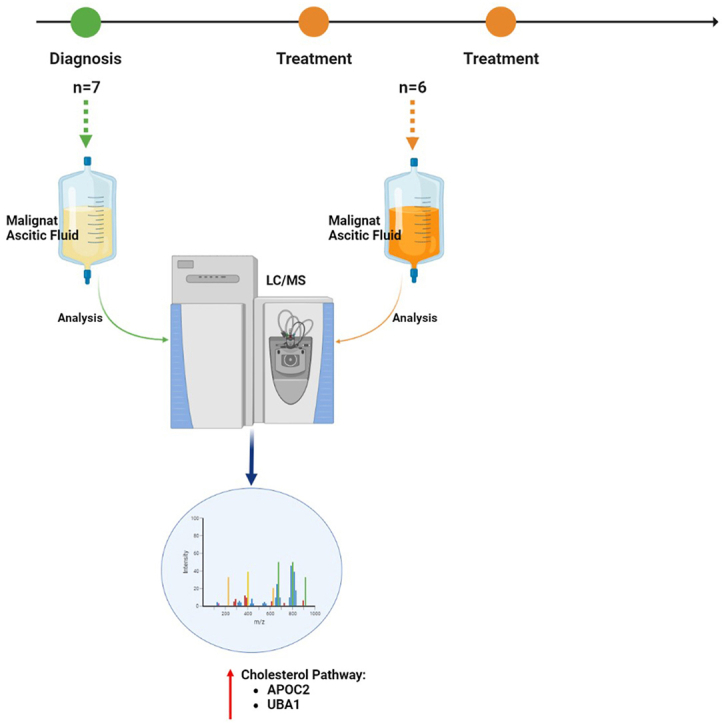
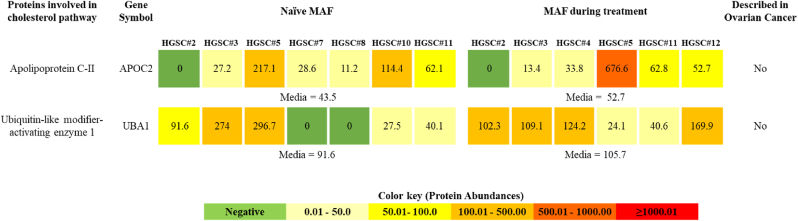
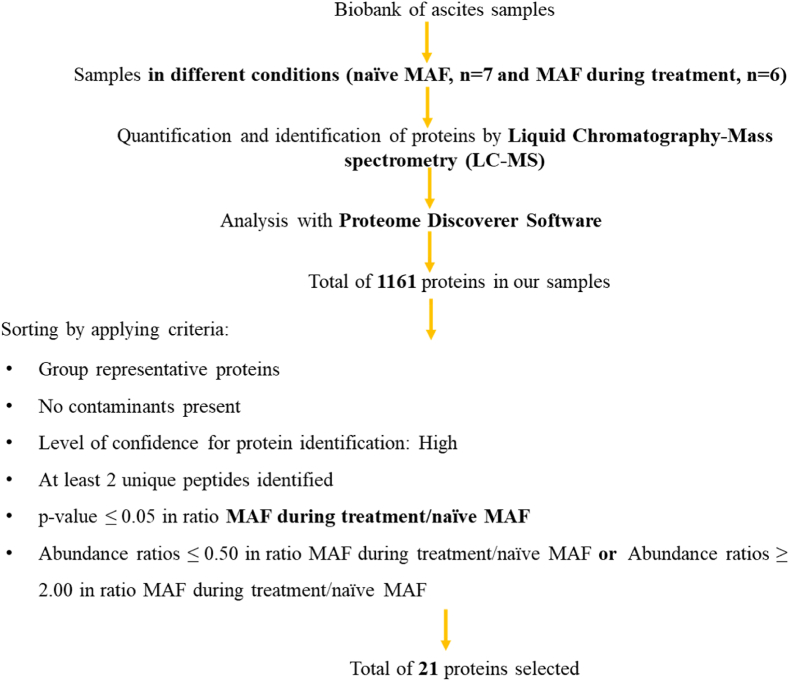
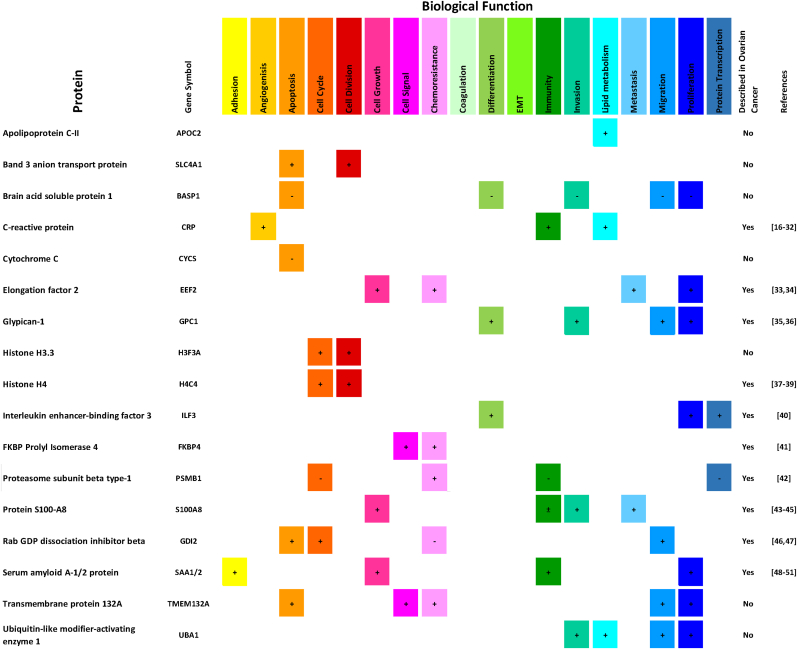
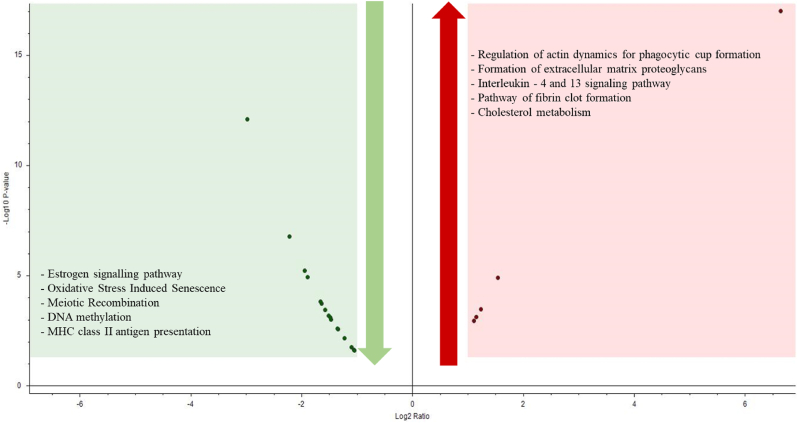
Ovarian cancer (OC) patients develop ascites, an accumulation of ascitic fluid in the peritoneal cavity anda sign of tumour dissemination within the peritoneal cavity. This body fluid is under-researched, mainly regarding the ascites formed during tumour progression that have no diagnostic value and, therefore, are discarded. We performed a discovery proteomics study to identify new biomarkers in the ascites supernatant of OC patients. In this preliminary study, we analyzed a small amount of OC ascites to highlight the importance of not discarding such biological material during treatment, which could be valuable for OC management. Our findings reveal that OC malignant ascitic fluid (MAF) displays a proliferative environment that promotes the growth of OC cells that shift the metabolic pathway using alternative sources of nutrients, such as the cholesterol pathway. Also, OC ascites drained from patients during treatment showed an immunosuppressive environment, with up-regulation of proteins from the signaling pathways of IL-4 and IL-13 and down-regulation from the MHC-II. This preliminary study pinpointed a new protein (Transmembrane Protein 132A) in the OC context that deserves to be better explored in a more extensive cohort of patients' samples. The proteomic profile of MAF from OC patients provides a unique insight into the metabolic kinetics of cancer cells during disease progression, and this information can be used to develop more effective treatment strategies.
卵巢癌(OC)患者会出现腹水,即腹腔内积聚的腹水,这是肿瘤在腹腔内播散的迹象。这种体液的研究较少,主要是关于肿瘤进展过程中形成的、无诊断价值因而被丢弃的腹水。我们进行了一项探索性蛋白质组学研究,以鉴定OC患者腹水上清液中的新生物标志物。在这项初步研究中,我们分析了少量OC腹水,以强调在治疗过程中不丢弃此类生物材料的重要性,其对OC的管理可能具有重要价值。我们的研究结果表明,OC恶性腹水(MAF)呈现出一种增殖环境,可促进OC细胞的生长,这些细胞利用胆固醇途径等替代营养来源来改变代谢途径。此外,治疗期间从患者体内排出的OC腹水显示出免疫抑制环境,白细胞介素-4和白细胞介素-13信号通路中的蛋白质上调,而主要组织相容性复合体II类分子(MHC-II)中的蛋白质下调。这项初步研究在OC背景下确定了一种新蛋白质(跨膜蛋白132A),值得在更广泛的患者样本队列中进行更深入的探索。OC患者MAF的蛋白质组学图谱为疾病进展过程中癌细胞的代谢动力学提供了独特的见解,这些信息可用于制定更有效的治疗策略。