Maqsud Abrar Nasser, Alkhunaizi Fatimah Maitham, Al-Jehani Hosam
Department of Psychiatry, King Fahad Specialist Hospital, Dammam, Saudi Arabia.
Department of Mental Health, Medical College, Imam Abdulrahman Bin Faisal University, Dammam, Saudi Arabia.
Surg Neurol Int. 2024 Jun 7;15:192. doi: 10.25259/SNI_358_2024. eCollection 2024.
Klüver-Bucy syndrome (KBS) is a rare neuropsychiatric disorder, and it can be associated with a variety of neurological disorders. It is characterized by visual agnosia, placidity, hyperorality, hypersexuality, dietary changes, amnesia, and hypermetamorphosis. KBS is mainly a clinical diagnosis, with at least three symptoms sufficient to diagnose the condition.
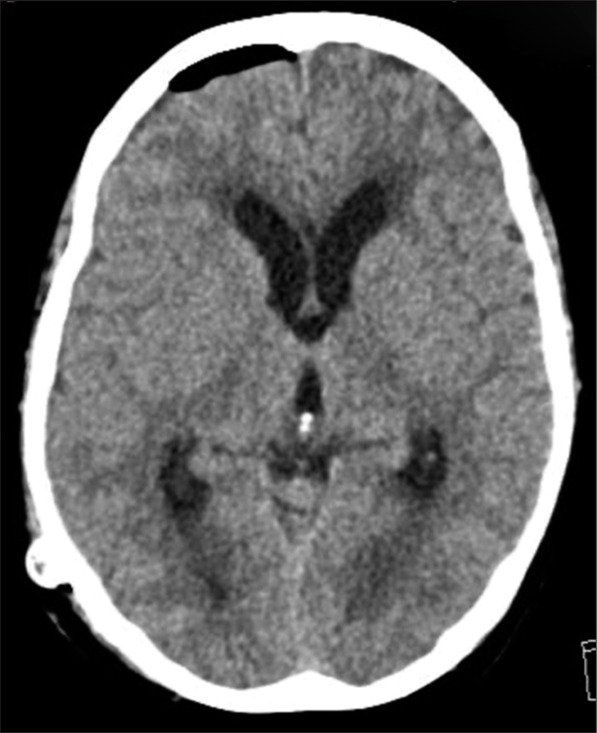
The case describes a 49-year-old Filipino woman with a history of hypertension who presented with symptoms strongly suggesting KBS following subarachnoid hemorrhage, including behaviors such as hyperorality, hypermobility, placidity, hypermetamorphosis, and hypersexuality along with memory disturbance. She was managed as a case of brief psychotic disorder initially with olanzapine, then on the second presentation as a case of delirium with risperidone.
Among many symptoms of KBS, only three symptoms are required for the diagnosis clinically. Numerous neurological conditions can cause KBS. Symptomatic treatment is the mainstream treatment currently for KBS. While different differential diagnoses are present, neurologists, psychiatrists, neurosurgeons, and radiologists should collaborate and be vigilant for the diagnosis of KBS, especially with the presence of one of its etiologies.
克吕弗-布西综合征(KBS)是一种罕见的神经精神障碍,可与多种神经系统疾病相关。其特征包括视觉失认、平静、口欲亢进、性欲亢进、饮食改变、失忆和变换症。KBS主要是临床诊断,至少有三种症状足以诊断该病。
该病例描述了一名49岁有高血压病史的菲律宾女性,蛛网膜下腔出血后出现强烈提示KBS的症状,包括口欲亢进、多动、平静、变换症和性欲亢进等行为以及记忆障碍。她最初被当作短暂性精神病性障碍病例用奥氮平治疗,第二次就诊时被当作谵妄病例用利培酮治疗。
在KBS的诸多症状中,临床诊断只需三种症状。众多神经系统疾病可导致KBS。对症治疗是目前KBS的主流治疗方法。虽然存在不同的鉴别诊断,但神经科医生、精神科医生、神经外科医生和放射科医生应协作并警惕KBS的诊断,尤其是存在其病因之一时。