Department of Animal Sciences, The Robert H. Smith Faculty of Agriculture, Food, and Environment, Hebrew University of Jerusalem, Rehovot, Israel.
Department of Poultry and Aquaculture, Institute of Animal Sciences, Agricultural Research Organization, Rishon LeZion, Israel.
Front Endocrinol (Lausanne). 2024 Jun 21;15:1302672. doi: 10.3389/fendo.2024.1302672. eCollection 2024.
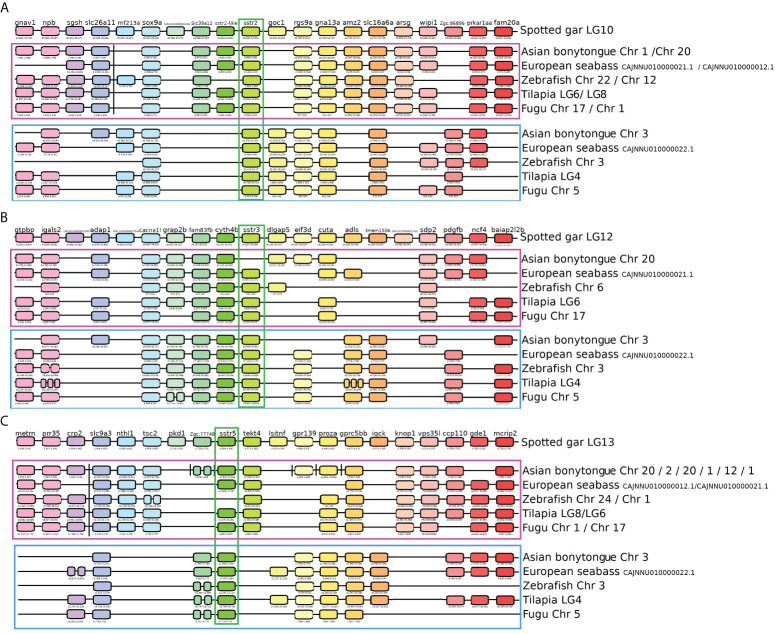
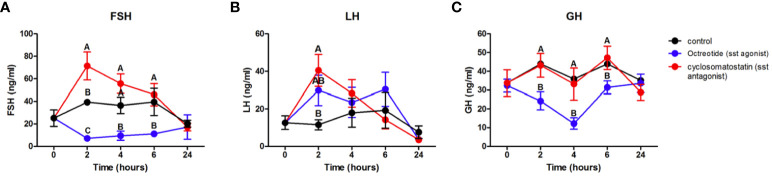
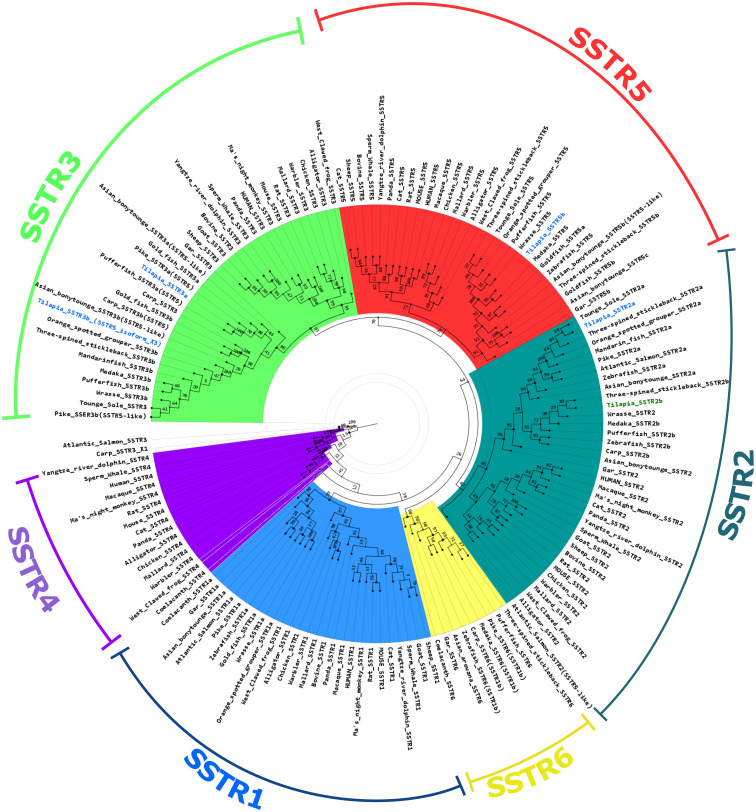
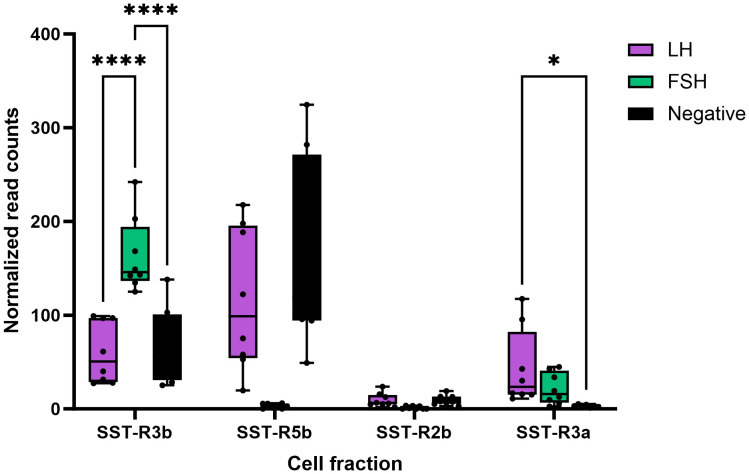
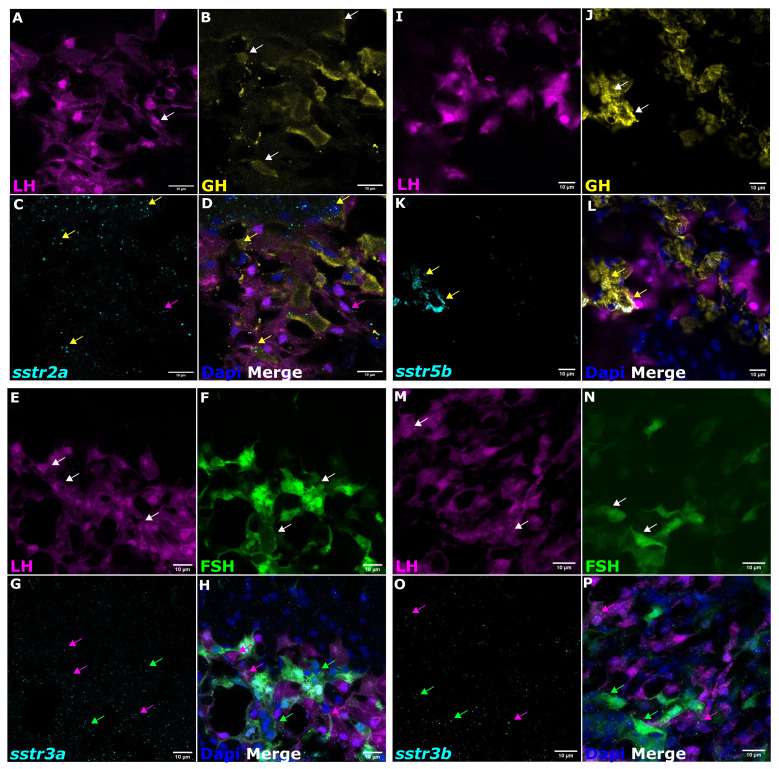
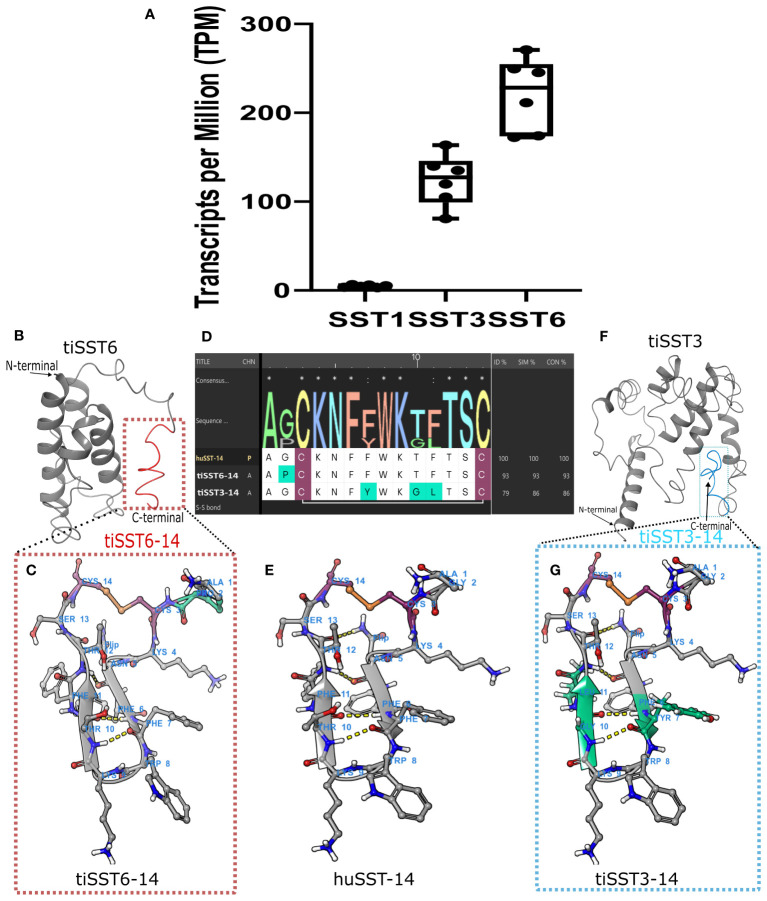
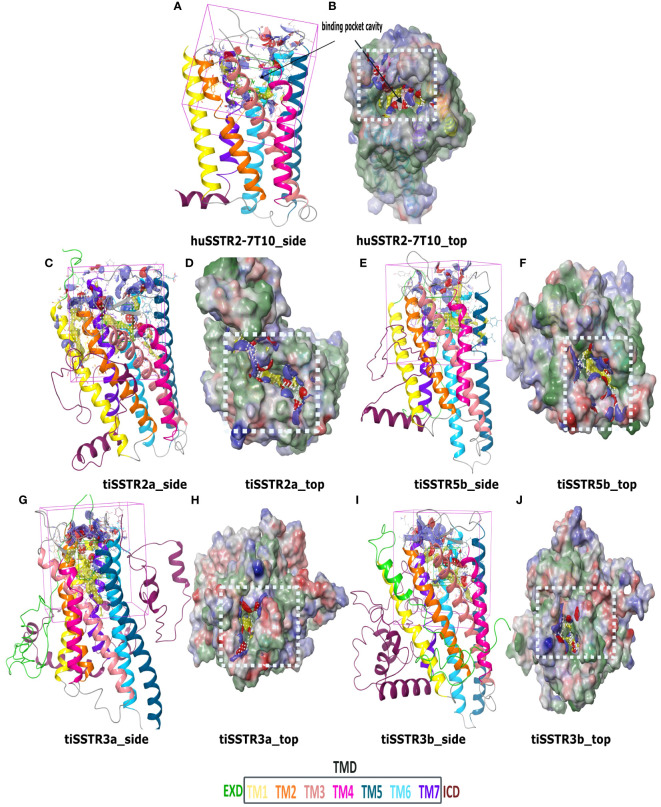
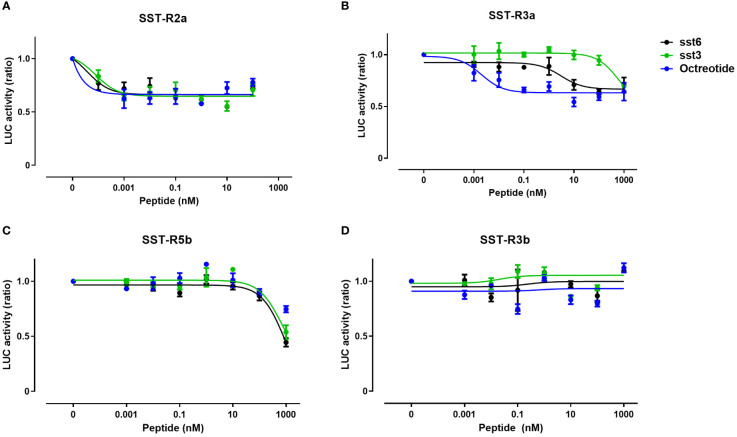
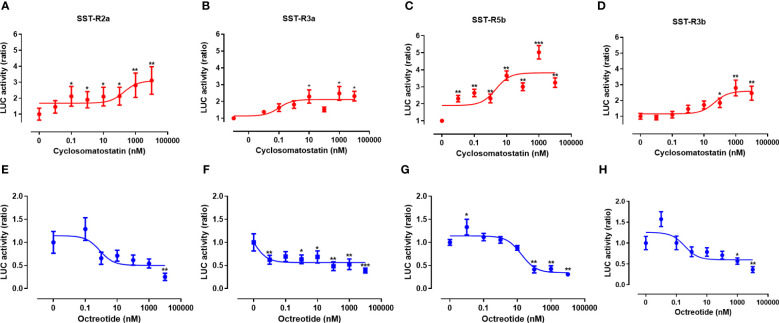
Somatostatin (SST) plays diverse physiological roles in vertebrates, particularly in regulating growth hormone secretion from the pituitary. While the function of SST as a neuromodulator has been studied extensively, its role in fish and mammalian reproduction remains poorly understood. To address this gap, we investigated the involvement of the somatostatin system in the regulation of growth and reproductive hormones in tilapia. RNA sequencing of mature tilapia brain tissue revealed the presence of three SST peptides: SST6, SST3, and low levels of SST1. Four different isoforms of the somatostatin receptor (SSTR) subfamily were also identified in the tilapia genome. Phylogenetic and synteny analysis identified tiSSTR2-like as the root of the tree, forming two mega clades, with SSTR1 and SSTR4 in one and SSTR2a, SSTR3a, and SSTR5b in the other. Interestingly, the tiSSTR-5 isoforms 5x1, 5x2, and 5x3 were encoded in the gene and were an artifact of misperception in the nomenclature in the database. RNA-seq of separated pituitary cell populations showed that SSTRs were expressed in gonadotrophs, with enriched in luteinizing hormone (LH) cells and significantly enriched in follicle-stimulating hormone (FSH) cells. Notably, cyclosomatostatin, an SSTR antagonist, induced cAMP activity in all SSTRs, with SSTR3a displaying the highest response, whereas octreotide, an SSTR agonist, showed a binding profile like that observed in human receptors. Binding site analysis of tiSSTRs from tilapia pituitary cells revealed the presence of canonical binding sites characteristic of peptide-binding class A G-protein-coupled receptors. Based on these findings, we explored the effect of somatostatin on gonadotropin release from the pituitary . Whereas cyclosomatostatin increased LH and FSH plasma levels at 2 h post-injection, octreotide decreased FSH levels after 2 h, but the LH levels remained unaffected. Overall, our findings provide important insights into the somatostatin system and its mechanisms of action, indicating a potential role in regulating growth and reproductive hormones. Further studies of the complex interplay between SST, its receptors, and reproductive hormones may advance reproductive control and management in cultured populations.
生长抑素(SST)在脊椎动物中发挥着多种生理作用,特别是在调节垂体生长激素的分泌方面。虽然 SST 作为神经调节剂的功能已经得到了广泛的研究,但它在鱼类和哺乳动物生殖中的作用仍知之甚少。为了解决这一空白,我们研究了 SST 系统在罗非鱼生长和生殖激素调节中的作用。成熟罗非鱼脑组织的 RNA 测序显示存在三种 SST 肽:SST6、SST3 和低水平的 SST1。在罗非鱼基因组中还发现了四种不同的生长抑素受体(SSTR)亚家族的同工型。系统发育和基因同线性分析表明 tiSSTR2 样是树的根,形成两个超级进化枝,其中 SSTR1 和 SSTR4 在一个枝上,SSTR2a、SSTR3a 和 SSTR5b 在另一个枝上。有趣的是,tiSSTR-5 同工型 5x1、5x2 和 5x3 被编码在 基因中,这是数据库中命名法误解的一个产物。分离的垂体细胞群体的 RNA-seq 显示 SSTRs 在促性腺激素细胞中表达,其中 在黄体生成素(LH)细胞中富集, 在卵泡刺激素(FSH)细胞中显著富集。值得注意的是,环生长抑素,一种 SSTR 拮抗剂,在所有 SSTR 中诱导 cAMP 活性,其中 SSTR3a 表现出最高的反应,而奥曲肽,一种 SSTR 激动剂,表现出与人类受体观察到的类似的结合谱。从罗非鱼垂体细胞中 tiSSTRs 的结合位点分析表明存在特征性的肽结合 A 类 G 蛋白偶联受体的经典结合位点。基于这些发现,我们探讨了生长抑素对垂体促性腺激素释放的影响。虽然环生长抑素在注射后 2 小时增加了 LH 和 FSH 的血浆水平,但奥曲肽在 2 小时后降低了 FSH 水平,但 LH 水平不受影响。总的来说,我们的研究结果为生长抑素系统及其作用机制提供了重要的见解,表明其在调节生长和生殖激素方面可能发挥作用。进一步研究 SST、其受体和生殖激素之间的复杂相互作用,可能会促进生殖控制和养殖种群的管理。