Department of Gynecology with Center of Oncological Surgery, Charité-University Hospital Berlin, Charitéplatz 1, 10117, Berlin, Germany.
Department of Gynecology, St-Franziskus Hospital, Münster, Germany.
Arch Gynecol Obstet. 2024 Nov;310(5):2617-2621. doi: 10.1007/s00404-024-07588-x. Epub 2024 Jul 8.
We present the rare case of an 18-year-old patient with a Dicer-1 mutation-associated sarcoma of the cervix uteri.
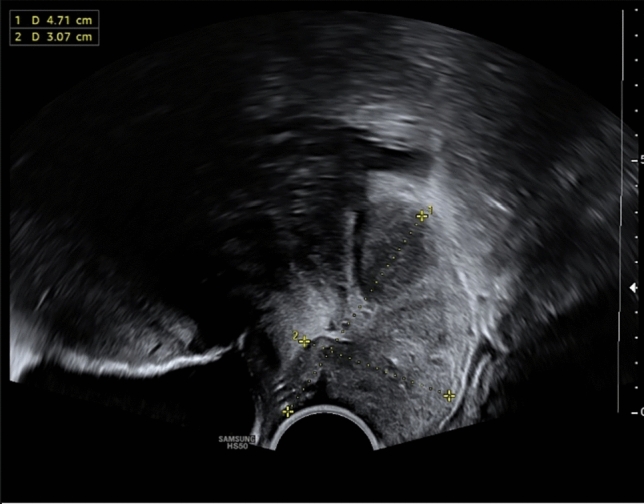
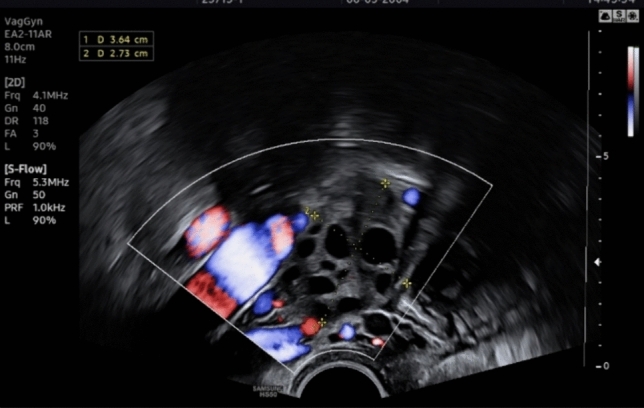
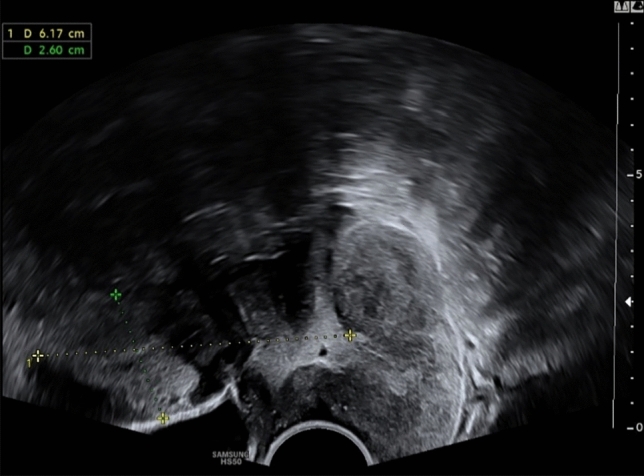
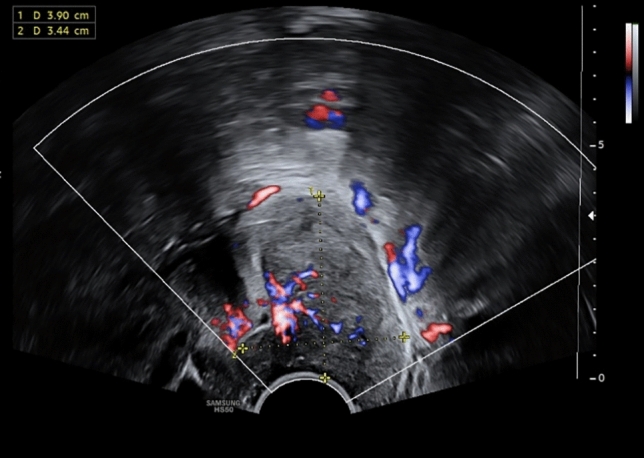
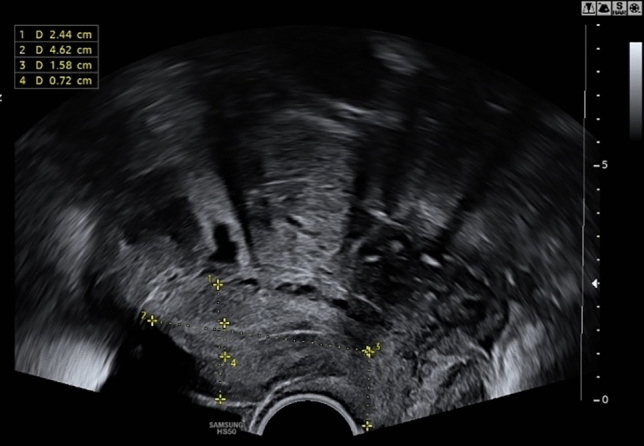
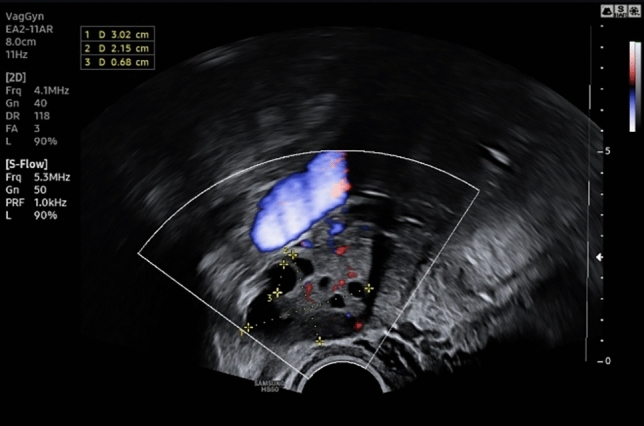
The patient presented with irregular vaginal bleeding in July 2022. The clinical examination showed an exophytic tumor of the cervix, uterus and ovaries were normal in sonogram. The tumor of the cervix was resected, followed by a diagnostic hysteroscopy and abrasion of the uterine cervix and cavity. Hysteroscopy showed normal findings of the cervix and uterus. After diagnosis of a highly malignant Dicer-1 mutation-associated sarcoma of the cervix, cryopreservation of oocytes was realized. Based on the principle of obtaining maximum oncological safety while preserving fertility in this 18-year-old patient, we recommended chemotherapy rather than radiation with its far severe implications on the patient´s reproductive organs. 4 cycles of chemotherapy consisting of doxorubicin and ifosfamide were applied until December 2022. After re-staging in December 2022 via CT scan and MRI, the abdomen and pelvis as well as control hysteroscopy and abrasion were unremarkable. Until now, the patient is tumor free.
Primary sarcomas of the cervix are very rare. Recent literature hints towards a distinct DICER-1 sarcoma entity characterized by specific mutational clusters. Limited follow-up data suggested that DICER1-mutant tumors might exhibit a less aggressive clinical course than DICER1-wild-type tumors.
Decision-making in case of rare histological entities with sparse recommendations in the literature poses a challenge to the treating physician. Treatment strategies should consider oncological safety as well as options of preserving fertility. Gonadotoxic potential of different strategies should be taken into consideration and discussed in detail with the affected patient.
我们报告了一例罕见的 18 岁患者,其患有与 Dicer-1 突变相关的宫颈癌肉瘤。
患者于 2022 年 7 月出现不规则阴道出血。临床检查显示宫颈外生性肿瘤,超声检查子宫和卵巢正常。切除宫颈肿瘤后,行诊断性宫腔镜检查和宫颈及宫腔刮宫。宫腔镜检查显示宫颈和子宫正常。诊断为高度恶性 Dicer-1 突变相关宫颈癌肉瘤后,实现了卵母细胞的冷冻保存。基于在这位 18 岁患者中获得最大肿瘤安全性同时保留生育能力的原则,我们建议进行化疗而不是放疗,因为放疗对患者的生殖器官有严重影响。应用多柔比星和顺铂 4 个周期的化疗,直至 2022 年 12 月。2022 年 12 月通过 CT 扫描和 MRI 重新分期后,腹部和骨盆以及控制宫腔镜检查和刮宫术均未见异常。直到现在,患者无肿瘤。
宫颈原发性肉瘤非常罕见。最近的文献提示存在一种独特的 DICER-1 肉瘤实体,其特征是特定的突变簇。有限的随访数据表明,DICER1 突变型肿瘤的临床过程可能不如 DICER1 野生型肿瘤具有侵袭性。
在文献中建议有限的罕见组织学实体的情况下,决策对治疗医生提出了挑战。治疗策略应考虑肿瘤安全性以及保留生育能力的选择。应考虑不同策略的性腺毒性潜力,并与受影响的患者详细讨论。