Department of Health Management, Nanfang Hospital, Southern Medical University, Guangzhou, 510515, China.
Guangdong Provincial Key Laboratory of Viral Hepatitis Research, Department of Infectious Diseases, Nanfang Hospital, Southern Medical University, Guangzhou, 510515, China.
Adv Sci (Weinh). 2024 Sep;11(34):e2404047. doi: 10.1002/advs.202404047. Epub 2024 Jul 8.
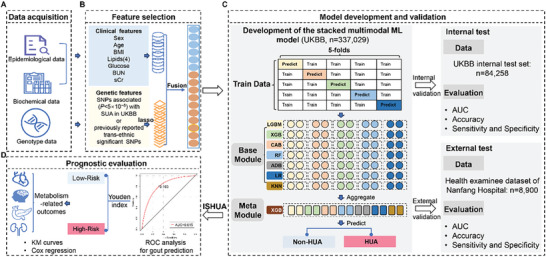
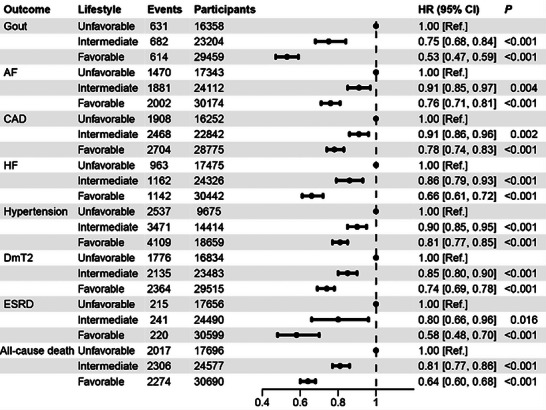
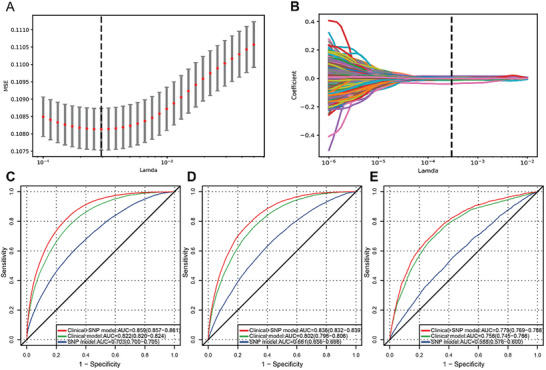
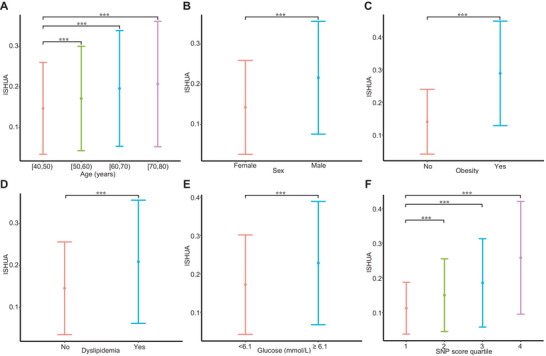
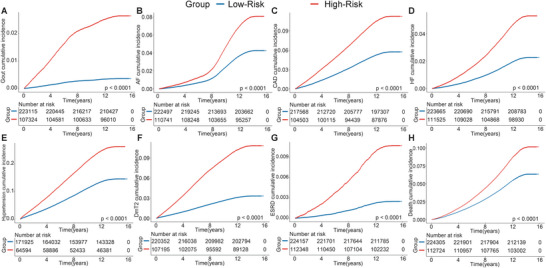
Hyperuricemia (HUA) has emerged as the second most prevalent metabolic disorder characterized by prolonged and asymptomatic period, triggering gout and metabolism-related outcomes. Early detection and prognosis prediction for HUA and gout are crucial for pre-emptive interventions. Integrating genetic and clinical data from 421287 UK Biobank and 8900 Nanfang Hospital participants, a stacked multimodal machine learning model is developed and validated to synthesize its probabilities as an in-silico quantitative marker for hyperuricemia (ISHUA). The model demonstrates satisfactory performance in detecting HUA, exhibiting area under the curves (AUCs) of 0.859, 0.836, and 0.779 within the train, internal, and external test sets, respectively. ISHUA is significantly associated with gout and metabolism-related outcomes, effectively classifying individuals into low- and high-risk groups for gout in the train (AUC, 0.815) and internal test (AUC, 0.814) sets. The high-risk group shows increased susceptibility to metabolism-related outcomes, and participants with intermediate or favorable lifestyle profiles have hazard ratios of 0.75 and 0.53 for gout compared with those with unfavorable lifestyles. Similar trends are observed for other metabolism-related outcomes. The multimodal machine learning-based ISHUA marker enables personalized risk stratification for gout and metabolism-related outcomes, and it is unveiled that lifestyle changes can ameliorate these outcomes within high-risk group, providing guidance for preventive interventions.
高尿酸血症(HUA)已成为第二大常见代谢紊乱,其特征为长时间无症状,并可引发痛风和代谢相关结局。早期发现和预测 HUA 和痛风对于预防性干预至关重要。通过整合来自 421287 名英国生物银行和 8900 名南方医院参与者的遗传和临床数据,开发并验证了一个堆叠式多模态机器学习模型,以综合其概率作为一种用于高尿酸血症(ISHUA)的虚拟定量标志物。该模型在检测 HUA 方面表现出令人满意的性能,在训练、内部和外部测试集中的曲线下面积(AUC)分别为 0.859、0.836 和 0.779。ISHUA 与痛风和代谢相关结局显著相关,能够有效地将个体分为痛风的低风险和高风险组,在训练集(AUC,0.815)和内部测试集(AUC,0.814)中进行分类。高风险组显示出对代谢相关结局的更高易感性,与生活方式不利的参与者相比,生活方式中等或有利的参与者发生痛风的风险比分别为 0.75 和 0.53。对于其他代谢相关结局也观察到类似的趋势。基于多模态机器学习的 ISHUA 标志物可实现痛风和代谢相关结局的个性化风险分层,并且揭示了生活方式改变可以改善高风险组中的这些结局,为预防性干预提供了指导。