Nuffield Department of Medicine Centre for Global Health Research, University of Oxford, S Parks Rd, Oxford, OX1 3SY, UK.
East & North Hertfordshire NHS Trust, Stevenage, UK.
BMC Med. 2024 Jul 8;22(1):286. doi: 10.1186/s12916-024-03509-6.
Advanced practice providers (APPs), including physician assistants/associates (PAs), nurse practitioners (NPs) and other non-physician roles, have been developed largely to meet changing healthcare demand and increasing workforce shortages. First introduced in primary care in the US, APPs are prevalent in secondary care across different specialty areas in different countries around the world. In this scoping review, we aimed to summarise the factors influencing the development, recruitment, integration, retention and career development of APP roles in hospital health care teams.
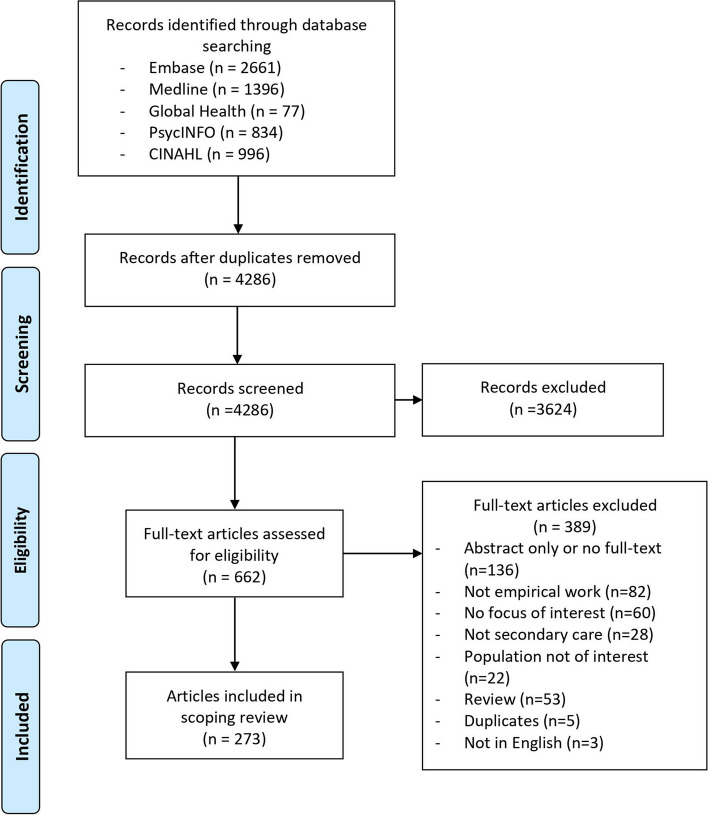
We conducted a scoping review and searched Ovid MEDLINE, Ovid Embase, Ovid Global Health, Ovid PsycINFO and EBSCOhost CINAHL to obtain relevant articles published between Jan 2000 and Apr 2023 that focused on workforce management of APP roles in secondary care. Articles were screened by two reviewers independently. Data from included articles were charted and coded iteratively to summarise factors influencing APP development, recruitment, integration, retention and career development across different health system structural levels (macro-, meso- and micro-level).
We identified and analysed 273 articles that originated mostly from high-income countries, e.g. the US (n = 115) and the UK (n = 52), and primarily focused on NP (n = 183) and PA (n = 41). At the macro-level, broader workforce supply, national/regional workforce policies such as work-hour restrictions on physicians, APP scope of practice regulations, and views of external collaborators, stakeholders and public representation of APPs influenced organisations' decisions on developing and managing APP roles. At the meso-level, organisational and departmental characteristics, organisational planning, strategy and policy, availability of resources, local experiences and evidence as well as views and perceptions of local organisational leaders, champions and other departments influenced all stages of APP role management. Lastly at the micro-level, individual APPs' backgrounds and characteristics, clinical team members' perceptions, understanding and relationship with APP roles, and patient perceptions and preferences also influenced how APPs are developed, integrated and retained.
We summarised a wide range of factors influencing APP role development and management in secondary care teams. We highlighted the importance for organisations to develop context-specific workforce solutions and strategies with long-term investment, significant resource input and transparent processes to tackle evolving healthcare challenges.
高级执业医师(APPs),包括医师助理/医师(PAs)、护士从业者(NPs)和其他非医师角色,主要是为了满足不断变化的医疗需求和日益严重的劳动力短缺而发展起来的。APP 首先在美国的初级保健中引入,现在在世界各国不同专业领域的二级保健中普遍存在。在本次范围界定综述中,我们旨在总结影响医院保健团队中 APP 角色发展、招聘、整合、留用和职业发展的因素。
我们进行了范围界定综述,并在 Ovid MEDLINE、Ovid Embase、Ovid Global Health、Ovid PsycINFO 和 EBSCOhost CINAHL 中进行了检索,以获取 2000 年 1 月至 2023 年 4 月期间发表的关于二级保健中 APP 角色劳动力管理的相关文章。由两名评审员独立筛选文章。对纳入的文章进行图表绘制和编码,以总结不同卫生系统结构层次(宏观、中观和微观层次)上影响 APP 发展、招聘、整合、留用和职业发展的因素。
我们确定并分析了 273 篇文章,这些文章主要来自高收入国家,例如美国(n = 115)和英国(n = 52),主要关注 NP(n = 183)和 PA(n = 41)。在宏观层面上,更广泛的劳动力供应、国家/地区劳动力政策(例如对医生的工作时间限制)、APP 实践范围法规以及外部合作者、利益相关者和公众对 APP 的看法,都影响了组织开发和管理 APP 角色的决策。在中观层面上,组织和部门的特点、组织规划、战略和政策、资源的可用性、当地经验和证据以及当地组织领导、拥护者和其他部门的看法和看法,都影响了 APP 角色管理的所有阶段。最后在微观层面上,个体 APP 的背景和特征、临床团队成员对 APP 角色的看法、理解和关系以及患者的看法和偏好,也影响了 APP 的发展、整合和留用。
我们总结了影响二级保健团队中 APP 角色发展和管理的广泛因素。我们强调了组织制定具有长期投资、大量资源投入和透明流程的特定于背景的劳动力解决方案和策略的重要性,以应对不断变化的医疗保健挑战。