Watanangura Antja, Meller Sebastian, Farhat Nareed, Suchodolski Jan S, Pilla Rachel, Khattab Mohammad R, Lopes Bruna C, Bathen-Nöthen Andrea, Fischer Andrea, Busch-Hahn Kathrin, Flieshardt Cornelia, Gramer Martina, Richter Franziska, Zamansky Anna, Volk Holger A
Department of Small Animal Medicine and Surgery, University of Veterinary Medicine Hannover, Hannover, Germany.
Center for Systems Neuroscience (ZSN), Hannover, Germany.
Front Vet Sci. 2024 Jun 21;11:1385469. doi: 10.3389/fvets.2024.1385469. eCollection 2024.
Anxiety and cognitive dysfunction are frequent, difficult to treat and burdensome comorbidities in human and canine epilepsy. Fecal microbiota transplantation (FMT) has been shown to modulate behavior in rodent models by altering the gastrointestinal microbiota (GIM). This study aims to investigate the beneficial effects of FMT on behavioral comorbidities in a canine translational model of epilepsy.
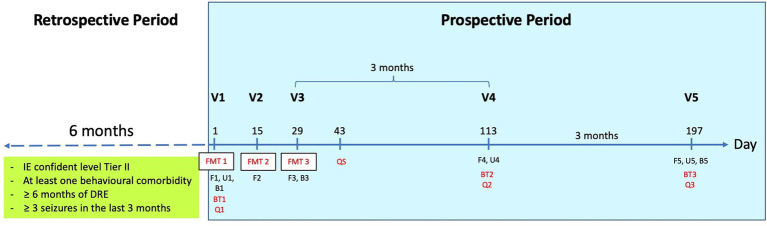
Nine dogs with drug-resistant epilepsy (DRE) and behavioral comorbidities were recruited. The fecal donor had epilepsy with unremarkable behavior, which exhibited a complete response to phenobarbital, resulting in it being seizure-free long term. FMTs were performed three times, two weeks apart, and the dogs had follow-up visits at three and six months after FMTs. Comprehensive behavioral analysis, including formerly validated questionnaires and behavioral tests for attention deficit hyperactivity disorder (ADHD)- and fear- and anxiety-like behavior, as well as cognitive dysfunction, were conducted, followed by objective computational analysis. Blood samples were taken for the analysis of antiseizure drug (ASD) concentrations, hematology, and biochemistry. Urine neurotransmitter concentrations were measured. Fecal samples were subjected to analysis using shallow DNA shotgun sequencing, real-time polymerase chain reaction (qPCR)-based Dysbiosis Index (DI) assessment, and short-chain fatty acid (SCFA) quantification.
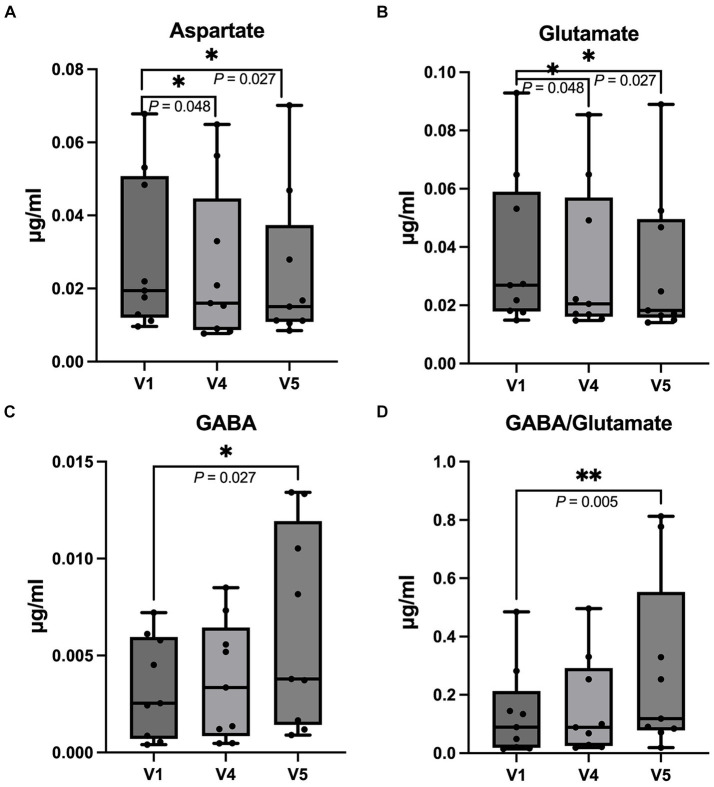
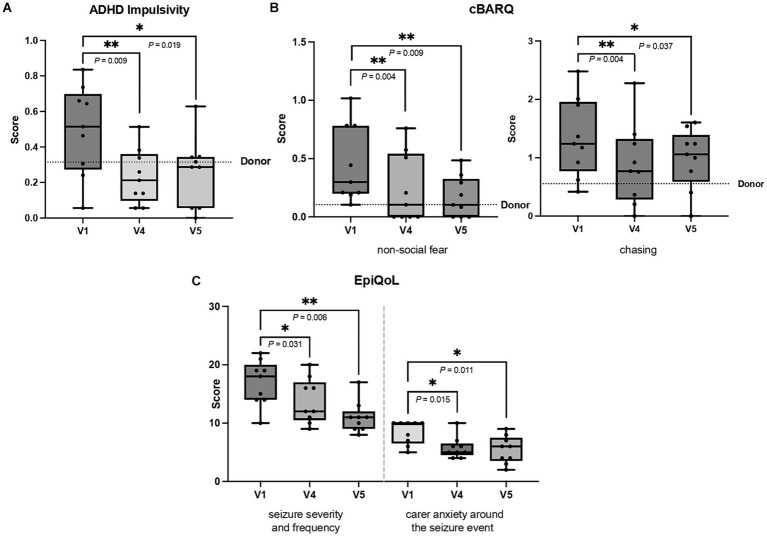
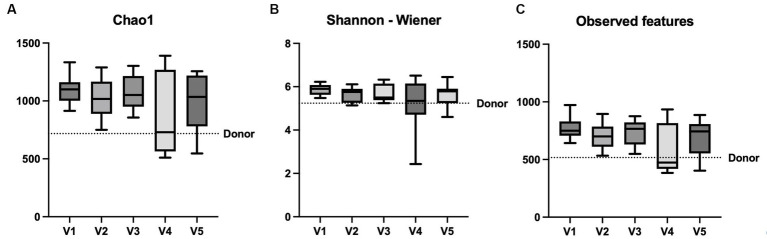
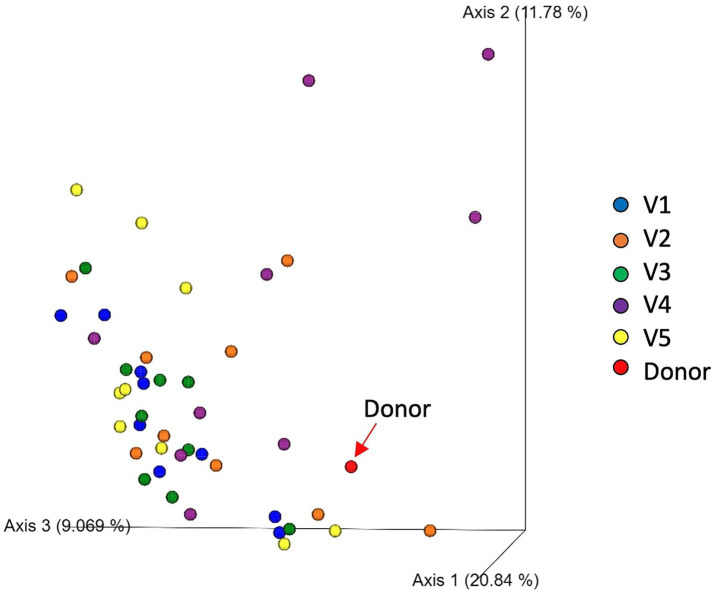
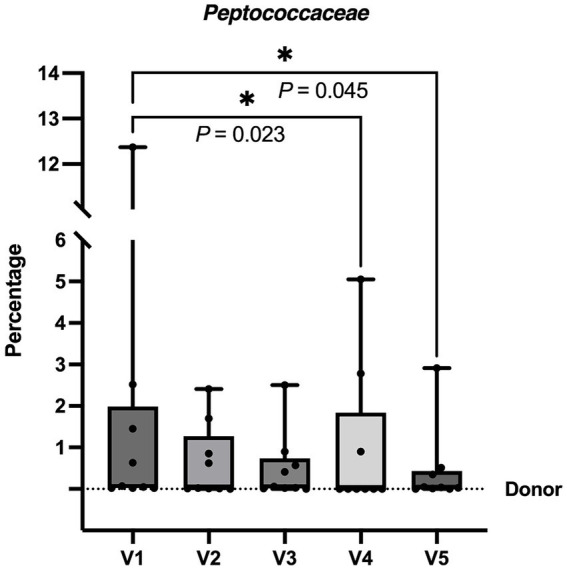
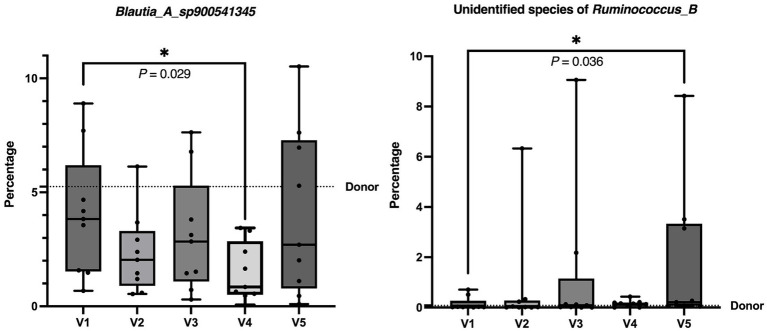
Following FMT, the patients showed improvement in ADHD-like behavior, fear- and anxiety-like behavior, and quality of life. The excitatory neurotransmitters aspartate and glutamate were decreased, while the inhibitory neurotransmitter gamma-aminobutyric acid (GABA) and GABA/glutamate ratio were increased compared to baseline. Only minor taxonomic changes were observed, with a decrease in Firmicutes and a species, while a species increased. Functional gene analysis, SCFA concentration, blood parameters, and ASD concentrations remained unchanged.
Behavioral comorbidities in canine IE could be alleviated by FMT. This study highlights FMT's potential as a novel approach to improving behavioral comorbidities and enhancing the quality of life in canine patients with epilepsy.
焦虑和认知功能障碍是人类和犬类癫痫中常见、难以治疗且负担沉重的共病。粪便微生物群移植(FMT)已被证明可通过改变胃肠道微生物群(GIM)来调节啮齿动物模型的行为。本研究旨在探讨FMT对癫痫犬类转化模型中行为共病的有益影响。
招募了9只患有耐药性癫痫(DRE)和行为共病的犬。粪便供体患有癫痫但行为无异常,对苯巴比妥表现出完全反应,长期无癫痫发作。进行了三次FMT,间隔两周,犬在FMT后三个月和六个月进行随访。进行了全面的行为分析,包括先前验证的问卷以及针对注意力缺陷多动障碍(ADHD)、恐惧和焦虑样行为以及认知功能障碍的行为测试,随后进行客观的计算分析。采集血样用于分析抗癫痫药物(ASD)浓度、血液学和生物化学。测量尿神经递质浓度。粪便样本采用浅层DNA鸟枪法测序、基于实时聚合酶链反应(qPCR)的失调指数(DI)评估和短链脂肪酸(SCFA)定量分析。
FMT后,患者在ADHD样行为、恐惧和焦虑样行为以及生活质量方面有所改善。与基线相比,兴奋性神经递质天冬氨酸和谷氨酸减少,而抑制性神经递质γ-氨基丁酸(GABA)和GABA/谷氨酸比值增加。仅观察到微小的分类学变化,厚壁菌门和一个物种减少,而一个物种增加。功能基因分析、SCFA浓度、血液参数和ASD浓度保持不变。
FMT可缓解犬类癫痫中的行为共病。本研究强调了FMT作为改善行为共病和提高癫痫犬类患者生活质量的新方法的潜力。