Yoneyama Yosuke, Zhang Ran-Ran, Kimura Masaki, Cai Yuqi, Adam Mike, Parameswaran Sreeja, Masaki Hideki, Mizuno Naoaki, Bhadury Joydeep, Maezawa So, Ochiai Hiroshi, Nakauchi Hiromitsu, Potter S Steven, Weirauch Matthew T, Takebe Takanori
Institute of Research, Tokyo Medical and Dental University, 1-5-45 Yushima, Bunkyo-ku, Tokyo 113-8510, Japan.
Department of Genome Biology, Graduate School of Medicine, Osaka University, Suita, Osaka 565-0871, Japan.
bioRxiv. 2024 Jun 27:2024.06.27.600209. doi: 10.1101/2024.06.27.600209.
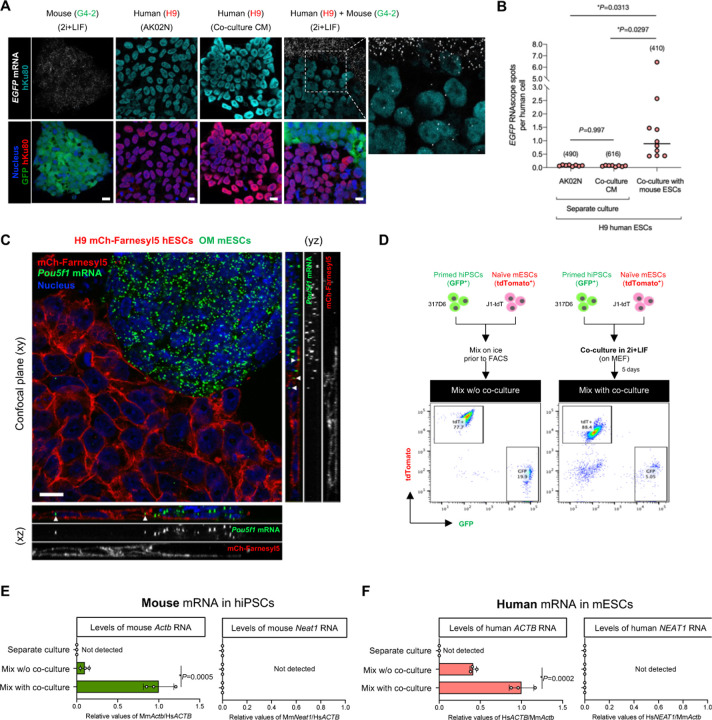
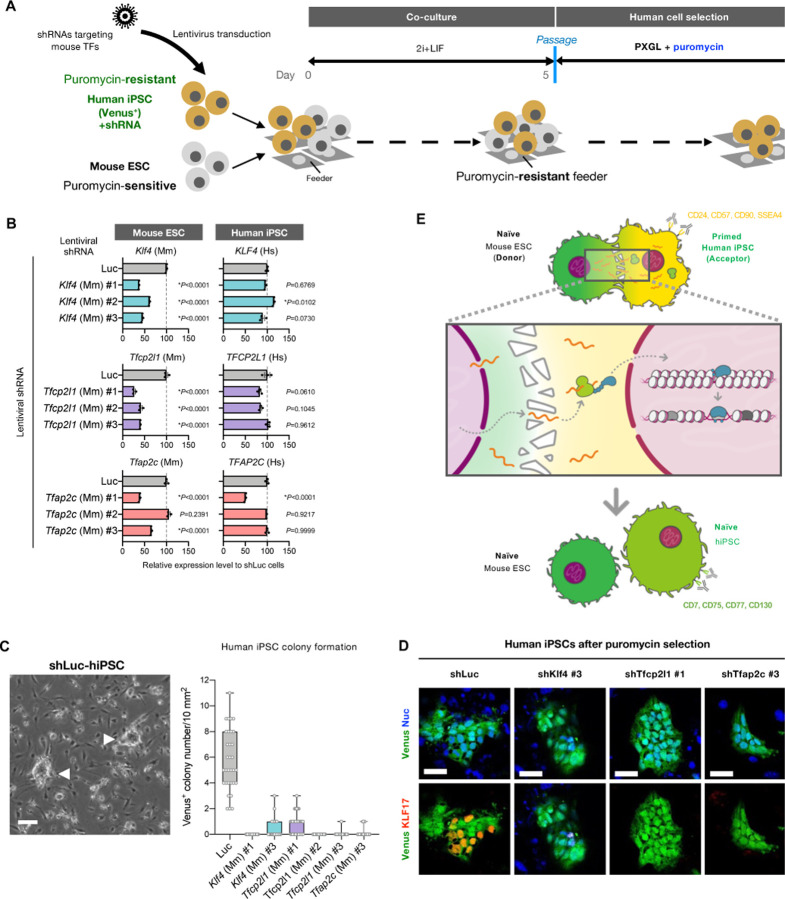
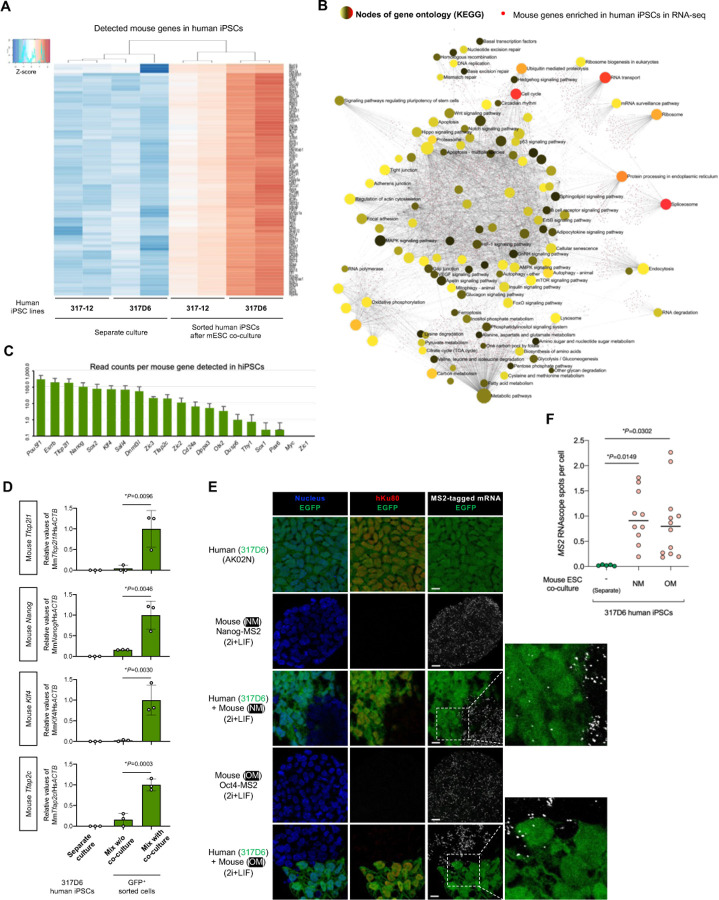
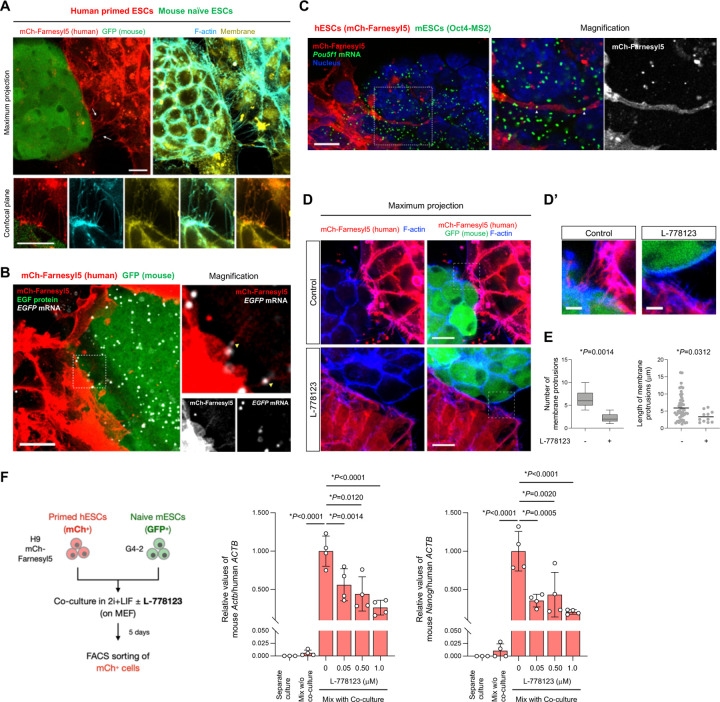
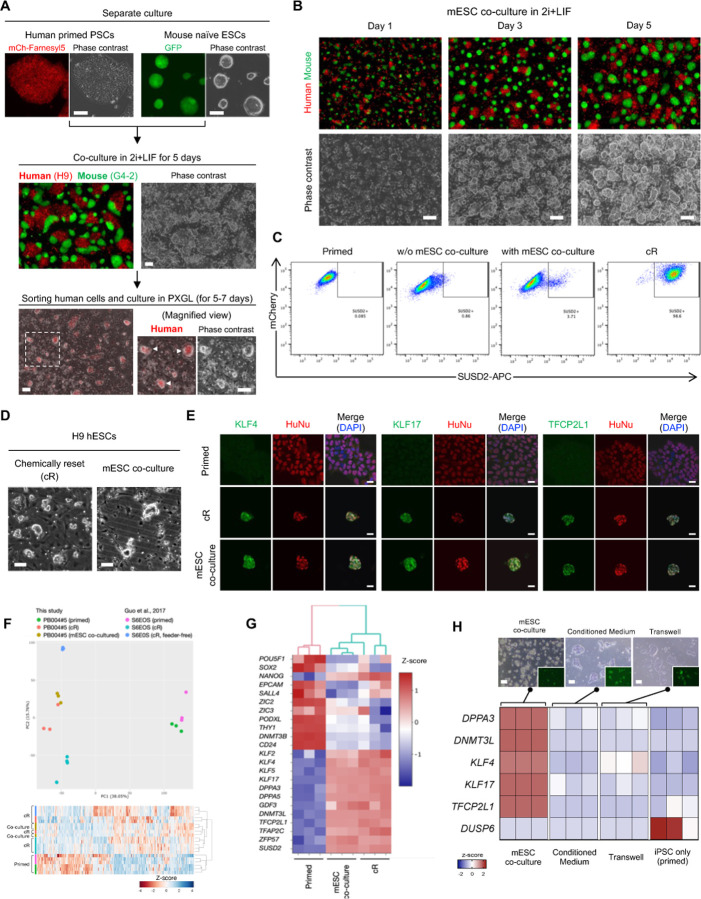
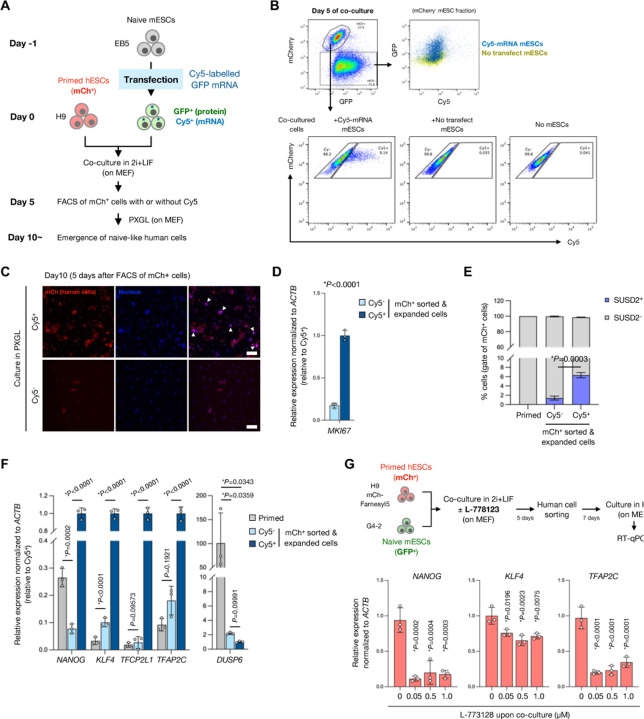
Inter-cellular transmission of mRNA is being explored in mammalian species using immortal cell lines (1-3). Here, we uncover an inter-cellular mRNA transfer phenomenon that allows for the adaptation and reprogramming of human primed pluripotent stem cells (hPSCs). This process is induced by the direct cell contact-mediated coculture with mouse embryonic stem cells (mESCs) under the condition impermissible for human primed PSC culture. Mouse-derived mRNA contents are transmitted into adapted hPSCs only in the coculture. Transfer-specific mRNA analysis show the enrichment for divergent biological pathways involving transcription/translational machinery and stress-coping mechanisms, wherein such transfer is diminished when direct cell contacts are lost. After 5 days of mESC culture, surface marker analysis, and global gene profiling confirmed that mRNA transfer-prone hPSC efficiently gains a naïve-like state. Furthermore, transfer-specific knockdown experiments targeting mouse-specific transcription factor-coding mRNAs in hPSC show that mouse-derived , and are indispensable for human naïve-like conversion. Thus, inter-species mRNA transfer triggers cellular reprogramming in mammalian cells. Our results support that episodic mRNA transfer can occur in cell cooperative and competitive processes(4), which provides a fresh perspective on understanding the roles of mRNA mobility for intra- and inter-species cellular communications.
目前正在利用永生细胞系在哺乳动物物种中探索mRNA的细胞间传递(1-3)。在此,我们发现了一种细胞间mRNA转移现象,该现象可使人类始发态多能干细胞(hPSC)发生适应性变化和重编程。此过程是在不适合人类始发态PSC培养的条件下,通过与小鼠胚胎干细胞(mESC)直接细胞接触介导的共培养诱导产生的。仅在共培养过程中,小鼠来源的mRNA成分会转移到适应性改变的hPSC中。对转移特异性mRNA的分析表明,涉及转录/翻译机制和应激应对机制的不同生物学途径出现富集,而当直接细胞接触丧失时,这种转移会减少。在mESC共培养5天后,表面标志物分析和全基因组分析证实,易于发生mRNA转移的hPSC有效地获得了一种幼稚样状态。此外,在hPSC中针对小鼠特异性转录因子编码mRNA进行的转移特异性敲低实验表明,小鼠来源的 、 和 对于人类幼稚样转变是不可或缺的。因此,种间mRNA转移触发了哺乳动物细胞中的细胞重编程。我们的结果支持在细胞合作与竞争过程中可能发生偶发性mRNA转移(4),这为理解mRNA流动性在种内和种间细胞通讯中的作用提供了新的视角。