Department of Cardiology, The Second Affiliated Hospital of Harbin Medical University, Harbin, 150086, China.
The Key Laboratory of Myocardial Ischemia, Harbin, 150086, China.
Adv Sci (Weinh). 2024 Sep;11(34):e2310227. doi: 10.1002/advs.202310227. Epub 2024 Jul 10.
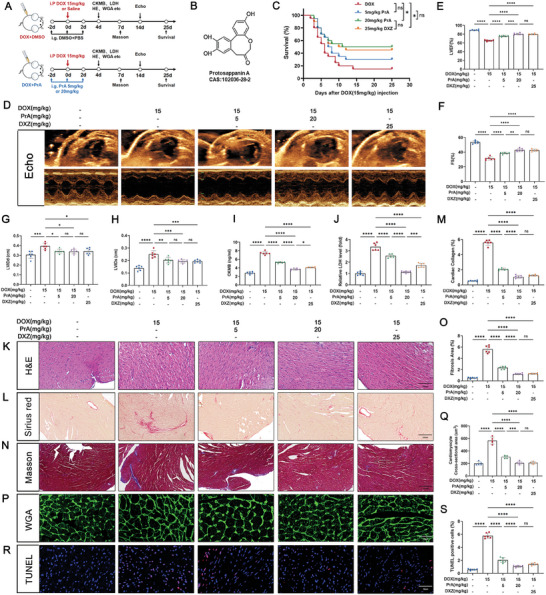
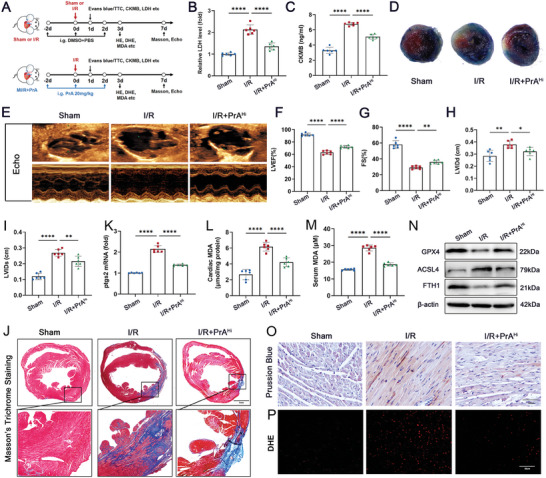
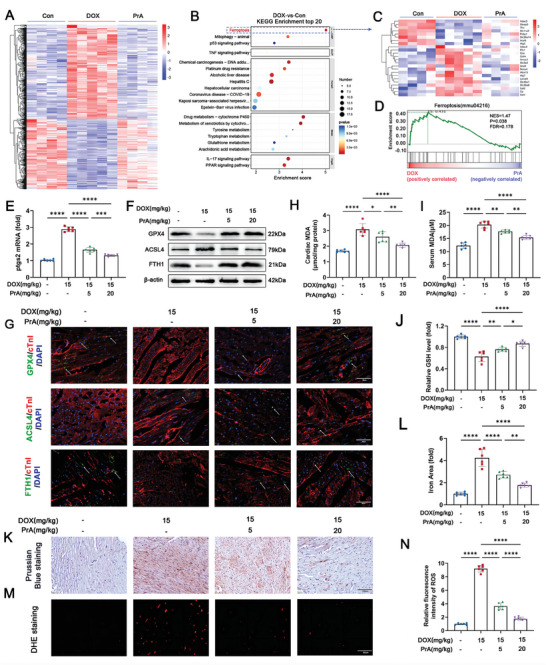
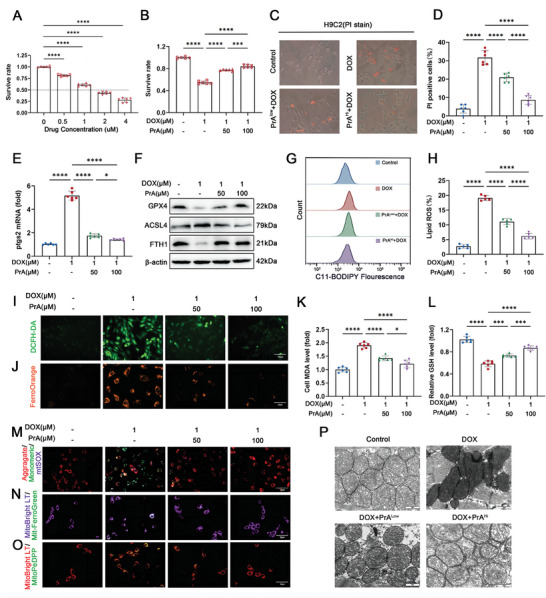
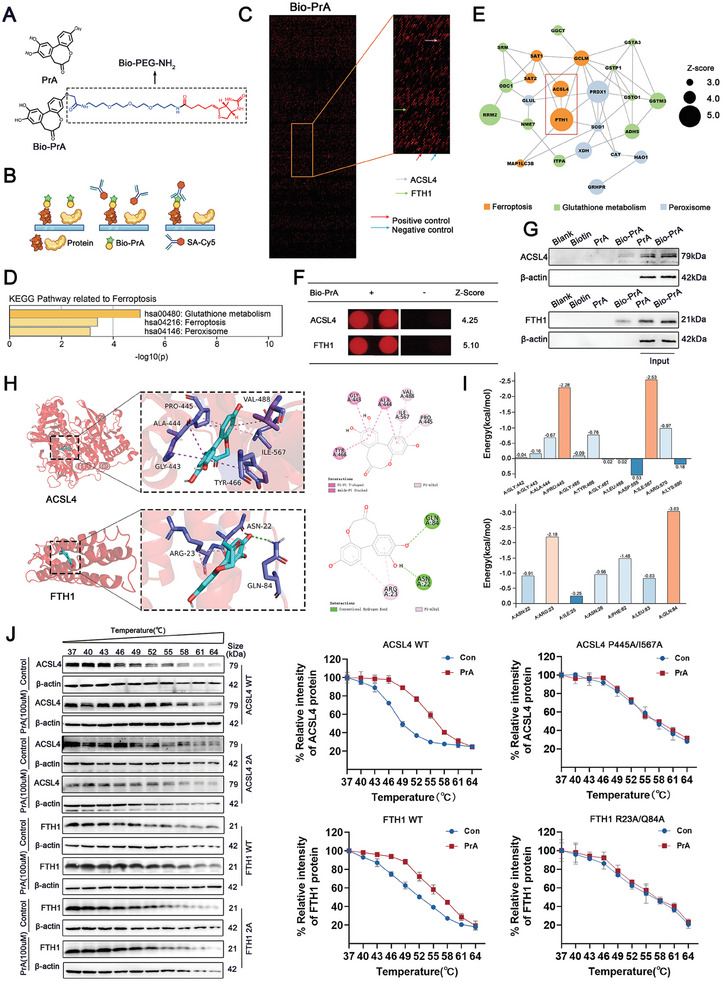
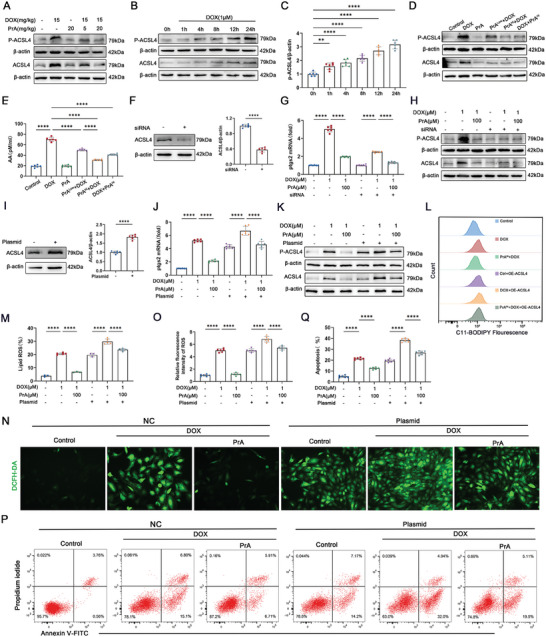
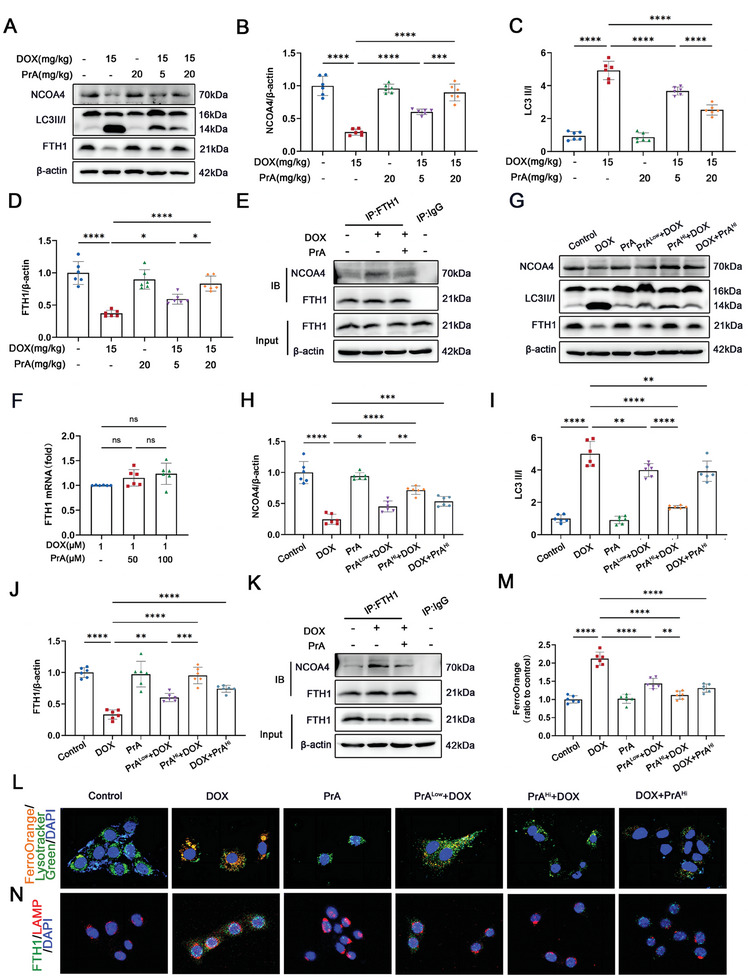
Doxorubicin (DOX) is an effective anticancer agent, but its clinical utility is constrained by dose-dependent cardiotoxicity, partly due to cardiomyocyte ferroptosis. However, the progress of developing cardioprotective medications to counteract ferroptosis has encountered obstacles. Protosappanin A (PrA), an anti-inflammatory compound derived from hematoxylin, shows potential against DOX-induced cardiomyopathy (DIC). Here, it is reported that PrA alleviates myocardial damage and dysfunction by reducing DOX-induced ferroptosis and maintaining mitochondrial homeostasis. Subsequently, the molecular target of PrA through proteome microarray, molecular docking, and dynamics simulation is identified. Mechanistically, PrA physically binds with ferroptosis-related proteins acyl-CoA synthetase long-chain family member 4 (ACSL4) and ferritin heavy chain 1 (FTH1), ultimately inhibiting ACSL4 phosphorylation and subsequent phospholipid peroxidation, while also preventing FTH1 autophagic degradation and subsequent release of ferrous ions (Fe) release. Given the critical role of ferroptosis in the pathogenesis of ischemia-reperfusion (IR) injury, this further investigation posits that PrA can confer a protective effect against IR-induced cardiac damage by inhibiting ferroptosis. Overall, a novel pharmacological inhibitor is unveiled that targets ferroptosis and uncover a dual-regulated mechanism for cardiomyocyte ferroptosis in DIC, highlighting additional therapeutic options for chemodrug-induced cardiotoxicity and ferroptosis-triggered disorders.
多柔比星(DOX)是一种有效的抗癌药物,但由于剂量依赖性的心脏毒性,其临床应用受到限制,部分原因是心肌细胞发生铁死亡。然而,开发对抗铁死亡的心脏保护药物的进展遇到了障碍。来源于血根碱的抗炎化合物Protosappanin A(PrA)在对抗多柔比星诱导的心肌病(DIC)方面显示出潜力。本文报道了 PrA 通过减少 DOX 诱导的铁死亡和维持线粒体稳态来减轻心肌损伤和功能障碍。随后,通过蛋白质组微阵列、分子对接和动力学模拟确定了 PrA 的分子靶标。在机制上,PrA 与铁死亡相关蛋白酰基辅酶 A 合成酶长链家族成员 4(ACSL4)和铁蛋白重链 1(FTH1)发生物理结合,最终抑制 ACSL4 磷酸化和随后的磷脂过氧化,同时防止 FTH1 自噬降解和随后的亚铁离子(Fe)释放。鉴于铁死亡在缺血再灌注(IR)损伤发病机制中的关键作用,进一步的研究表明,PrA 通过抑制铁死亡对 IR 诱导的心脏损伤具有保护作用。总的来说,揭示了一种新型的铁死亡药理学抑制剂,针对铁死亡,并揭示了 DIC 中心肌细胞铁死亡的双重调节机制,为化学药物诱导的心脏毒性和铁死亡触发的疾病提供了更多的治疗选择。