Pharmacognosy Department, Faculty of Pharmacy, Ain Shams University, Cairo, 11566, Egypt.
Department of Pharmaceutical Sciences, College of Pharmacy, Gulf Medical University, P.O. Box 4184, Ajman, United Arab Emirates.
BMC Complement Med Ther. 2024 Jul 10;24(1):262. doi: 10.1186/s12906-024-04505-2.
Bitter orange (Citrus aurantium) is a fruiting shrub native to tropical and subtropical countries around the world and cultivated in many regions due to its nutraceutical value. The current study investigated the metabolic profiling and enzyme inhibitory activities of volatile constituents derived from the C. aurantium peel cultivated in Egypt by three different extraction methods.
The volatile chemical constituents of the peel of C. aurantium were isolated using three methods; steam distillation (SD), hydrodistillation (HD), and microwave-assisted hydrodistillation (MAHD), and then were investigated by GC-MS. The antioxidant potential was evaluated by different assays such as DPPH, ABTS, FRAP, CUPRAC, and phosphomolybdenum and metal chelating potential. Moreover, the effect of enzyme inhibition of the three essential oils was tested using BChE, AChE, tyrosinase, glucosidase, as well as amylase assays.
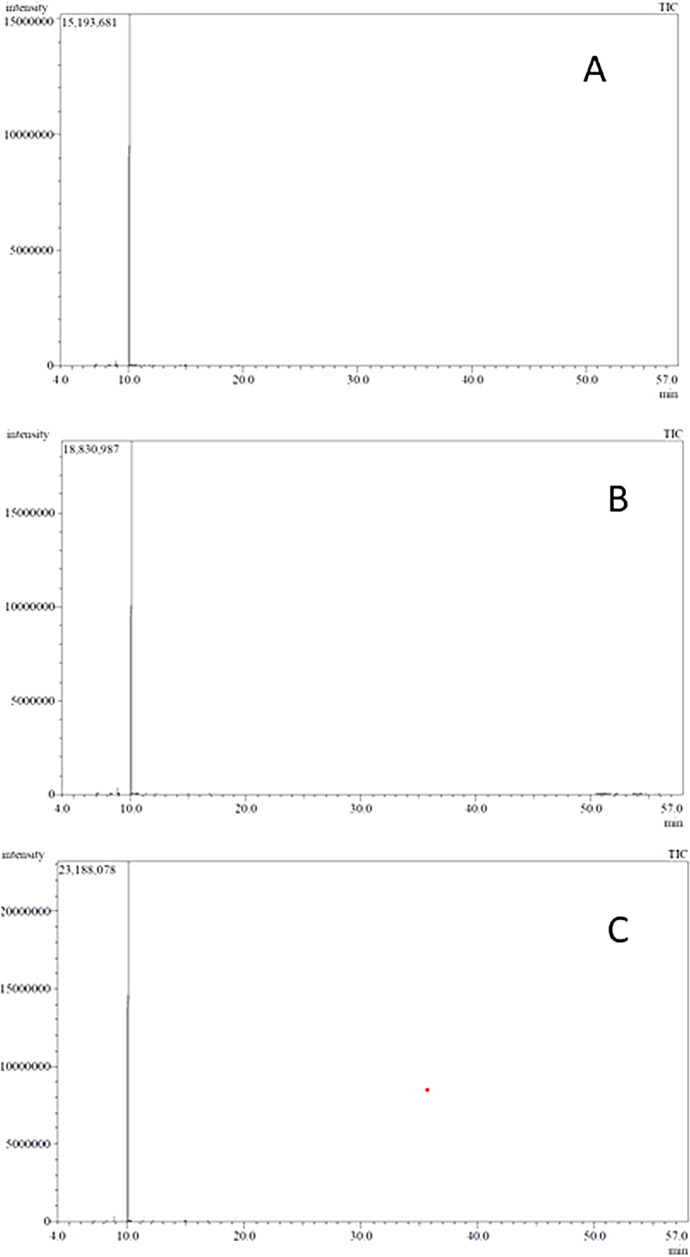
A total of six compounds were detected by GC/MS analysis. The major constituent obtained by all three extraction methods was limonene (98.86% by SD, 98.68% by HD, and 99.23% by MAHD). Differences in the composition of the compounds of the three oils were observed. The hydrodistillation technique has yielded the highest number of compounds, notably two oxygenated monoterpenes: linalool (0.12%) and α-terpineol acetate (0.1%).
In our study differences in the extraction methods of C. aurantium peel oils resulted in differences in the oils' chemical composition. Citrus essential oils and their components showed potential antioxidant, anticholinesterase, antimelanogenesis, and antidiabetic activities. The presence of linalool and α-terpineol acetate may explain the superior activity observed for the oil isolated by HD in both radical scavenging and AChE inhibition assays, as well as in the enzyme inhibition assays.
苦橙(Citrus aurantium)是一种原产于世界各地热带和亚热带国家的果实灌木,由于其具有营养保健价值,在许多地区都有种植。本研究采用三种不同的提取方法,对埃及种植的苦橙皮的挥发性成分的代谢谱和酶抑制活性进行了研究。
采用水蒸气蒸馏(SD)、水蒸馏(HD)和微波辅助水蒸馏(MAHD)三种方法提取苦橙皮的挥发性化学成分,并用 GC-MS 进行分析。采用 DPPH、ABTS、FRAP、CUPRAC 和磷钼酸盐法等不同方法评价抗氧化能力,同时还采用 BChE、AChE、酪氨酸酶、葡萄糖苷酶和淀粉酶测定法测定三种精油的酶抑制作用。
GC/MS 分析共检测到 6 种化合物。三种提取方法均以柠檬烯(SD 中 98.86%,HD 中 98.68%,MAHD 中 99.23%)为主。三种油的化合物组成存在差异。水蒸馏技术产生了最高数量的化合物,特别是两种含氧单萜:芳樟醇(0.12%)和乙酸α-松油醇(0.1%)。
本研究中,苦橙皮油的提取方法的差异导致了油的化学成分的差异。柑橘精油及其成分表现出潜在的抗氧化、抗乙酰胆碱酯酶、抗黑色素生成和抗糖尿病活性。芳樟醇和α-松油醇乙酸酯的存在可能解释了 HD 分离的油在自由基清除和 AChE 抑制测定中以及在酶抑制测定中观察到的优越活性。