Universidade Federal do Paraná, Departamento de Clínica Médica, Programa de Pós-Graduação em Medicina Interna e Ciências da Saúde, Curitiba, PR, Brazil.
Hospital Universitário Evangélico Mackenzie, Serviço de Nefrologia, Curitiba, PR, Brazil.
J Bras Nefrol. 2024 Jul 5;46(3):e20240013. doi: 10.1590/2175-8239-JBN-2024-0013en. eCollection 2024.
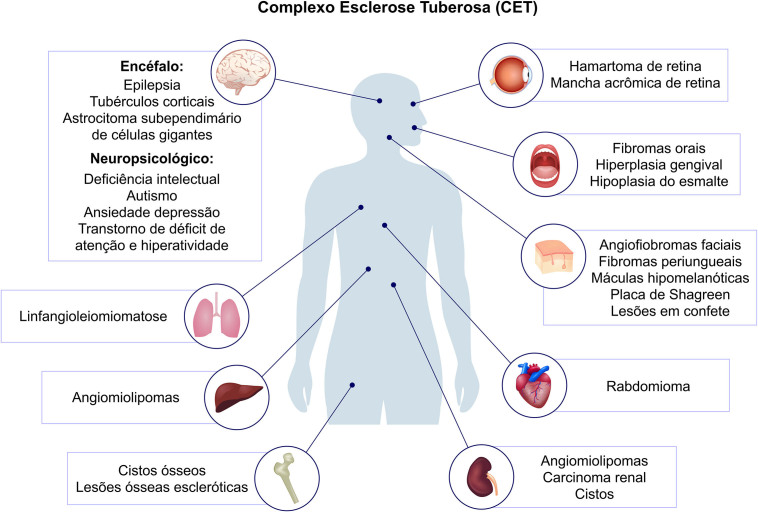
Tuberous sclerosis complex (TSC) is an autosomal dominant disease characterized by the development of hamartomas in the central nervous system, heart, skin, lungs, and kidneys and other manifestations including seizures, cortical tubers, radial migration lines, autism and cognitive disability. The disease is associated with pathogenic variants in the TSC1 or TSC2 genes, resulting in the hyperactivation of the mTOR pathway, a key regulator of cell growth and metabolism. Consequently, the hyperactivation of the mTOR pathway leads to abnormal tissue proliferation and the development of solid tumors. Kidney involvement in TSC is characterized by the development of cystic lesions, renal cell carcinoma and renal angiomyolipomas, which may progress and cause pain, bleeding, and loss of kidney function. Over the past years, there has been a notable shift in the therapeutic approach to TSC, particularly in addressing renal manifestations. mTOR inhibitors have emerged as the primary therapeutic option, whereas surgical interventions like nephrectomy and embolization being reserved primarily for complications unresponsive to clinical treatment, such as severe renal hemorrhage. This review focuses on the main clinical characteristics of TSC, the mechanisms underlying kidney involvement, the recent advances in therapy for kidney lesions, and the future perspectives.
结节性硬化症(TSC)是一种常染色体显性疾病,其特征是中枢神经系统、心脏、皮肤、肺和肾脏等部位出现错构瘤,以及癫痫发作、皮质结节、放射状迁移线、自闭症和认知障碍等其他表现。该疾病与 TSC1 或 TSC2 基因的致病性变异有关,导致 mTOR 通路的过度激活,而 mTOR 通路是细胞生长和代谢的关键调节因子。因此,mTOR 通路的过度激活导致异常组织增殖和实体肿瘤的发展。 TSC 中的肾脏受累表现为囊性病变、肾细胞癌和肾血管平滑肌脂肪瘤的发展,这些病变可能会进展并导致疼痛、出血和肾功能丧失。在过去的几年中,TSC 的治疗方法发生了显著变化,特别是在解决肾脏表现方面。mTOR 抑制剂已成为主要的治疗选择,而肾切除术和栓塞术等手术干预措施主要保留用于对临床治疗无反应的并发症,如严重肾出血。本文重点介绍 TSC 的主要临床特征、肾脏受累的机制、肾脏病变治疗的最新进展以及未来展望。