Wang Zheng, Wu Xique, Liu Meichen, Zhao Xiaoqiang, Wang Haichao, Meng Xiangfu, Zhang Xiaofei
Department of Chemical Engineering, Hebei Petroleum University of Technology, Chengde 067000, China.
Department of Radiochemistry, China Institute of Atomic Energy, Beijing 102413, China.
Molecules. 2024 Jun 26;29(13):3031. doi: 10.3390/molecules29133031.
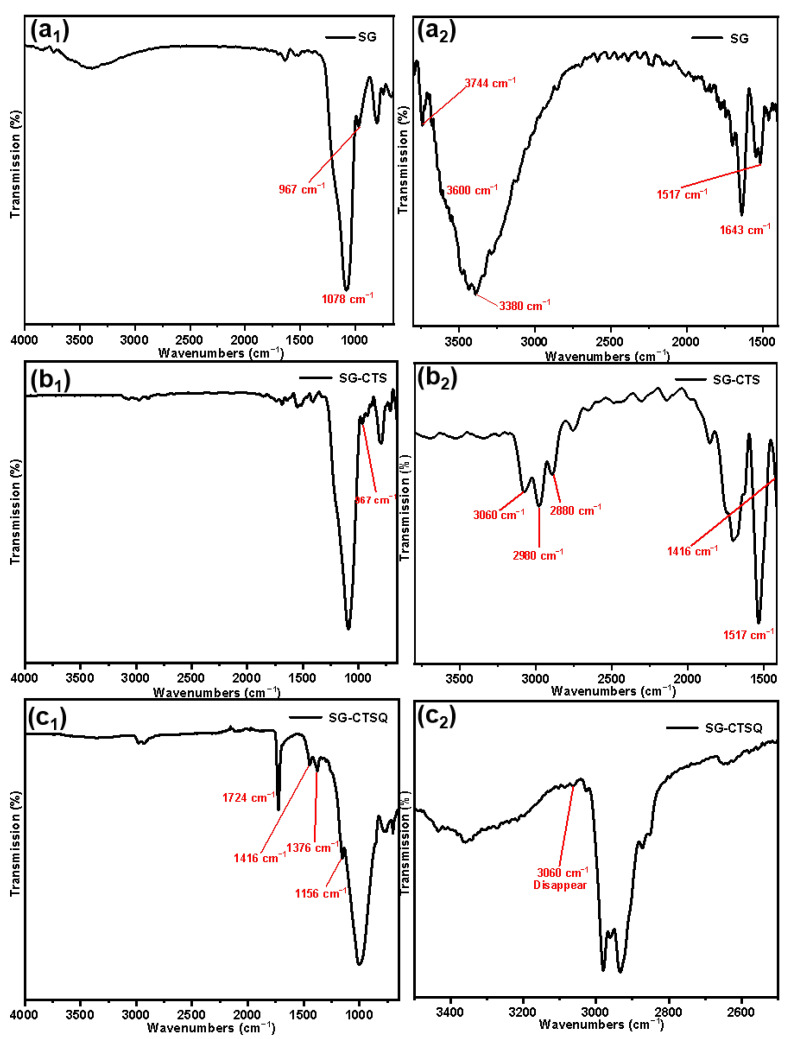
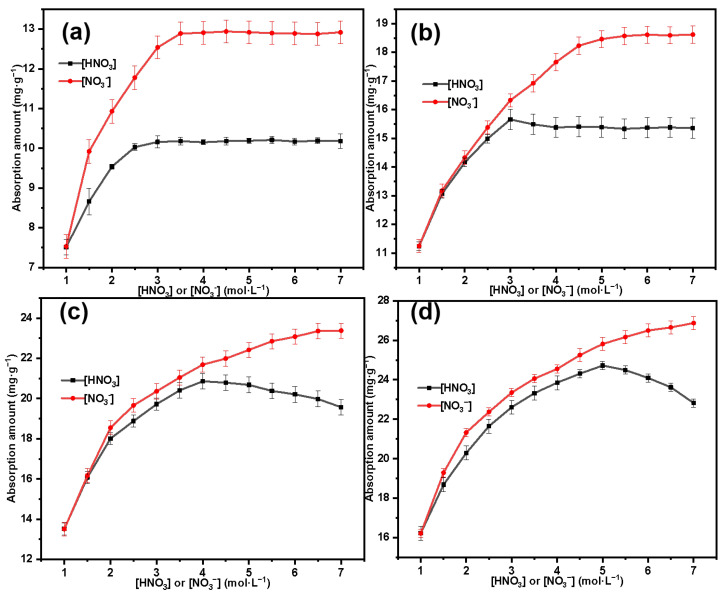
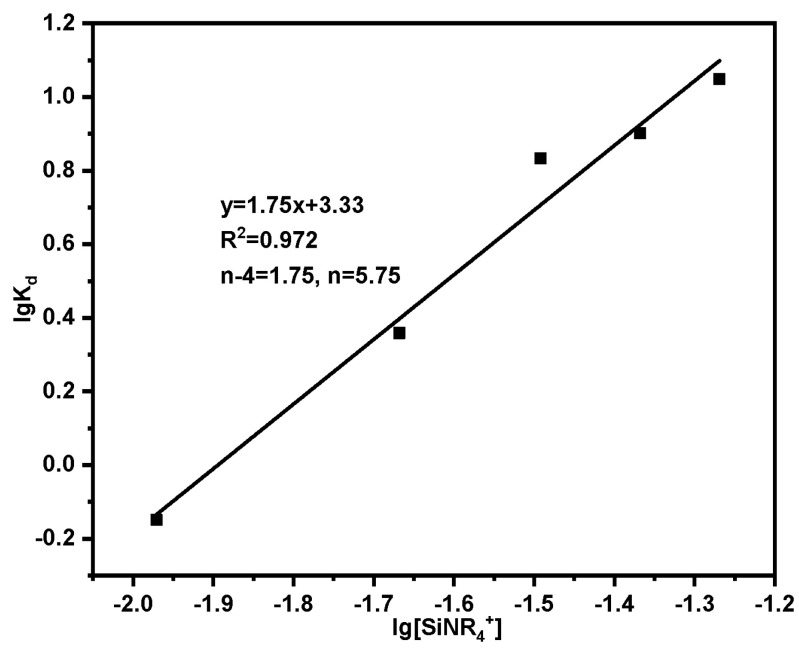
In this research, the authors studied the synthesis of a silicon-based quaternary ammonium material based on the coupling agent chloromethyl trimethoxysilane (KH-150) as well as its adsorption and separation properties for Th(IV). Using FTIR and NMR methods, the silicon-based materials before and after grafting were characterized to determine the spatial structure of functional groups in the silicon-based quaternary ammonium material SG-CTSQ. Based on this, the functional group grafting amount (0.537 mmol·g) and quaternization rate (83.6%) of the material were accurately calculated using TGA weight loss and XPS. In the adsorption experiment, the four materials with different grafting amounts showed different degrees of variation in their adsorption of Th(IV) with changes in HNO concentration and NO concentration but all exhibited a tendency toward anion exchange. The thermodynamic and kinetic experimental results demonstrated that materials with low grafting amounts (SG-CTSQ and SG-CTSQ) tended to physical adsorption of Th(IV), while the other two tended toward chemical adsorption. The adsorption mechanism experiment further proved that the functional groups achieve the adsorption of Th(IV) through an anion-exchange reaction. Chromatographic column separation experiments showed that SG-CTSQ has a good performance in U-Th separation, with a decontamination factor for uranium in Th(IV) of up to 385.1, and a uranium removal rate that can reach 99.75%.
在本研究中,作者研究了基于偶联剂氯甲基三甲氧基硅烷(KH - 150)的硅基季铵材料的合成及其对Th(IV)的吸附和分离性能。采用傅里叶变换红外光谱(FTIR)和核磁共振(NMR)方法对接枝前后的硅基材料进行表征,以确定硅基季铵材料SG - CTSQ中官能团的空间结构。在此基础上,利用热重分析(TGA)失重和X射线光电子能谱(XPS)准确计算了材料的官能团接枝量(0.537 mmol·g)和季铵化率(83.6%)。在吸附实验中,四种不同接枝量的材料对Th(IV)的吸附随HNO浓度和NO浓度的变化呈现出不同程度的变化,但均表现出阴离子交换的趋势。热力学和动力学实验结果表明,低接枝量的材料(SG - CTSQ和SG - CTSQ)倾向于对Th(IV)进行物理吸附,而另外两种材料则倾向于化学吸附。吸附机理实验进一步证明,官能团通过阴离子交换反应实现对Th(IV)的吸附。色谱柱分离实验表明,SG - CTSQ在U - Th分离方面具有良好的性能,Th(IV)中铀的去污系数高达385.1,铀去除率可达99.75%。