Tianjin Key Laboratory of Nonlinear Dynamics and Control, School of Mechanical Engineering, Tianjin University, Tianjin 300350, China.
Sensors (Basel). 2024 Jun 29;24(13):4249. doi: 10.3390/s24134249.
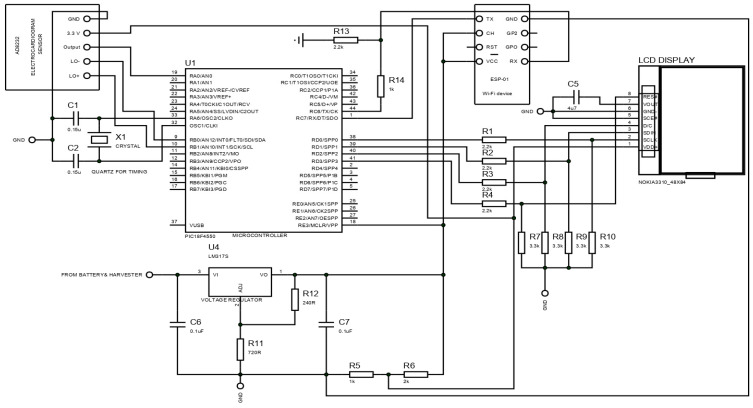
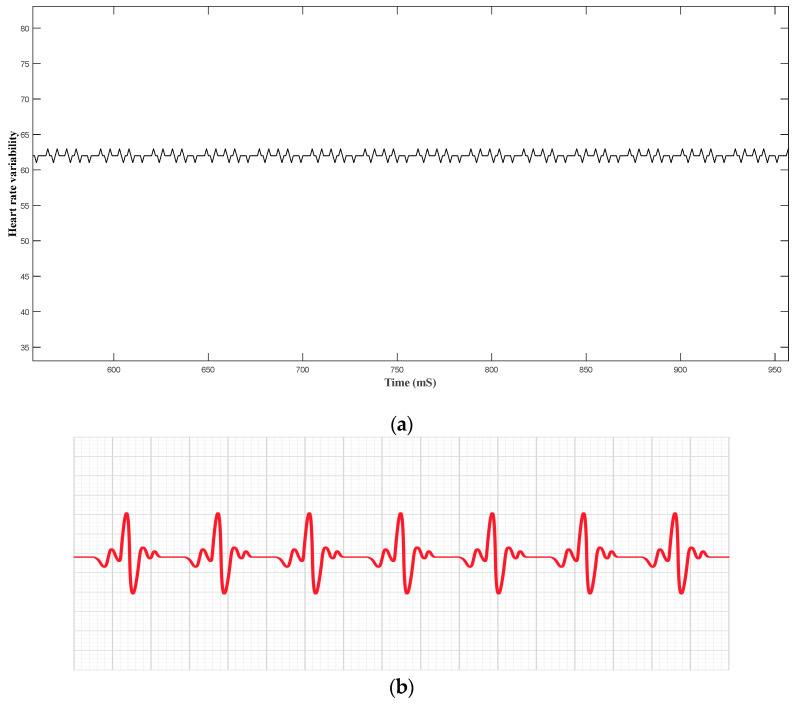
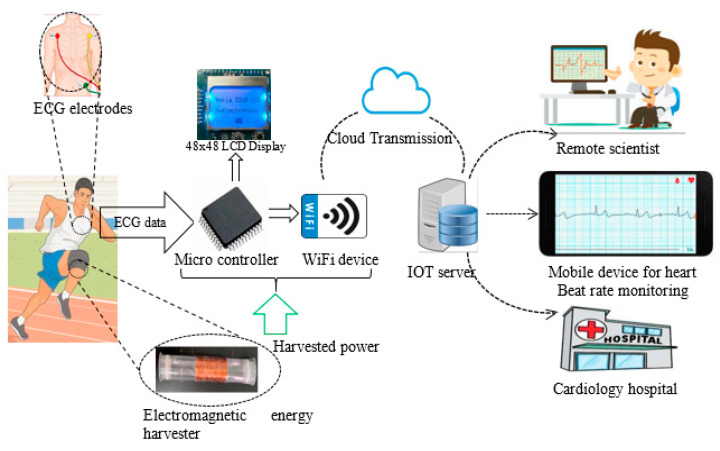
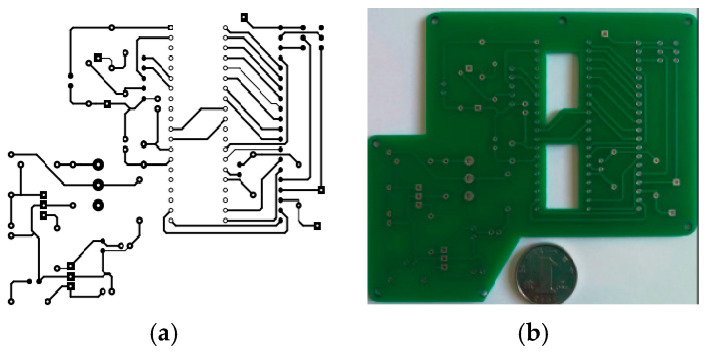
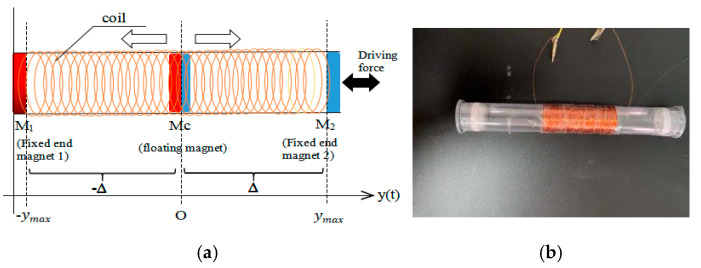
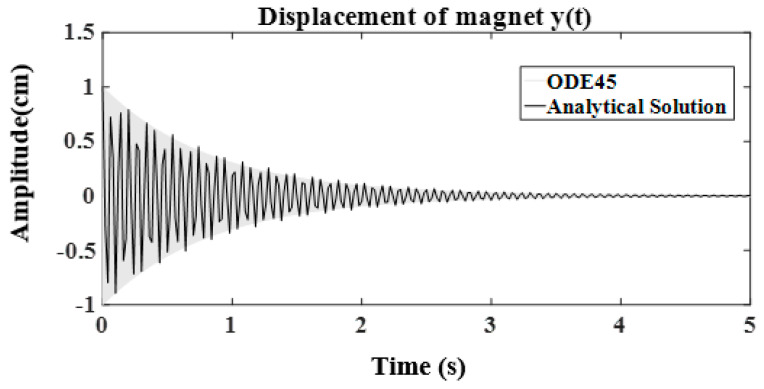
Remote patient-monitoring systems are helpful since they can provide timely and effective healthcare facilities. Such online telemedicine is usually achieved with the help of sophisticated and advanced wearable sensor technologies. The modern type of wearable connected devices enable the monitoring of vital sign parameters such as: heart rate variability (HRV) also known as electrocardiogram (ECG), blood pressure (BLP), Respiratory rate and body temperature, blood pressure (BLP), respiratory rate, and body temperature. The ubiquitous problem of wearable devices is their power demand for signal transmission; such devices require frequent battery charging, which causes serious limitations to the continuous monitoring of vital data. To overcome this, the current study provides a primary report on collecting kinetic energy from daily human activities for monitoring vital human signs. The harvested energy is used to sustain the battery autonomy of wearable devices, which allows for a longer monitoring time of vital data. This study proposes a novel type of stress- or exercise-monitoring ECG device based on a microcontroller (PIC18F4550) and a Wi-Fi device (ESP8266), which is cost-effective and enables real-time monitoring of heart rate in the cloud during normal daily activities. In order to achieve both portability and maximum power, the harvester has a small structure and low friction. Neodymium magnets were chosen for their high magnetic strength, versatility, and compact size. Due to the non-linear magnetic force interaction of the magnets, the non-linear part of the dynamic equation has an inverse quadratic form. Electromechanical damping is considered in this study, and the quadratic non-linearity is approximated using MacLaurin expansion, which enables us to find the law of motion for general case studies using classical methods for dynamic equations and the suitable parameters for the harvester. The oscillations are enabled by applying an initial force, and there is a loss of energy due to the electromechanical damping. A typical numerical application is computed with Matlab 2015 software, and an ODE45 solver is used to verify the accuracy of the method.
远程患者监测系统很有帮助,因为它们可以提供及时有效的医疗保健设施。这种在线远程医疗通常借助精密先进的可穿戴传感器技术来实现。现代类型的可穿戴式连接设备能够监测心率变异性(HRV),也称为心电图(ECG)、血压(BLP)、呼吸频率和体温、血压(BLP)、呼吸频率和体温等生命体征参数。可穿戴设备普遍存在的问题是它们对信号传输的功率需求;此类设备需要频繁充电,这对连续监测生命数据造成了严重限制。为了克服这一问题,本研究提供了一种从日常人体活动中收集动能以监测重要人体体征的初步报告。所采集的能量用于维持可穿戴设备的电池自主性,这使得可以更长时间地监测生命数据。本研究提出了一种基于微控制器(PIC18F4550)和 Wi-Fi 设备(ESP8266)的新型压力或运动监测 ECG 设备,该设备具有成本效益,能够在正常日常活动中实时监测云中的心率。为了实现便携性和最大功率,该采集器结构小巧,摩擦低。钕磁铁因其高磁场强度、多功能性和紧凑尺寸而被选中。由于磁铁的非线性磁力相互作用,动力方程的非线性部分具有逆二次形式。本研究考虑了机电阻尼,并用 MacLaurin 展开近似非线性,这使我们能够使用动力方程的经典方法和采集器的合适参数为一般案例研究找到运动定律。通过施加初始力来实现振荡,并由于机电阻尼而损失能量。使用 Matlab 2015 软件进行了典型的数值应用,并用 ODE45 求解器验证了方法的准确性。