Hassan Mudassir, Tutar Lütfi, Sari-Ak Duygu, Rasul Azhar, Basheer Ejaz, Tutar Yusuf
Department of Zoology, Government College University Faisalabad, Faisalabad, Punjab 38000, Pakistan.
Department of Molecular Biology and Genetics, Faculty of Arts and Sciences, Kırsehir Ahi Evran University, Kırsehir, Turkey.
Transl Oncol. 2024 Sep;47:102055. doi: 10.1016/j.tranon.2024.102055. Epub 2024 Jul 13.
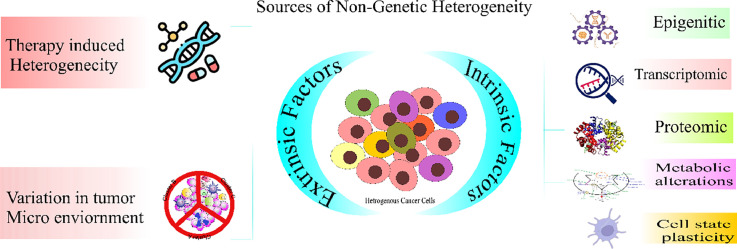
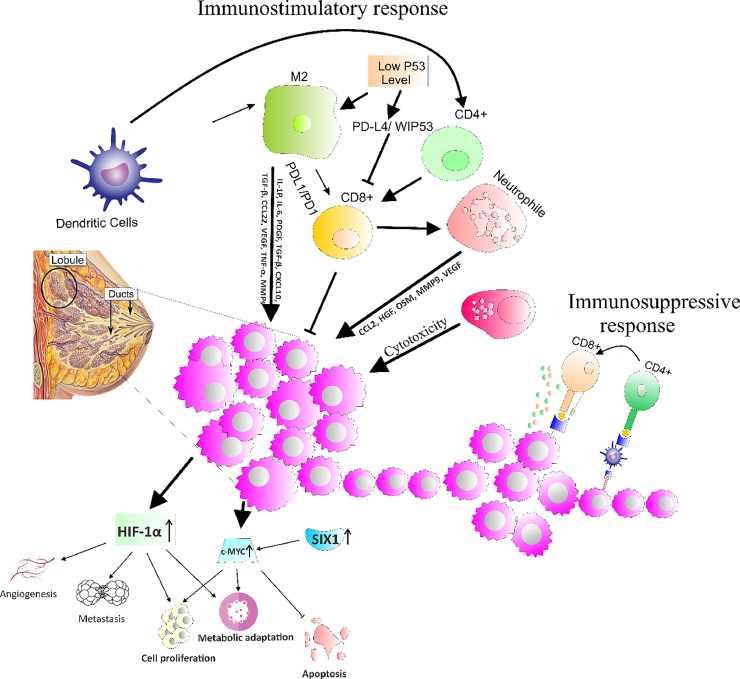
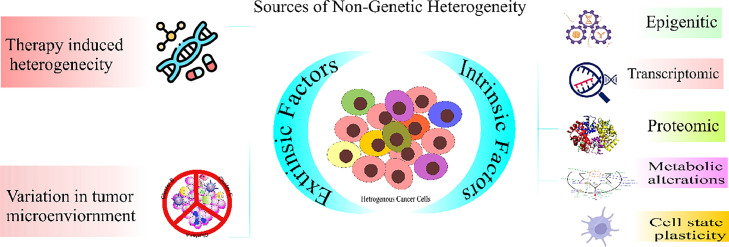
Breast cancer (BC) is a complex and multifactorial disease, driven by genetic alterations that promote tumor growth and progression. However, recent research has highlighted the importance of non-genetic factors in shaping cancer evolution and influencing therapeutic outcomes. Non-genetic heterogeneity refers to diverse subpopulations of cancer cells within breast tumors, exhibiting distinct phenotypic and functional properties. These subpopulations can arise through various mechanisms, including clonal evolution, genetic changes, epigenetic changes, and reversible phenotypic transitions. Although genetic and epigenetic changes are important points of the pathology of breast cancer yet, the immune system also plays a crucial role in its progression. In clinical management, histologic and molecular classification of BC are used. Immunological subtyping of BC has gained attention in recent years as compared to traditional techniques. Intratumoral heterogeneity revealed by immunological microenvironment (IME) has opened novel opportunities for immunotherapy research. This systematic review is focused on non-genetic variability to identify and interlink immunological subgroups in breast cancer. This review provides a deep understanding of adaptive methods adopted by tumor cells to withstand changes in the tumor microenvironment and selective pressure imposed by medications. These adaptive methods include alterations in drug targets, immune system evasion, activation of survival pathways, and alterations in metabolism. Understanding non-genetic heterogeneity is essential for the development of targeted therapies.
乳腺癌(BC)是一种复杂的多因素疾病,由促进肿瘤生长和进展的基因改变驱动。然而,最近的研究强调了非遗传因素在塑造癌症演变和影响治疗结果方面的重要性。非遗传异质性是指乳腺肿瘤内癌细胞的不同亚群,表现出不同的表型和功能特性。这些亚群可通过多种机制产生,包括克隆进化、基因变化、表观遗传变化和可逆的表型转变。尽管基因和表观遗传变化是乳腺癌病理学的重要方面,但免疫系统在其进展中也起着关键作用。在临床管理中,采用乳腺癌的组织学和分子分类。与传统技术相比,乳腺癌的免疫学分型近年来受到关注。免疫微环境(IME)揭示的肿瘤内异质性为免疫治疗研究开辟了新的机会。本系统综述聚焦于非遗传变异性,以识别和关联乳腺癌中的免疫亚组。本综述深入了解了肿瘤细胞为抵御肿瘤微环境变化和药物施加的选择性压力而采用的适应性方法。这些适应性方法包括药物靶点的改变、免疫系统逃避、生存途径的激活和代谢的改变。了解非遗传异质性对于靶向治疗的发展至关重要。