HUN-REN Biological Research Centre, Institute of Biophysics, Temesvári Krt. 62, Szeged, 6726, Hungary.
Doctoral School of Multidisciplinary Medical Sciences, University of Szeged, Dóm Tér 9, Szeged, 6720, Hungary.
Sci Rep. 2024 Jul 13;14(1):16181. doi: 10.1038/s41598-024-66706-6.
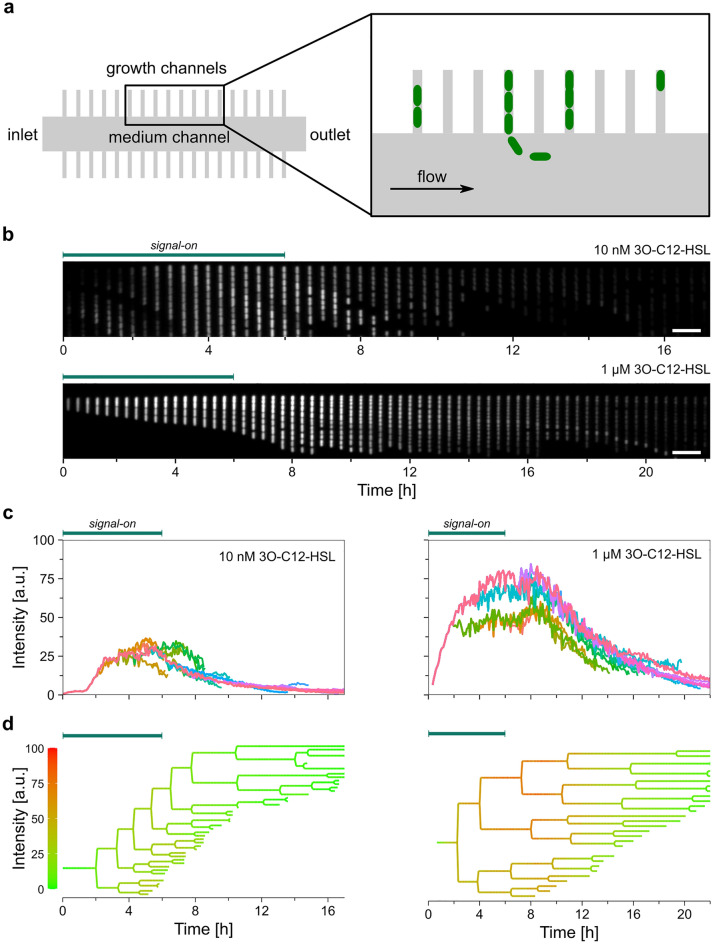
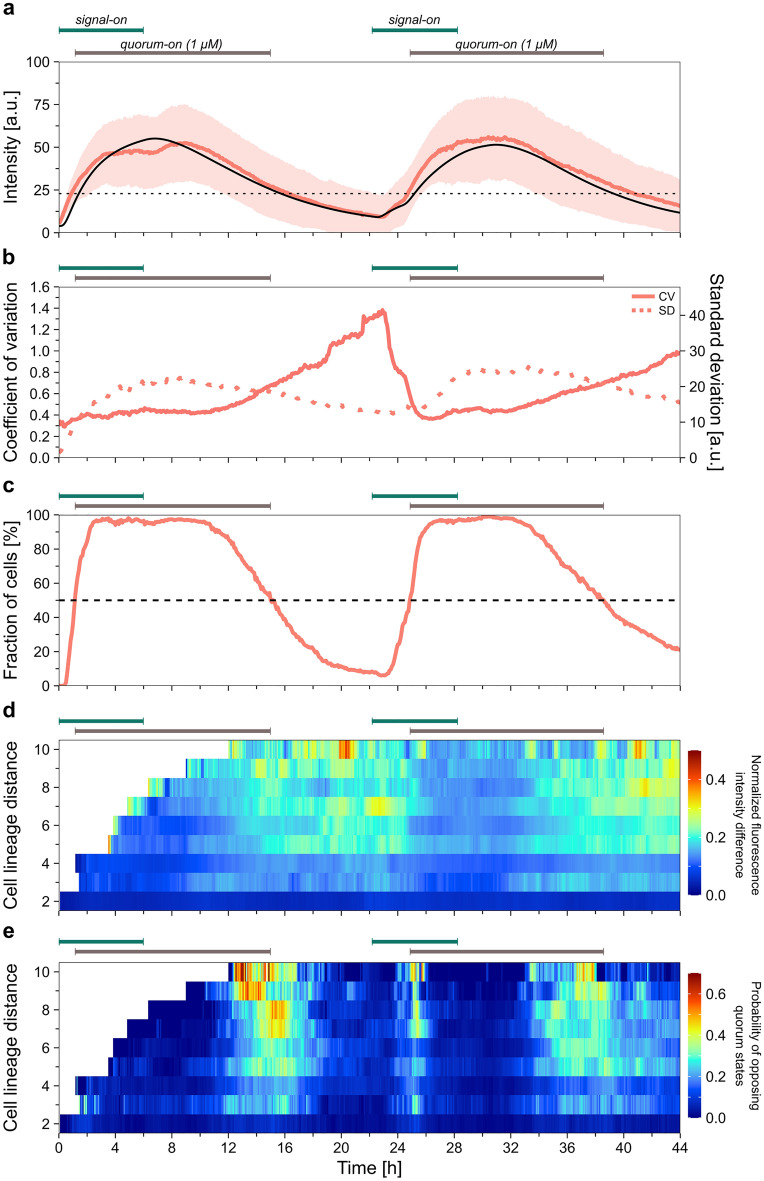
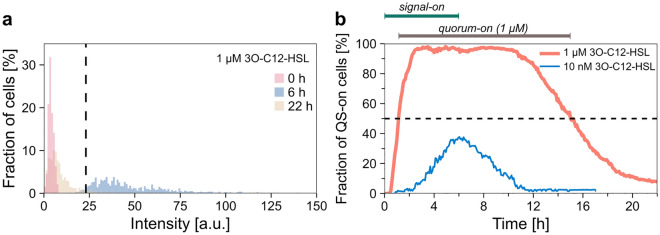
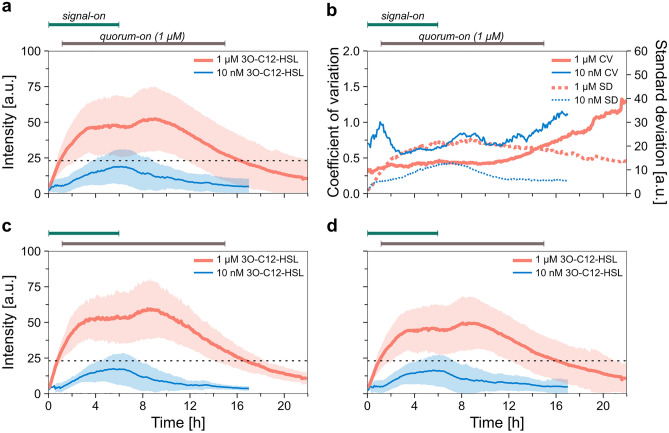
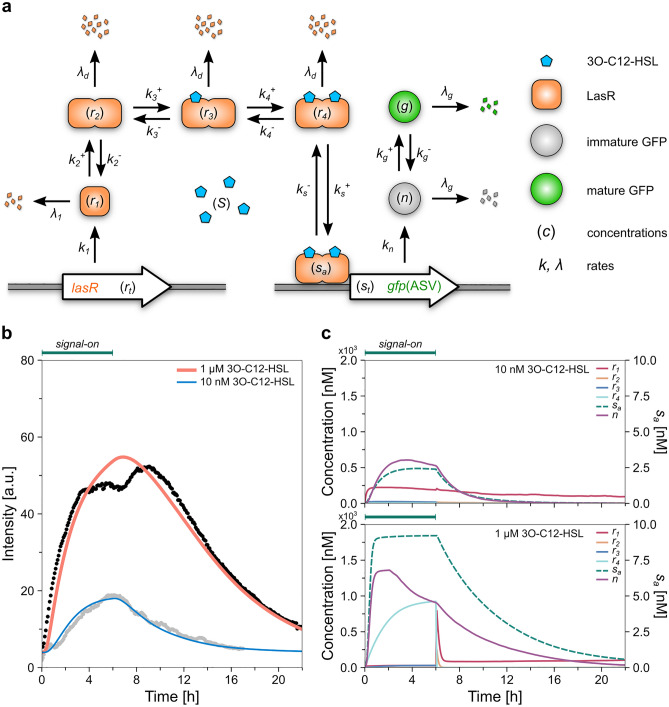
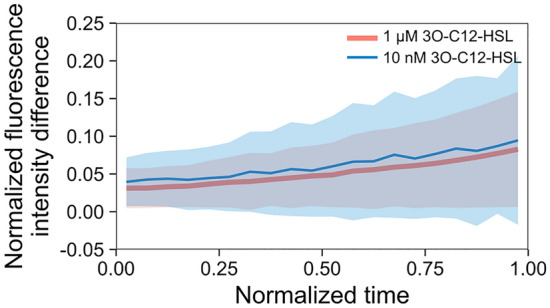
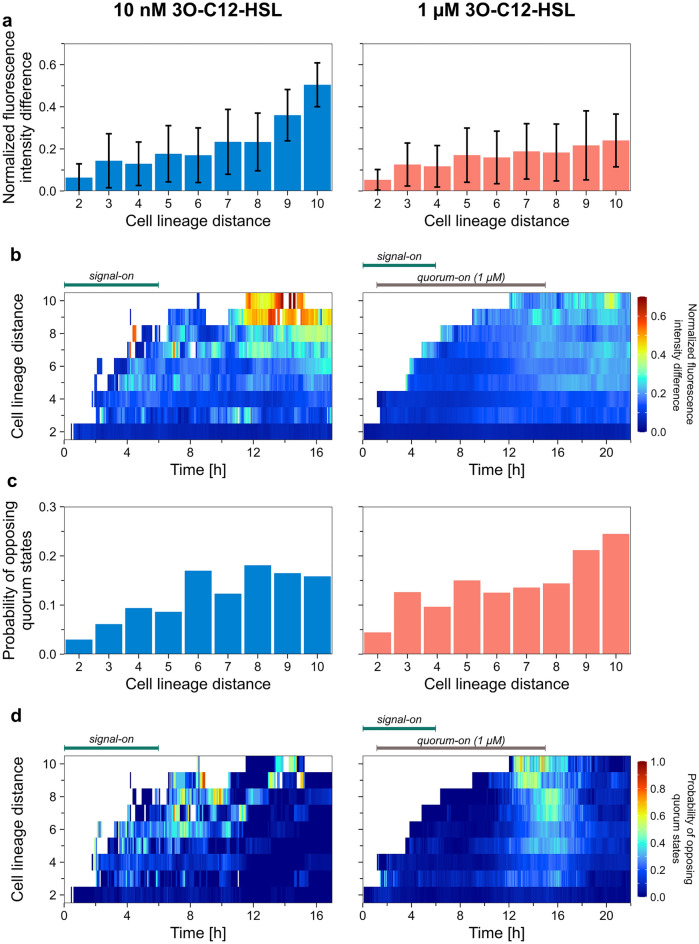
Quorum sensing (QS) is a communication form between bacteria via small signal molecules that enables global gene regulation as a function of cell density. We applied a microfluidic mother machine to study the kinetics of the QS response of Pseudomonas aeruginosa bacteria to additions and withdrawals of signal molecules. We traced the fast buildup and the subsequent considerably slower decay of a population-level and single-cell-level QS response. We applied a mathematical model to explain the results quantitatively. We found significant heterogeneity in QS on the single-cell level, which may result from variations in quorum-controlled gene expression and protein degradation. Heterogeneity correlates with cell lineage history, too. We used single-cell data to define and quantitatively characterize the population-level quorum state. We found that the population-level QS response is well-defined. The buildup of the quorum is fast upon signal molecule addition. At the same time, its decay is much slower following signal withdrawal, and the quorum may be maintained for several hours in the absence of the signal. Furthermore, the quorum sensing response of the population was largely repeatable in subsequent pulses of signal molecules.
群体感应(QS)是细菌之间通过小信号分子进行的一种通信形式,它能够根据细胞密度进行全局基因调控。我们应用微流控母机来研究铜绿假单胞菌对信号分子的添加和去除的 QS 反应的动力学。我们追踪了种群水平和单细胞水平 QS 反应的快速建立和随后明显较慢的衰减。我们应用了一个数学模型来定量解释结果。我们发现单细胞水平的 QS 存在显著的异质性,这可能是由于群体控制基因表达和蛋白质降解的变化所致。异质性也与细胞谱系历史有关。我们使用单细胞数据来定义和定量表征种群水平的群体状态。我们发现,种群水平的 QS 反应是明确的。在信号分子添加时,群体的建立速度很快。与此同时,信号去除后其衰减要慢得多,在没有信号的情况下,群体可能会维持几个小时。此外,在随后的信号分子脉冲中,群体的感应反应在很大程度上是可重复的。