Luo Tao, Fan Lei, Zhu Rong, Sun Dong
Department of Biomedical Engineering, City University of Hong Kong, Hong Kong, China.
State Key Laboratory of Precision Measurement Technology and Instruments, Department of Precision Instrument, Tsinghua University, Beijing 100084, China.
Micromachines (Basel). 2019 Feb 1;10(2):104. doi: 10.3390/mi10020104.
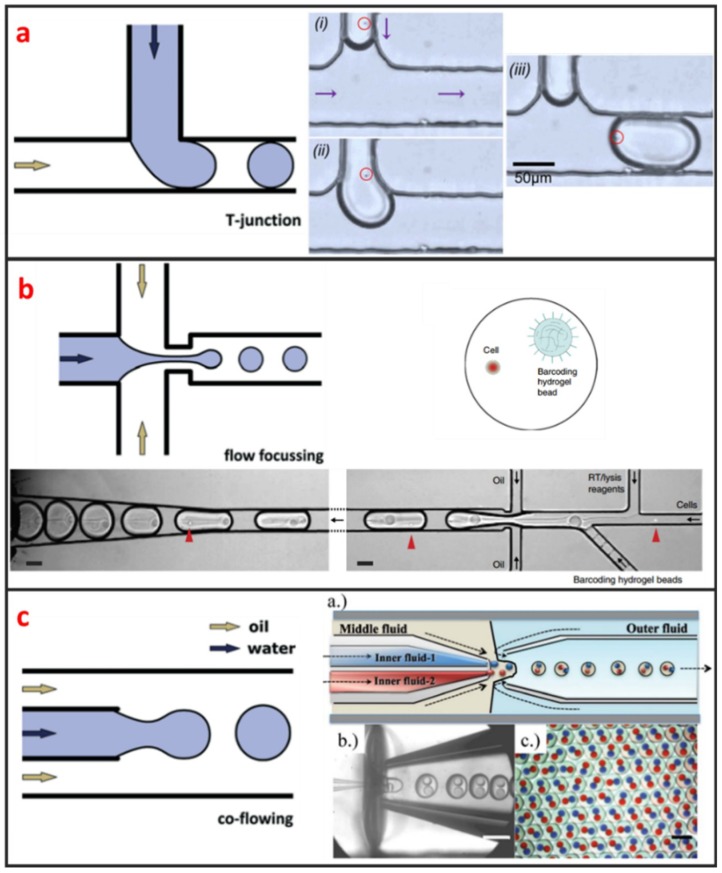
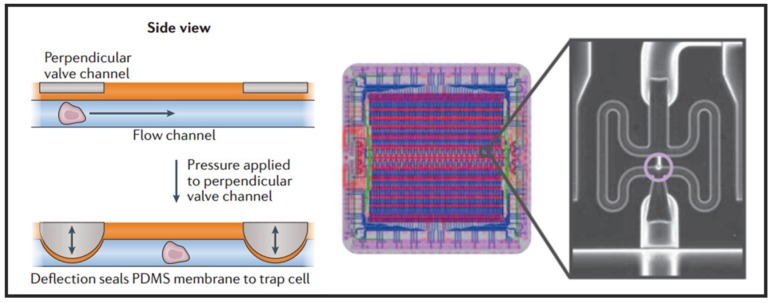
In a forest of a hundred thousand trees, no two leaves are alike. Similarly, no two cells in a genetically identical group are the same. This heterogeneity at the single-cell level has been recognized to be vital for the correct interpretation of diagnostic and therapeutic results of diseases, but has been masked for a long time by studying average responses from a population. To comprehensively understand cell heterogeneity, diverse manipulation and comprehensive analysis of cells at the single-cell level are demanded. However, using traditional biological tools, such as petri-dishes and well-plates, is technically challengeable for manipulating and analyzing single-cells with small size and low concentration of target biomolecules. With the development of microfluidics, which is a technology of manipulating and controlling fluids in the range of micro- to pico-liters in networks of channels with dimensions from tens to hundreds of microns, single-cell study has been blooming for almost two decades. Comparing to conventional petri-dish or well-plate experiments, microfluidic single-cell analysis offers advantages of higher throughput, smaller sample volume, automatic sample processing, and lower contamination risk, etc., which made microfluidics an ideal technology for conducting statically meaningful single-cell research. In this review, we will summarize the advances of microfluidics for single-cell manipulation and analysis from the aspects of methods and applications. First, various methods, such as hydrodynamic and electrical approaches, for microfluidic single-cell manipulation will be summarized. Second, single-cell analysis ranging from cellular to genetic level by using microfluidic technology is summarized. Last, we will also discuss the advantages and disadvantages of various microfluidic methods for single-cell manipulation, and then outlook the trend of microfluidic single-cell analysis.
在十万棵树的森林中,没有两片树叶是相同的。同样,在基因相同的细胞群体中,也没有两个细胞是一样的。单细胞水平上的这种异质性已被认为对于正确解读疾病的诊断和治疗结果至关重要,但长期以来一直被群体平均反应的研究掩盖。为了全面了解细胞异质性,需要在单细胞水平上对细胞进行多样化操作和综合分析。然而,使用传统的生物学工具,如培养皿和微孔板,在操作和分析具有小尺寸和低浓度目标生物分子的单细胞时,在技术上具有挑战性。随着微流控技术的发展,这是一种在尺寸从几十到几百微米的通道网络中操纵和控制微升至皮升范围内流体的技术,单细胞研究已经蓬勃发展了近二十年。与传统的培养皿或微孔板实验相比,微流控单细胞分析具有更高的通量、更小的样品体积、自动样品处理以及更低的污染风险等优点,这使得微流控技术成为进行具有统计学意义的单细胞研究的理想技术。在这篇综述中,我们将从方法和应用方面总结微流控技术在单细胞操纵和分析方面的进展。首先,将总结微流控单细胞操纵的各种方法,如水动力和电方法。其次,总结利用微流控技术从细胞水平到基因水平的单细胞分析。最后,我们还将讨论各种微流控单细胞操纵方法的优缺点,然后展望微流控单细胞分析的趋势。