Nutritional Biomarker Laboratory, MRC Epidemiology Unit, University of Cambridge, Cambridge, United Kingdom.
Nutritional Biomarker Laboratory, MRC Epidemiology Unit, University of Cambridge, Cambridge, United Kingdom.
J Nutr. 2024 Sep;154(9):2818-2826. doi: 10.1016/j.tjnut.2024.07.008. Epub 2024 Jul 14.
The logistics of timely processing of blood specimens remains a barrier in population health studies to the generation of micronutrient status data.
To test a blood specimen processing protocol that includes overnight postage with cooling and its effect on nutritional biomarker concentrations.
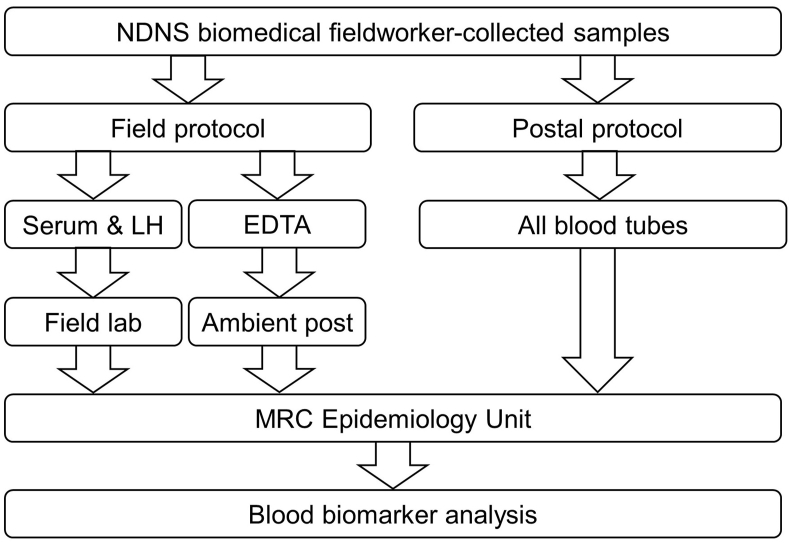
This study was embedded within the United Kingdom National Diet and Nutrition Survey. Paired specimens were collected from 64 participants (16 y+). One set of specimens were processed within 2 h of collection ["field"] and paired samples were mailed in an insulated box with cold packs using an overnight postal service to a central laboratory ["postal"]. Specimen processing protocols were aligned across field sites and the central laboratory. Specimens were frozen and later analyzed using established methods for vitamins, minerals, lipids, ferritin, and C-reactive protein (CRP). Percent difference was calculated between protocols and compared with quality specifications determined from intra- and interindividual variation.
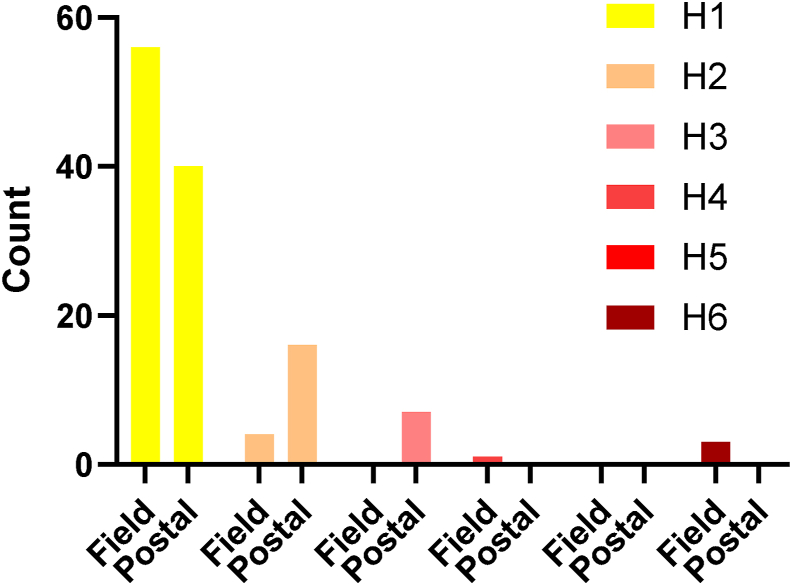
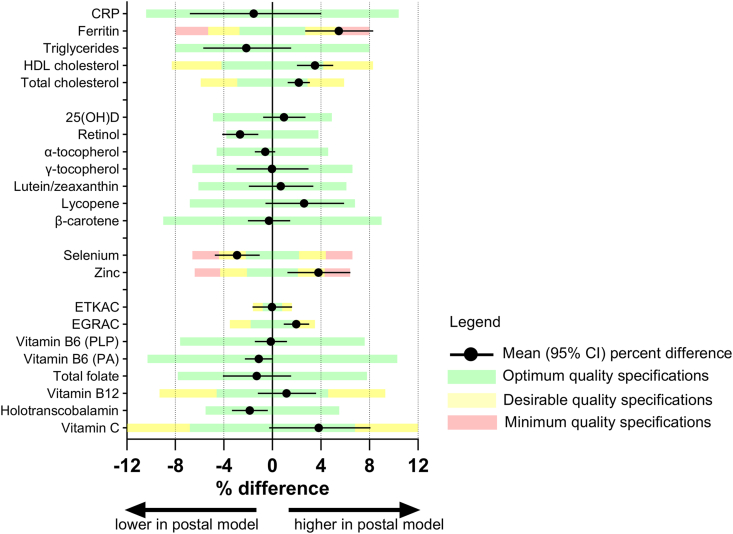
In the postal protocol, ferritin [geometric mean percent difference (95% confidence interval)] [6% (3, 8)] (P = 0.002) and zinc [4% (1, 6)] (P = 0.004) were higher compared with the field protocol. Retinol [-3% (-4, -1)] (P < 0.0001) and selenium [-3% (-5, -1)] (P = 0.003) concentrations were lower in the postal protocol, whereas total [2% (1, 3)] and HDL [4% (2, 5)] cholesterol were higher (P < 0.0001) than in the field protocol. Percent differences were within the optimum quality specification for the majority of biomarkers, but ferritin, zinc, and selenium fell outside of the optimum limits. Higher ferritin concentration in the postal protocol led to a decrease in the proportion of specimens with ferritin concentration <15 μg/L from 13% to 9%.
The majority of micronutrient biomarkers, serum lipids, and CRP were minimally affected by delayed processing when cooled. The study suggests acceptable stability of nutritional biomarkers within the described protocol, which can provide accurate data for nutritional biomarkers commonly measured in studies and surveys.
及时处理血样的物流在人群健康研究中仍然是生成微量营养素状态数据的一个障碍。
测试一种包括隔夜邮资冷藏的血样处理方案及其对营养生物标志物浓度的影响。
本研究嵌入在英国国家饮食与营养调查中。从 64 名参与者(16 岁及以上)中采集了一对标本。一组标本在采集后 2 小时内进行处理[现场],并将配对样本装入带冰袋的隔热盒中,通过隔夜邮政服务寄往中央实验室[邮寄]。现场和中央实验室都采用了相同的标本处理方案。标本冷冻后,使用既定方法分析维生素、矿物质、脂质、铁蛋白和 C 反应蛋白(CRP)。计算两种方案之间的差异百分比,并与根据个体内和个体间变异确定的质量规格进行比较。
在邮寄方案中,铁蛋白[几何平均值差异百分比(95%置信区间)] [6%(3,8)](P = 0.002)和锌[4%(1,6)](P = 0.004)高于现场方案。邮寄方案中视黄醇[-3%(-4,-1)](P < 0.0001)和硒[-3%(-5,-1)](P = 0.003)浓度较低,而总胆固醇[2%(1,3)]和高密度脂蛋白[4%(2,5)]较高(P < 0.0001)比现场方案。大多数生物标志物的差异百分比都在最佳质量规格范围内,但铁蛋白、锌和硒的差异百分比超出了最佳范围。邮寄方案中铁蛋白浓度较高,导致铁蛋白浓度<15μg/L的标本比例从 13%下降到 9%。
当冷却时,大多数微量营养素生物标志物、血清脂质和 CRP 受到延迟处理的影响很小。该研究表明,在所描述的方案中,营养生物标志物具有可接受的稳定性,可以为研究和调查中常用的营养生物标志物提供准确的数据。