Chongqing Key Laboratory of Child Neurodevelopment and Cognitive Disorders, Ministry of Education Key Laboratory of Child Development and Disorders, National Clinical Research Center for Child Health and Disorders, China International Science and Technology Cooperation Base of Child Development and Critical Disorders, Children's Hospital of Chongqing Medical University, Chongqing 400000, China.
Chongqing Key Laboratory of Child Neurodevelopment and Cognitive Disorders, Ministry of Education Key Laboratory of Child Development and Disorders, National Clinical Research Center for Child Health and Disorders, China International Science and Technology Cooperation Base of Child Development and Critical Disorders, Children's Hospital of Chongqing Medical University, Chongqing 400000, China. E-mail:
Zool Res. 2024 Jul 18;45(4):845-856. doi: 10.24272/j.issn.2095-8137.2023.363.
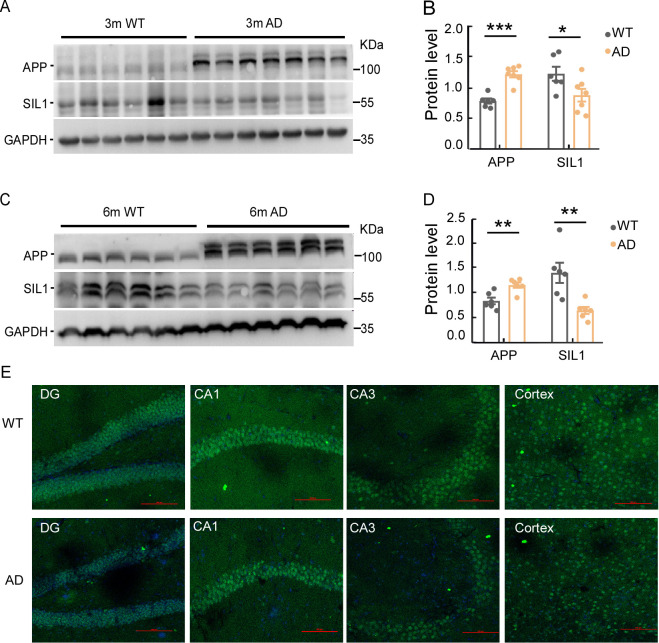
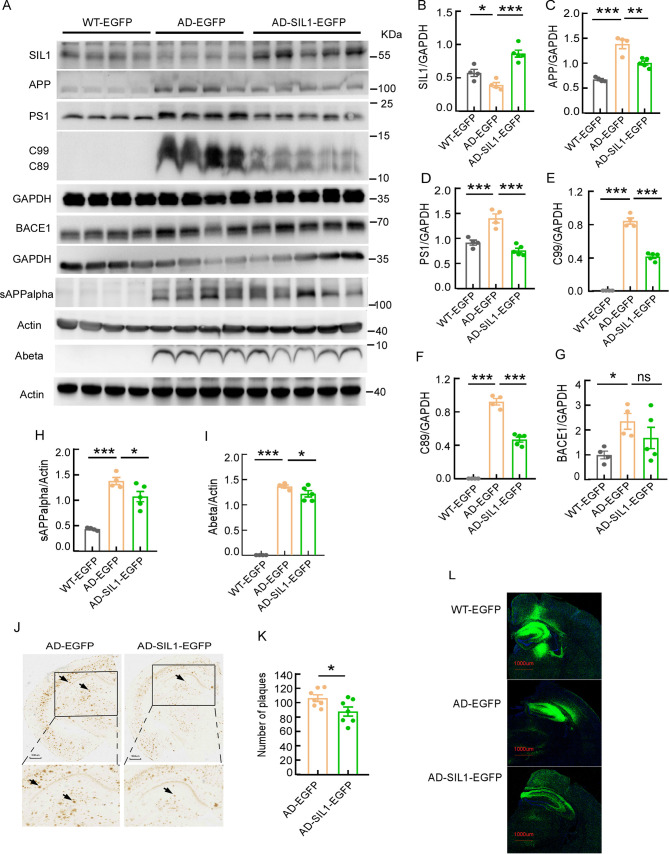
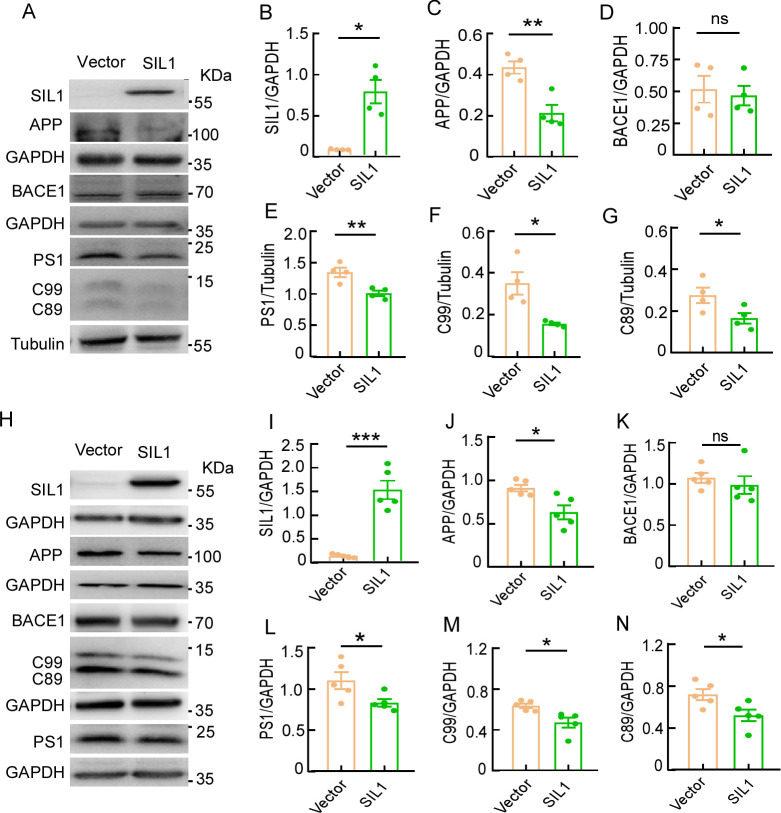
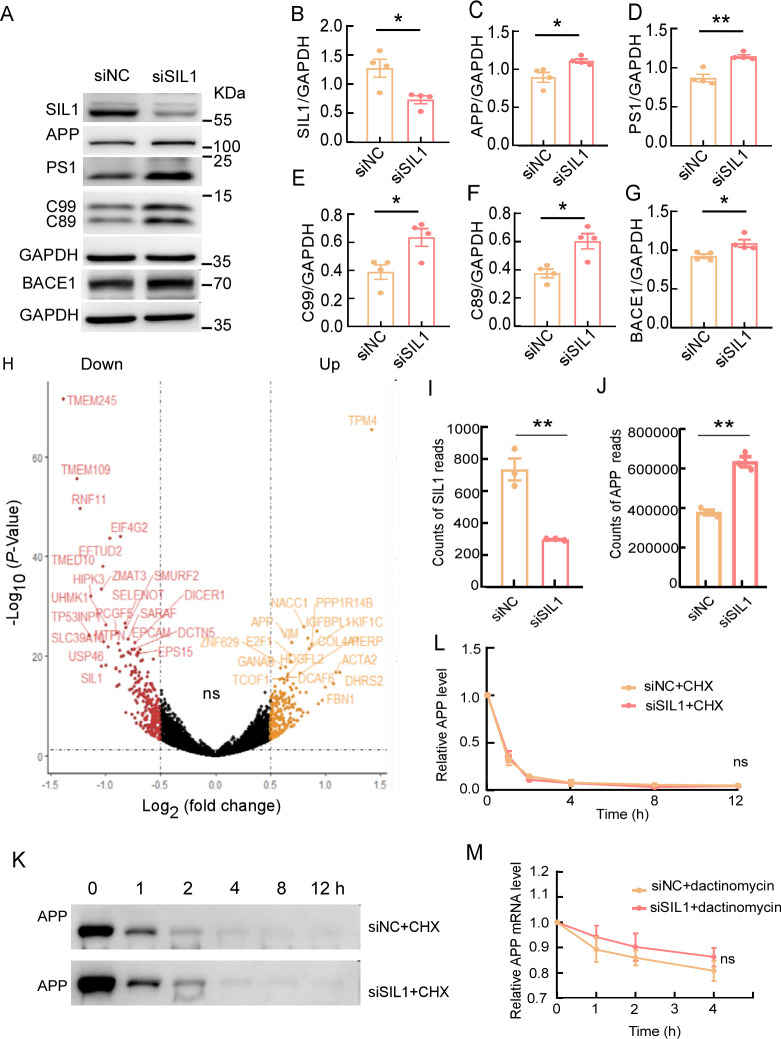
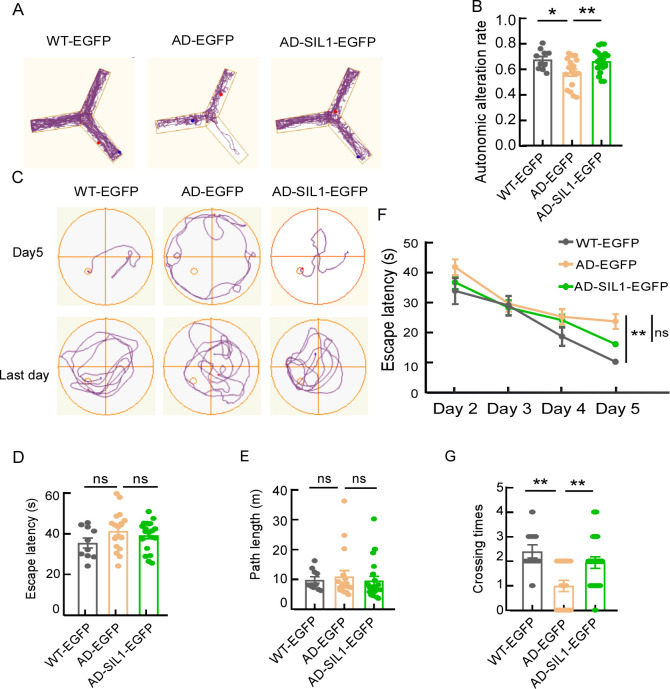
SIL1, an endoplasmic reticulum (ER)-resident protein, is reported to play a protective role in Alzheimer's disease (AD). However, the effect of SIL1 on amyloid precursor protein (APP) processing remains unclear. In this study, the role of SIL1 in APP processing was explored both and . In the experiment, SIL1 was either overexpressed or knocked down in cells stably expressing the human Swedish mutant APP695. In the experiment, AAV-SIL1-EGFP or AAV-EGFP was microinjected into APP23/PS45 mice and their wild-type littermates. Western blotting (WB), immunohistochemistry, RNA sequencing (RNA-seq), and behavioral experiments were performed to evaluate the relevant parameters. Results indicated that SIL1 expression decreased in APP23/PS45 mice. Overexpression of SIL1 significantly decreased the protein levels of APP, presenilin-1 (PS1), and C-terminal fragments (CTFs) of APP and . Conversely, knockdown of SIL1 increased the protein levels of APP, β-site APP cleavage enzyme 1 (BACE1), PS1, and CTFs, as well as APP mRNA expression in 2EB2 cells. Furthermore, SIL1 overexpression reduced the number of senile plaques in APP23/PS45 mice. Importantly, Y-maze and Morris Water maze tests demonstrated that SIL1 overexpression improved cognitive impairment in APP23/PS45 mice. These findings indicate that SIL1 improves cognitive impairment in APP23/PS45 mice by inhibiting APP amyloidogenic processing and suggest that SIL1 is a potential therapeutic target for AD by modulating APP processing.
SIL1,一种内质网(ER)驻留蛋白,据报道在阿尔茨海默病(AD)中发挥保护作用。然而,SIL1 对淀粉样前体蛋白(APP)加工的影响尚不清楚。在本研究中,分别在 和 中探索了 SIL1 在 APP 加工中的作用。在 实验中,通过过表达或敲低稳定表达人瑞典突变 APP695 的细胞中的 SIL1。在 实验中,将 AAV-SIL1-EGFP 或 AAV-EGFP 微注射到 APP23/PS45 小鼠及其野生型同窝仔鼠中。通过 Western blot(WB)、免疫组织化学、RNA 测序(RNA-seq)和行为学实验来评估相关参数。结果表明,SIL1 在 APP23/PS45 小鼠中表达降低。过表达 SIL1 显著降低 APP、早老素-1(PS1)和 APP C 端片段(CTFs)的蛋白水平 和 。相反,SIL1 敲低增加了 APP、β-位点 APP 切割酶 1(BACE1)、PS1 和 CTFs 的蛋白水平,以及 2EB2 细胞中 APP mRNA 的表达。此外,SIL1 过表达减少了 APP23/PS45 小鼠中的老年斑数量。重要的是,Y 迷宫和 Morris 水迷宫测试表明,SIL1 过表达改善了 APP23/PS45 小鼠的认知障碍。这些发现表明,SIL1 通过抑制 APP 淀粉样生成加工改善 APP23/PS45 小鼠的认知障碍,并表明 SIL1 通过调节 APP 加工成为 AD 的潜在治疗靶点。