Huggett Spencer B, Selveraj Sharmila, McGeary John E, Ikeda Ami, Yuan Emerald, Loeffel Lauren B, Rohan H C Palmer
Behavioral Genetics of Addiction Laboratory, Department of Psychology at Emory University, Atlanta, GA, USA.
Department of Psychiatry, Alpert Medical School of Brown University, Providence RI, USA.
bioRxiv. 2024 Jul 3:2024.07.02.601528. doi: 10.1101/2024.07.02.601528.
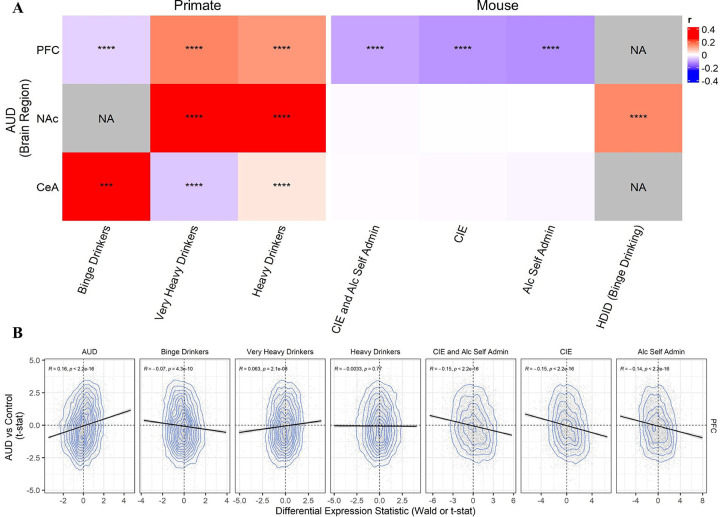
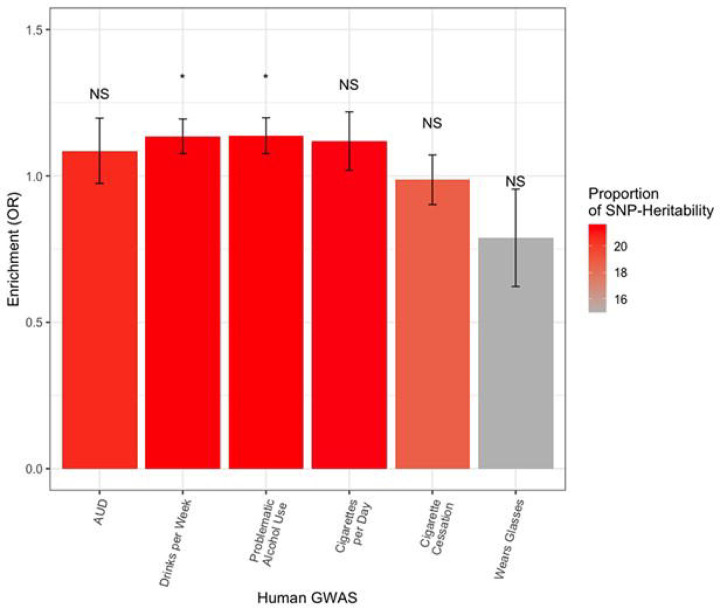
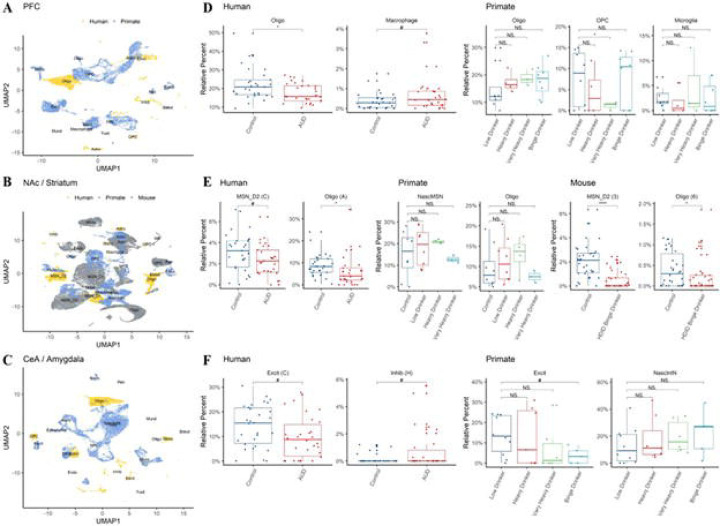
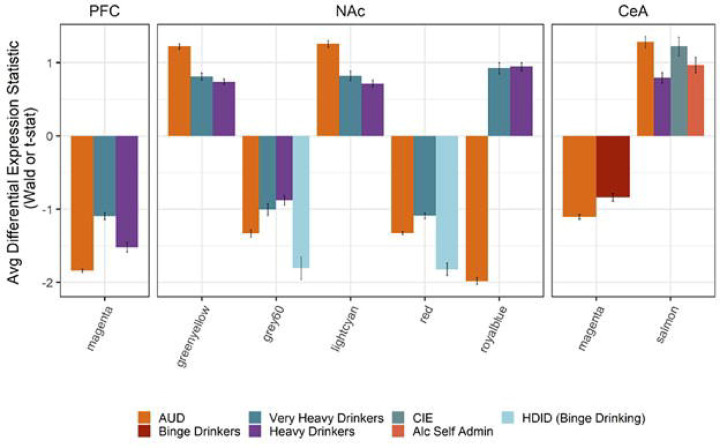
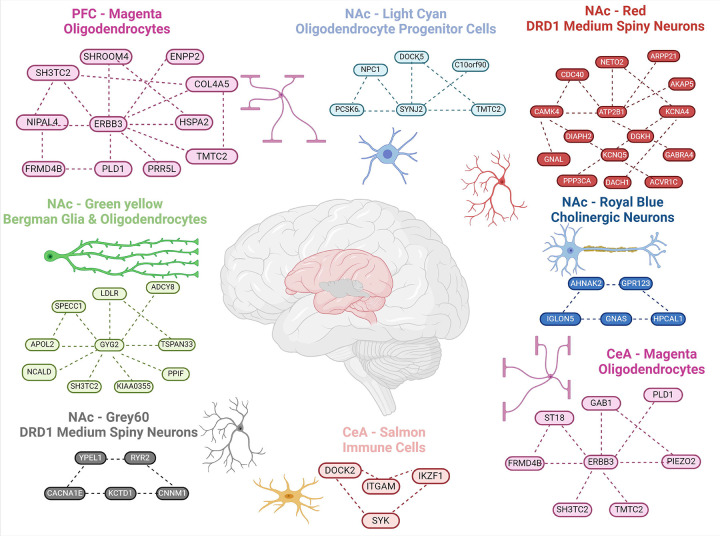
This study explores the neurobiological underpinnings of alcohol use disorder (AUD) by integrating bulk and single-cell transcriptomic data from humans, primates, and mice across three brain regions associated with addiction (i.e., prefrontal cortex (PFC), nucleus accumbens (NAc), and central amygdala (CeA)). We compared AUD RNA expression and cell-type abundance from 92 human brain to data from 53 primates and 90 mice engaged in diverse alcohol use paradigms. The findings revealed significant and reproducible correlations between human AUD and mammalian models of alcohol use that vary by tissue, species, and behavioral paradigm. The strongest correlations occurred between primate and mouse models of binge drinking (i.e., high drinking in the dark). Certain primate models demonstrated that the brain RNA correlations with human alcohol use disorder (AUD) were approximately 40% as strong as the correlations observed within human samples themselves. By integrating single-cell transcriptomic data, this study observed decreased oligodendrocyte proportions in the PFC and NAc of human AUD with similar trends in animal models. Gene co-expression network analyses revealed conserved systems associated with human AUD and animal models of heavy/binge alcohol consumption. Gene co-expression networks were enriched for pathways related to inflammation, myelination, and synaptic plasticity and the genes within them accounted for ~20% of the heritability in human alcohol consumption. Identified hub genes were associated with relevant traits (e.g., impulsivity, motivation) in humans and mice. This study sheds light on conserved biological entities underlying AUD and chronic alcohol use, providing insights into the cellular, genetic, and neuromolecular basis across species.
本研究通过整合来自人类、灵长类动物和小鼠的三个与成瘾相关脑区(即前额叶皮质(PFC)、伏隔核(NAc)和中央杏仁核(CeA))的大量和单细胞转录组数据,探索酒精使用障碍(AUD)的神经生物学基础。我们将92个人类大脑的AUD RNA表达和细胞类型丰度与53只灵长类动物和90只参与不同酒精使用模式的小鼠的数据进行了比较。研究结果揭示了人类AUD与不同组织、物种和行为模式的酒精使用哺乳动物模型之间存在显著且可重复的相关性。最强的相关性出现在灵长类动物和小鼠的暴饮模型之间(即暗箱高饮)。某些灵长类动物模型表明,大脑RNA与人类酒精使用障碍(AUD)的相关性约为人类样本自身观察到的相关性的40%。通过整合单细胞转录组数据,本研究观察到人类AUD患者PFC和NAc中少突胶质细胞比例降低,动物模型中也有类似趋势。基因共表达网络分析揭示了与人类AUD以及重度/暴饮酒精消费动物模型相关的保守系统。基因共表达网络富含与炎症、髓鞘形成和突触可塑性相关的通路,其中的基因约占人类酒精消费遗传度的20%。确定的枢纽基因与人类和小鼠的相关性状(如冲动性、动机)相关。这项研究揭示了AUD和慢性酒精使用背后保守的生物学实体,为跨物种的细胞、遗传和神经分子基础提供了见解。