
企业健康计划对菲律宾员工身体、职业、社会情感及精神健康的影响。
The Effects of a Corporate Wellness Program on the Physical, Occupational, Socio-emotional, and Spiritual Wellness of Filipino Workers.
作者信息
Argañosa Nica Marie Sj, Binghay Virgel C
机构信息
Institute of Human Nutrition and Food, College of Human Ecology, University of the Philippines Los Baños.
School of Labor and Industrial Relations, University of the Philippines Diliman.
出版信息
Acta Med Philipp. 2024 Mar 22;58(5):28-42. doi: 10.47895/amp.vi0.5797. eCollection 2024.
OBJECTIVE
The study determined the effects of corporate wellness programs (CWP) on Filipino workers' physical, occupational, socio-emotional, intellectual, and spiritual wellness.
METHODS
The study looked into the components of a CWP, its forms of communication, the respondents' level of participation, motivation, and their physical, occupational, socio-emotional, intellectual, and spiritual well-being to determine their wellness status during the pandemic. The study utilized an online survey to examine questions related to the efficacy of such programs, descriptive statistics, correlation analysis to assess the respondents' socio-demographic profiles, and point biserial correlation to test the association of CWP to their wellness status.
RESULTS
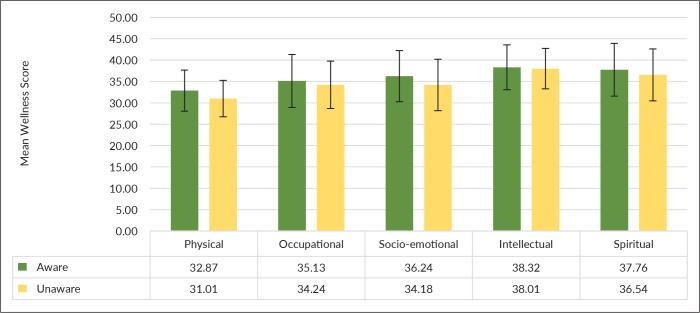
The research showed that 90% of the respondents participated in their organization's CWP, contradicting most studies that state CWP suffers from a low participation rate. CWP initiatives are mostly publicized through electronic mail, printed in memos, then posted on the bulletin board, and shared through the company website and social media. In addition, the study showed that overall wellness mean scores were higher in employees who were aware of their wellness programs than those who were not and in participating vis-à-vis non-participating employees.
CONCLUSION
The study's six assumptions showed positive results, indicating that CWPs are beneficial in improving employees' overall wellness. However, the per paradigm and overall wellness scores were weakly associated with participation and awareness status based on the point biserial correlation. No adverse effects were recorded in the study. In addition, the study discovered that employees were active in personal wellness initiatives, leading to high scores in their wellness dimensions. The study showed different individual wellness initiatives implying that employees were also proactive about their total well-being.
目的
本研究确定企业健康计划(CWP)对菲律宾员工身体、职业、社会情感、智力和精神健康的影响。
方法
本研究调查了CWP的组成部分、其沟通形式、受访者的参与程度、动机,以及他们的身体、职业、社会情感、智力和精神健康状况,以确定他们在疫情期间的健康状况。该研究利用在线调查来检验与此类计划效果相关的问题,使用描述性统计、相关分析来评估受访者的社会人口统计学特征,并使用点二列相关来检验CWP与其健康状况之间的关联。
结果
研究表明,90%的受访者参与了所在组织的CWP,这与大多数认为CWP参与率低的研究结果相矛盾。CWP倡议大多通过电子邮件宣传,打印在备忘录中,然后张贴在公告栏上,并通过公司网站和社交媒体分享。此外,研究表明,了解健康计划的员工的总体健康平均得分高于不了解的员工,参与计划的员工高于未参与的员工。
结论
该研究的六个假设显示出积极结果,表明企业健康计划有助于改善员工的整体健康状况。然而,根据点二列相关分析,每个范式和总体健康得分与参与度和认知状态的关联较弱。研究中未记录到不良影响。此外,研究发现员工积极参与个人健康倡议,从而在健康维度上获得高分。研究显示了不同的个人健康倡议,这意味着员工也积极关注自己的整体健康。



 Zotero 插件