Irwin Amanda, Malik Arunima, Vyas Aditya, Bateman Catherine, Joyce Sarah
The University of Sydney, ISA, School of Physics, Sydney, New South Wales, Australia.
The University of Sydney, Discipline of Accounting, Sydney Business School, Sydney, New South Wales, Australia.
Lancet Reg Health West Pac. 2024 Jun 20;48:101115. doi: 10.1016/j.lanwpc.2024.101115. eCollection 2024 Jul.
Health systems have a dual imperative to take action on climate change. First, they must develop climate resilient health services in response to the direct and indirect impacts of climate change on health. Second, they must reduce their own carbon footprint since health systems are a significant contributor to global greenhouse gas emissions.
An environmentally-extended multi-region input-output analysis was carried out, incorporating National Accounts data for Australia and annual expenditure data from WA Health for financial year 2019-20. Expenditure data were categorised to one of 344 economic sectors and by location of the provider of goods or services purchased.
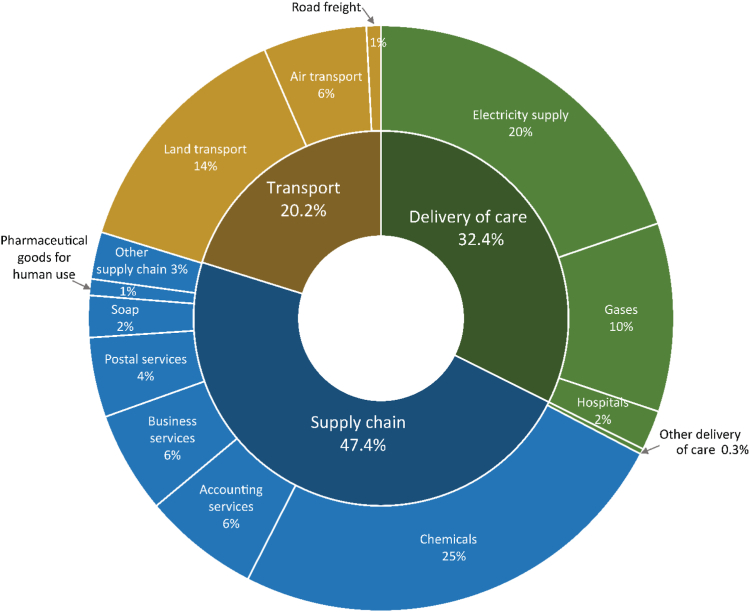
WA Health contributes 8% of WA's total carbon footprint, driven by expenditure on chemicals (23.8% of total), transport (20.2% of total), and electricity supply (19.7% of total). These 3 sectors represent 63.7% of WA Health's carbon footprint, but only 10.8% of its total expenditure.
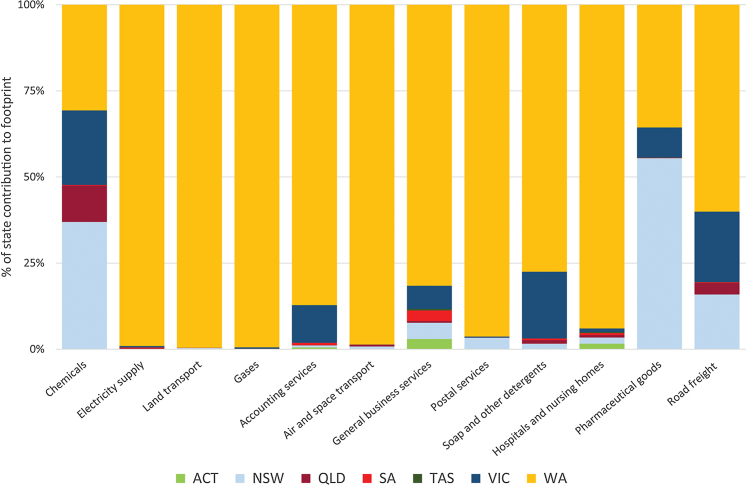
Reducing emissions related to health service provision in WA will require a holistic approach that leverages carbon footprinting insights and integrates them into organisational decision-making across all health programs. The high carbon-intensity of the transport and chemicals sectors supports previous research calling for a reduction in unnecessary pathology testing and the transition to delivery of non-urgent health care via sustainable models of telehealth. The impact of WA's size and location presents challenges, with a predominantly non-renewable energy supply and reliance on transport and supply chains from other states adding significantly to emissions.
The study received funding from the Australian Research Council, The University of Sydney, and the WA Department of Health. The full list of funding information can be found in Acknowledgements.
卫生系统在应对气候变化方面有双重紧迫任务。其一,鉴于气候变化对健康的直接和间接影响,它们必须发展具有气候适应能力的卫生服务。其二,由于卫生系统是全球温室气体排放的重要贡献者,它们必须减少自身的碳足迹。
开展了一项环境扩展的多区域投入产出分析,纳入了澳大利亚的国民账户数据以及西澳大利亚州卫生部2019 - 20财年的年度支出数据。支出数据被归类到344个经济部门之一,并按所购买商品或服务的提供者所在地进行分类。
西澳大利亚州卫生部的碳足迹占该州总碳足迹的8%,主要由化学品支出(占总计的23.8%)、运输支出(占总计的20.2%)和电力供应支出(占总计的19.7%)驱动。这三个部门占西澳大利亚州卫生部碳足迹的63.7%,但仅占其总支出的10.8%。
减少西澳大利亚州卫生服务提供相关的排放将需要一种整体方法,利用碳足迹洞察并将其纳入所有卫生项目的组织决策中。运输和化学品部门的高碳强度支持了先前的研究,该研究呼吁减少不必要的病理检查,并向通过可持续远程医疗模式提供非紧急医疗保健转变。西澳大利亚州的规模和地理位置带来了挑战,其主要依赖不可再生能源供应,且依赖来自其他州的运输和供应链,这显著增加了排放量。
该研究获得了澳大利亚研究理事会、悉尼大学和西澳大利亚州卫生部的资助。完整的资助信息列表可在致谢部分找到。