Laboratory of Translational Oncology and Experimental Cancer Therapeutics and.
Department of Pathology and Laboratory Medicine, Warren Alpert Medical School, Brown University, Providence, Rhode Island, USA.
J Clin Invest. 2024 Jul 15;134(14):e179570. doi: 10.1172/JCI179570.
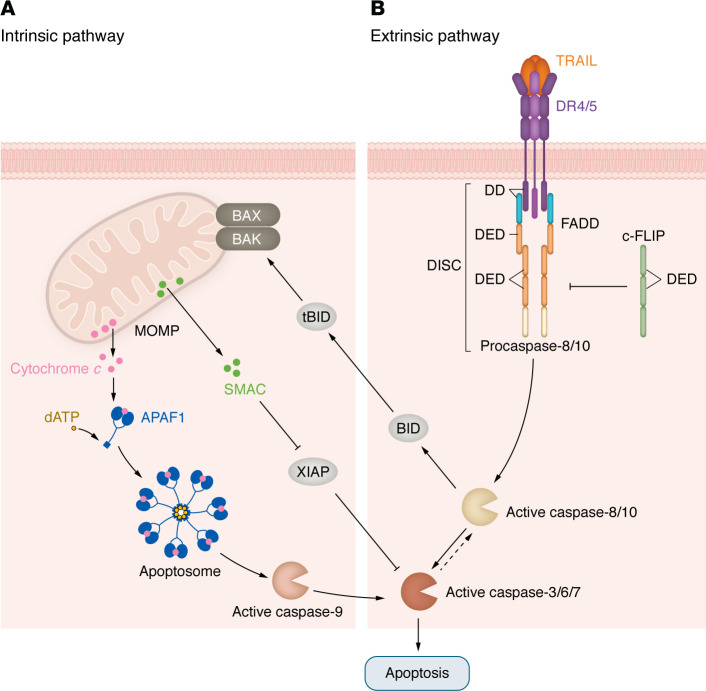
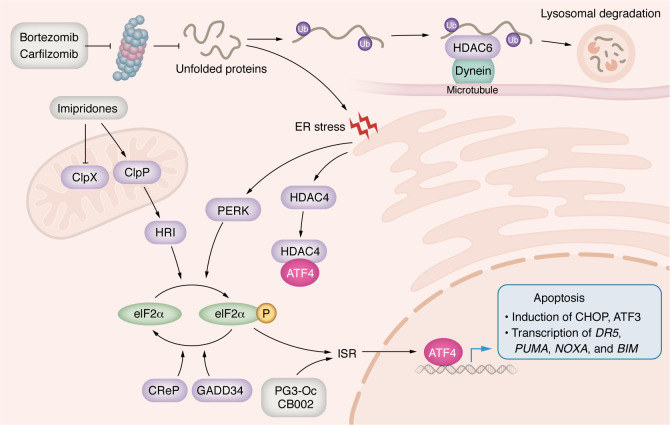
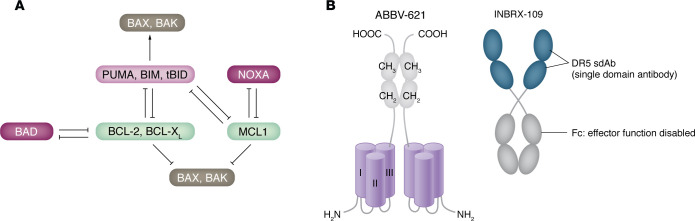
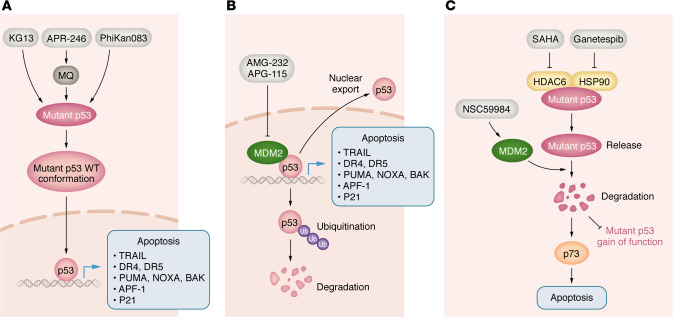
Apoptosis is a form of programmed cell death that is mediated by intrinsic and extrinsic pathways. Dysregulation of and resistance to cell death are hallmarks of cancer. For over three decades, the development of therapies to promote treatment of cancer by inducing various cell death modalities, including apoptosis, has been a main goal of clinical oncology. Apoptosis pathways also interact with other signaling mechanisms, such as the p53 signaling pathway and the integrated stress response (ISR) pathway. In addition to agents directly targeting the intrinsic and extrinsic pathway components, anticancer drugs that target the p53 and ISR signaling pathways are actively being developed. In this Review, we discuss selected and promising anticancer therapies in various stages of development, including drug targets, mechanisms, and resistance to related treatments, focusing especially on B cell lymphoma 2 (BCL-2) inhibitors, TRAIL analogues, DR5 antibodies, and strategies that target p53, mutant p53, and the ISR.
细胞凋亡是一种由内在和外在途径介导的程序性细胞死亡形式。细胞死亡的失调和抵抗是癌症的标志。三十多年来,通过诱导包括细胞凋亡在内的各种细胞死亡方式来促进癌症治疗的疗法的开发一直是临床肿瘤学的主要目标。细胞凋亡途径还与其他信号机制相互作用,如 p53 信号通路和综合应激反应 (ISR) 通路。除了直接针对内在和外在途径成分的药物外,还在积极开发针对 p53 和 ISR 信号通路的抗癌药物。在这篇综述中,我们讨论了处于不同开发阶段的选定的有前途的抗癌疗法,包括药物靶点、机制和对相关治疗的耐药性,特别关注 B 细胞淋巴瘤 2 (BCL-2) 抑制剂、TRAIL 类似物、DR5 抗体以及针对 p53、突变型 p53 和 ISR 的策略。