Department of Orthopedics, Guangdong Second Provincial General Hospital, Guangzhou, China.
Division of Orthopedics and Traumatology, Department of Orthopedics, Nanfang Hospital, Southern Medical University, Guangzhou, China.
Front Endocrinol (Lausanne). 2024 Jun 28;15:1368046. doi: 10.3389/fendo.2024.1368046. eCollection 2024.
Pathogens causing diabetic foot infections (DFIs) vary by region globally; however, knowledge of the causative organism is essential for effective empirical treatment. We aimed to determine the incidence and antibiotic susceptibility of DFI pathogens worldwide, focusing on Asia and China.
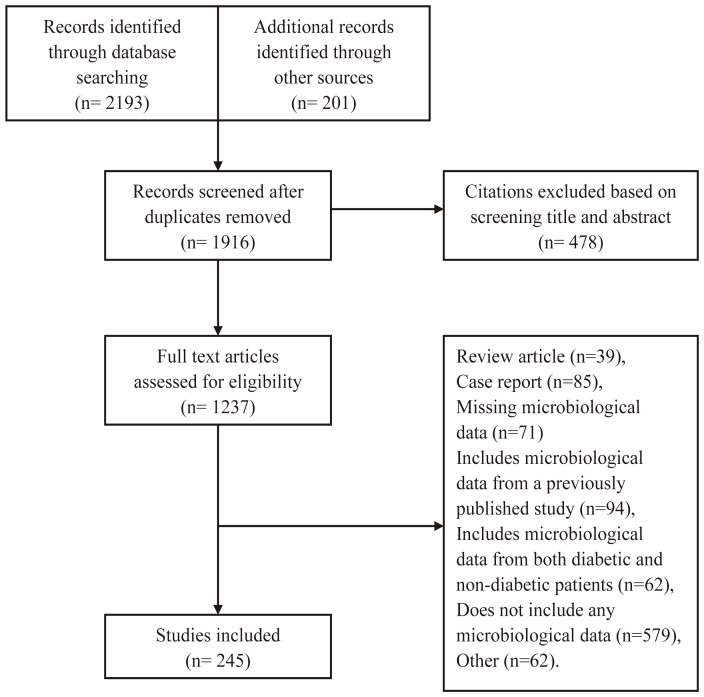
Through a comprehensive literature search, we identified published studies on organisms isolated from DFI wounds from January 2000 to December 2020.
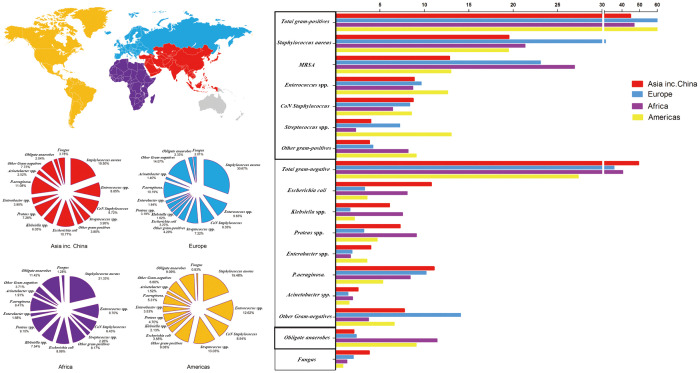
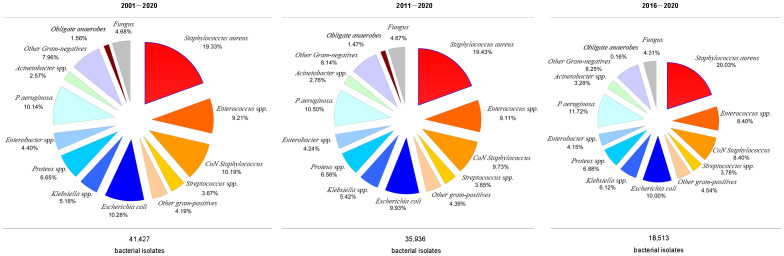
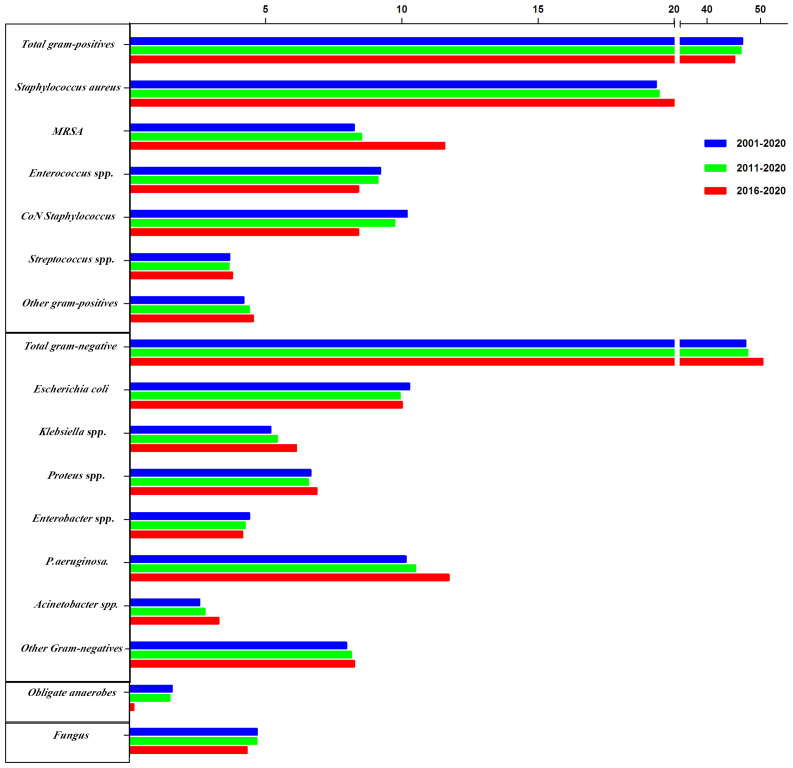
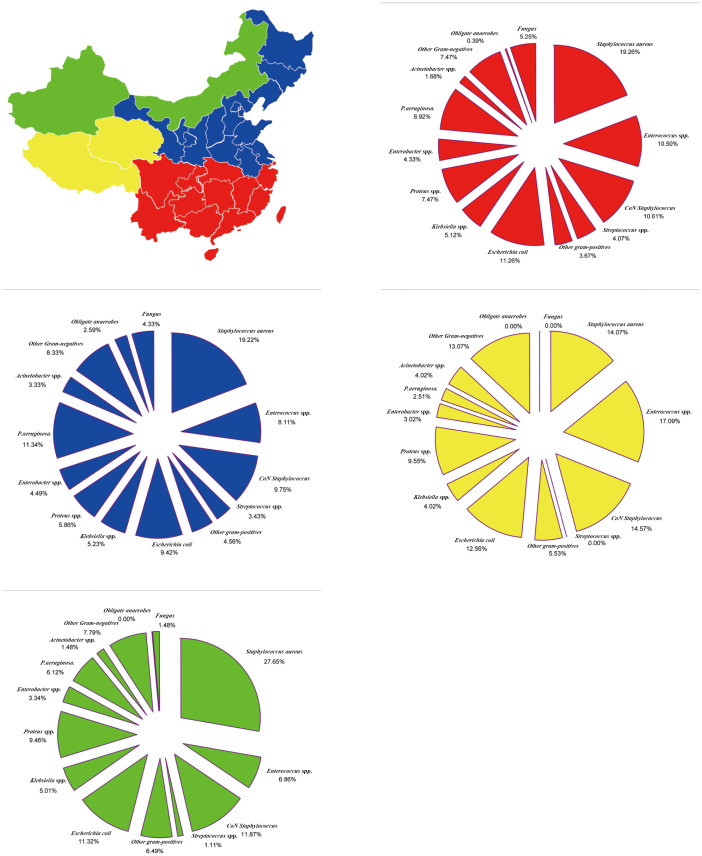
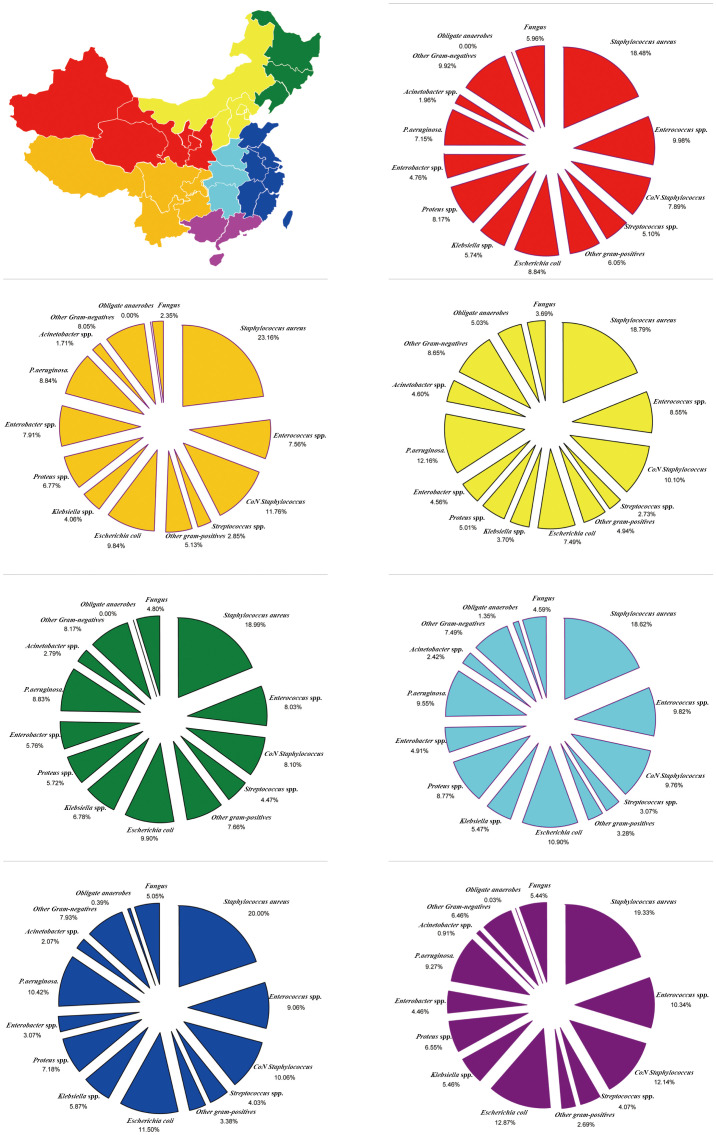
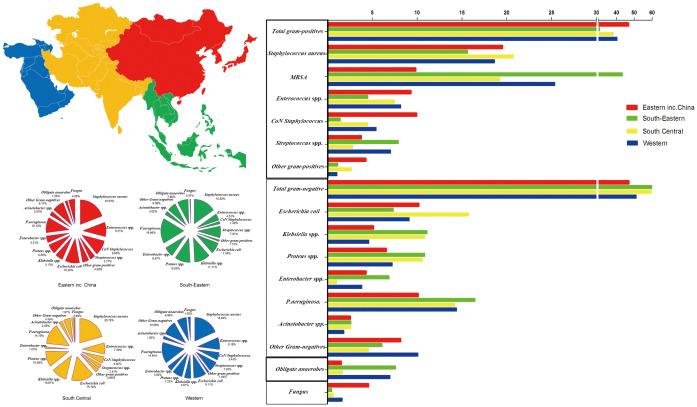
Based on our inclusion criteria, we analyzed 245 studies that cumulatively reported 38,744 patients and 41,427 isolated microorganisms. DFI pathogens varied according to time and region. Over time, the incidence of Gram-positive and Gram-negative aerobic bacteria have decreased and increased, respectively. America and Asia have the highest (62.74%) and lowest (44.82%) incidence of Gram-negative bacteria, respectively. Africa has the highest incidence (26.90%) of methicillin-resistant Staphylococcus aureus. Asia has the highest incidence (49.36%) of Gram-negative aerobic bacteria with species infection rates as follows: , 10.77%; , 3.95%; and , 11.08%, with higher local rates in China and Southeast Asia. Linezolid, vancomycin, and teicoplanin were the most active agents against Gram-positive aerobes, while imipenem and cefoperazone-sulbactam were the most active agents against Gram-negative aerobes.
This systematic review showed that over 20 years, the pathogens causing DFIs varied considerably over time and region. This data may inform local clinical guidelines on empirical antibiotic therapy for DFI in China and globally. Regular large-scale epidemiological studies are necessary to identify trends in DFI pathogenic bacteria.
https://www.crd.york.ac.uk/prospero/, identifier CRD42023447645.
全球范围内,导致糖尿病足感染(DFI)的病原体因地区而异;然而,了解致病病原体对于有效的经验性治疗至关重要。我们旨在确定全球范围内 DFI 病原体的发病率和抗生素敏感性,重点关注亚洲和中国。
通过全面的文献检索,我们确定了 2000 年 1 月至 2020 年 12 月期间从 DFI 伤口中分离出的病原体的已发表研究。
根据我们的纳入标准,我们分析了 245 项研究,这些研究累计报告了 38744 例患者和 41427 株分离的微生物。DFI 病原体随时间和地区而变化。随着时间的推移,革兰阳性需氧菌和革兰阴性需氧菌的发病率分别下降和增加。美洲和亚洲的革兰阴性菌发病率最高(62.74%)和最低(44.82%)。非洲耐甲氧西林金黄色葡萄球菌的发病率最高(26.90%)。亚洲革兰阴性需氧菌的发病率最高(49.36%),其中感染率最高的菌种如下: ,10.77%; ,3.95%; ,11.08%,中国和东南亚的局部发病率更高。对于革兰阳性需氧菌,林可霉素、万古霉素和替考拉宁是最有效的药物,而对于革兰阴性需氧菌,亚胺培南和头孢哌酮-舒巴坦是最有效的药物。
本系统综述表明,20 多年来,DFI 的病原体随时间和地区差异很大。这些数据可能为中国和全球的 DFI 经验性抗生素治疗提供本地临床指南。有必要定期进行大规模的流行病学研究,以确定 DFI 病原菌的趋势。
https://www.crd.york.ac.uk/prospero/,标识符 CRD42023447645。