Wu Xiaofei, Sun Qiong, Li Xiang, Jiang Lin, Chen Li
Department of Hematology, The Central Hospital of Wuhan, Tongji Medical College of Huazhong University of Science and Technology, Wuhan, 430014 China.
Indian J Hematol Blood Transfus. 2024 Jul;40(3):407-414. doi: 10.1007/s12288-024-01756-4. Epub 2024 Mar 25.
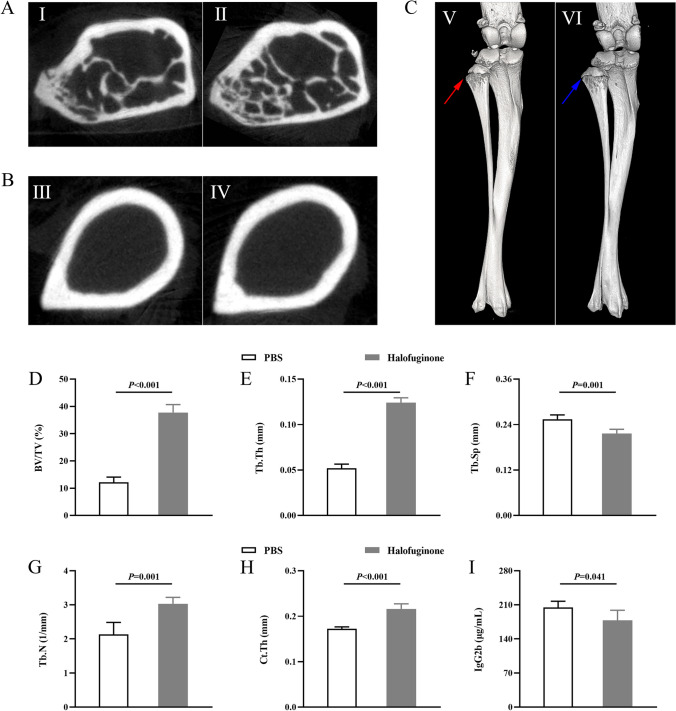
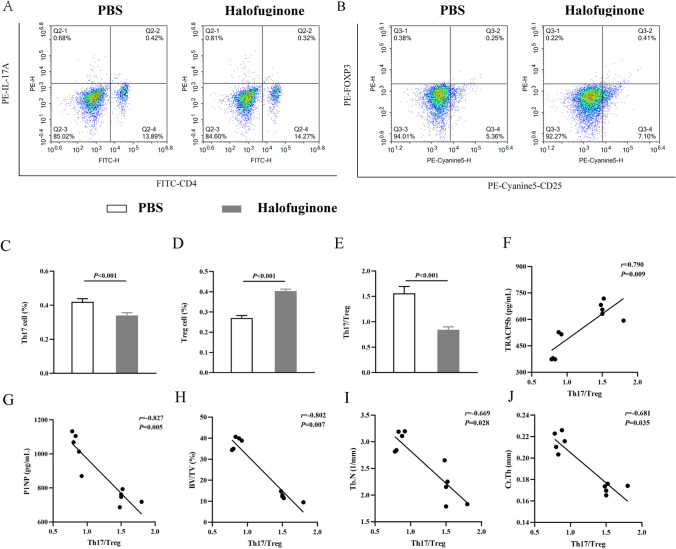
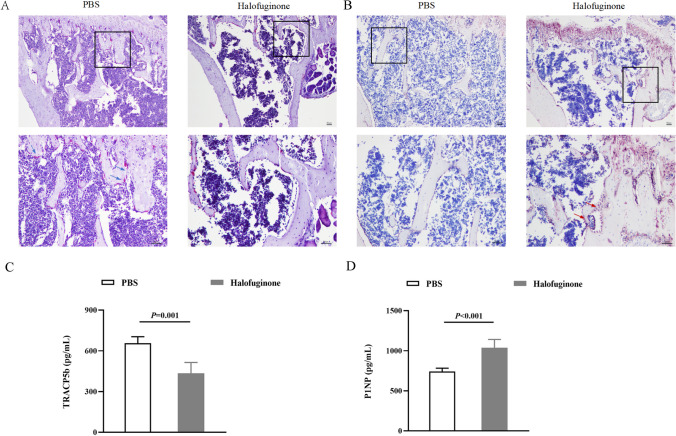
Evidences shows that T helper 17 (Th17) and regulatory T (Treg) cells imbalance plays a critical role in bone lesions of MM patients. Therefore, regulating the Th17/Treg imbalance may be beneficial for bone lesions in MM. Ten MM mice complicated with bone lesions were established and divided into the halofuginone (HF) group and the PBS group. After treatment, tibia and fibula from both groups were scanned by micro-CT. Osteoclasts and osteoblasts were validated by histochemical staining and ELISA. Th17 and Treg cells were tested by flow cytometry. The correlations between Th17/Treg cell ratio and osteoclasts, osteoblasts and bone remodeling were analyzed using the Spearman relative analysis. After treatment, mice in the HF group had an increase in trabecular bone volume fraction and thickened cortex, but a decrease in trabecular separation compared to mice in the PBS group.Tartrate-resistant acid phosphase (TRAP) + osteoclasts and its biomarker TRACP5b in serum were reduced, while alkaline phosphatase (ALP) + osteoblasts and its biomarker N-terminal propeptide of type 1precollagen (P1NP) in serum were accreted in the HF group. Th17/Treg cell ratio in halofuginone-treated mice was 0.85 ± 0.05, and was significantly lower than that in PBS-treated mice, which was 1.51 ± 0.03. In addition, it showed that the Th17/Treg cell ratio was significantly and positively associated with osteoclasts, but was significantly and negatively associated with osteoblasts and bone remodeling. Halofuginone plays a critical role in the amelioration bone lesions in MM, as it can inhibit osteoclastogenesis and enhance osteoblastogenesis by regulating the Th17/Treg cell balance.
The online version contains supplementary material available at 10.1007/s12288-024-01756-4.
证据表明,辅助性T细胞17(Th17)和调节性T(Treg)细胞失衡在MM患者的骨病变中起关键作用。因此,调节Th17/Treg失衡可能对MM的骨病变有益。建立10只并发骨病变的MM小鼠,并将其分为常山酮(HF)组和PBS组。治疗后,通过显微CT扫描两组小鼠的胫骨和腓骨。通过组织化学染色和酶联免疫吸附测定法验证破骨细胞和成骨细胞。通过流式细胞术检测Th17和Treg细胞。使用Spearman相关性分析分析Th17/Treg细胞比率与破骨细胞、成骨细胞和骨重塑之间的相关性。治疗后,与PBS组小鼠相比,HF组小鼠的骨小梁体积分数增加,皮质增厚,但骨小梁间距减小。HF组血清中抗酒石酸酸性磷酸酶(TRAP)+破骨细胞及其生物标志物TRACP5b减少,而血清中碱性磷酸酶(ALP)+成骨细胞及其生物标志物I型前胶原N端前肽(P1NP)增加。常山酮治疗的小鼠中Th17/Treg细胞比率为0.85±0.05,显著低于PBS治疗的小鼠,后者为1.51±0.03。此外,结果表明Th17/Treg细胞比率与破骨细胞显著正相关,但与成骨细胞和骨重塑显著负相关。常山酮在改善MM的骨病变中起关键作用,因为它可以通过调节Th17/Treg细胞平衡来抑制破骨细胞生成并增强成骨细胞生成。
在线版本包含可在10.1007/s12288-024-01756-4获取的补充材料。