Department of Microbiology, Faculty of Veterinary Medicine, Zagazig University, Zagazig, Egypt.
Department of Pharmacology, Faculty of Veterinary Medicine, Zagazig University, Zagazig, Egypt.
Sci Rep. 2024 Jul 17;14(1):16483. doi: 10.1038/s41598-024-65991-5.
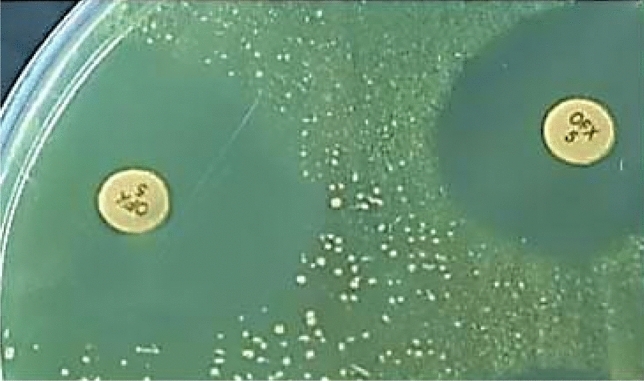
The drug efflux pump is a crucial mechanism implicated in resistance to multiple antimicrobials. Thymoquinone (TQ) has evidently demonstrated multiple activities, antibacterial being the most effective. Knowledge about TQ activity against multidrug-resistant Staphylococcus aureus is very scarce. Therefore, the present study was conducted to investigate TQ resistance modulation in ciprofloxacin (CIP) and doxycycline (DO) multidrug-resistant S. aureus. Forty-seven samples were collected from different sources, and S. aureus was isolated and identified. Then, S. aureus resistance profiles to antimicrobials, N. sativa essential oil, and TQ; the correlation between TQ-MIC readings and disc diffusion; cartwheel and ethidium bromide (EtBr) accumulation assays; and norA gene expression were all described within silico molecular docking for TQ interactions with norA efflux pump protein. TQ-MICs ranged from 5-320 µg/ml. TQ down-regulated norA gene expression, resulting in a drop in efflux pump activity of 77.5-90.6% in the examined strains, comparable to that observed with verapamil. Exposure of S. aureus strains to CIP and DO raises the initial basal efflux pumping expression to 34.2 and 22.9 times, respectively. This induced efflux pumping overexpression was substantially reduced by 97.7% when TQ was combined with CIP or DO. There was a significant reduction of MICs of CIP and DO MICs by 2-15 and 2-4 folds, respectively, after treatment with 0.5XMIC-TQ in resistance modulation assays. These results refer to TQ ligand inhibitory interactions with NorA protein in molecular docking. Interpretations of inhibition zone diameters (IZDs) of disc diffusion and TQ-MICs exhibit independence of MICs from IZDs, as indicated by invalid linear regression analysis. TQ significantly reduced efflux pumping S. aureus induced by CIP and DO, but further investigations are needed to improve TQ-pharmacokinetics to restore CIP and DO activity and suppress fluoroquinolone and doxycycline-resistant S. aureus selection in clinical and animal settings.
药物外排泵是导致多种抗菌药物耐药的关键机制。百里醌(TQ)显然表现出多种活性,其中抗菌活性最强。关于 TQ 对多药耐药金黄色葡萄球菌的活性知之甚少。因此,本研究旨在研究 TQ 对环丙沙星(CIP)和多西环素(DO)多药耐药金黄色葡萄球菌的耐药调节作用。从不同来源采集了 47 个样本,分离并鉴定了金黄色葡萄球菌。然后,描述了金黄色葡萄球菌对抗菌药物、N. sativa 精油和 TQ 的耐药谱;TQ-MIC 读数与圆盘扩散之间的相关性;车轮和溴化乙锭(EtBr)积累测定;以及 norA 基因表达均通过体内分子对接描述了 TQ 与 norA 外排泵蛋白的相互作用。TQ-MIC 范围为 5-320μg/ml。TQ 下调了 norA 基因的表达,导致研究菌株中外排泵活性下降 77.5-90.6%,与维拉帕米相当。CIP 和 DO 暴露于金黄色葡萄球菌菌株会使初始基础外排泵表达分别增加 34.2 和 22.9 倍。当 TQ 与 CIP 或 DO 联合使用时,这种诱导的外排泵过表达可降低 97.7%。在耐药调节试验中,用 0.5XMIC-TQ 处理后,CIP 和 DO 的 MIC 值分别显著降低了 2-15 倍和 2-4 倍。这些结果是指在分子对接中 TQ 配体与 NorA 蛋白的抑制相互作用。抑制圈直径(IZD)的解释与 MIC 无关 扩散和 TQ-MICs,如无效线性回归分析所示。TQ 显著降低了 CIP 和 DO 诱导的金黄色葡萄球菌外排泵,但是需要进一步研究以改善 TQ 药代动力学,以恢复 CIP 和 DO 的活性,并抑制氟喹诺酮类和多西环素耐药金黄色葡萄球菌在临床和动物环境中的选择。