Park Ki-Tae, Park Eun Kyung, Lee Dong-Hoon, An Joon Hwan, Won Jonghwa, Kim Sung Hwa, Lee Young-Kyun, Park Jung-Wee
Department of Orthopaedic Surgery, Seoul National University Bundang Hospital, Seongnam, Korea.
Department of Radiology, We Comfortable Clinic, Seoul, Korea.
J Korean Med Sci. 2024 Jul 15;39(27):e204. doi: 10.3346/jkms.2024.39.e204.
As one of the most challenging fractures to orthopedic surgeons, acetabular fractures show a wide range of incidence among countries and regions with even more variance in the treatment modalities. In this study, we aimed to investigate the epidemiology of acetabular fractures, and to compare the rate of subsequent total hip arthroplasty (THA) between nonoperative and operative treatments in South Korea using a medical claims database.
This was a retrospective study using the Korean Health Insurance Review and Assessment database. Patients admitted for acetabular fractures from January 2007 to December 2018 were identified using International Classification of Diseases-10 codes. Kaplan-Meier survival analysis was used to compare the cumulative incidence of THA between two groups. We also evaluated the survivorship of operative group according to the type of institutions.
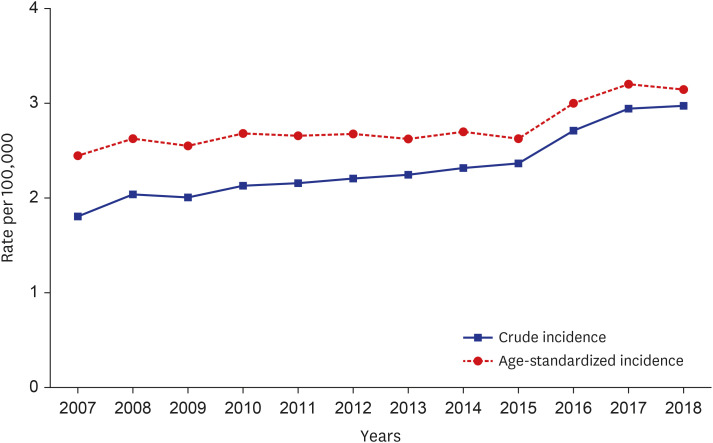
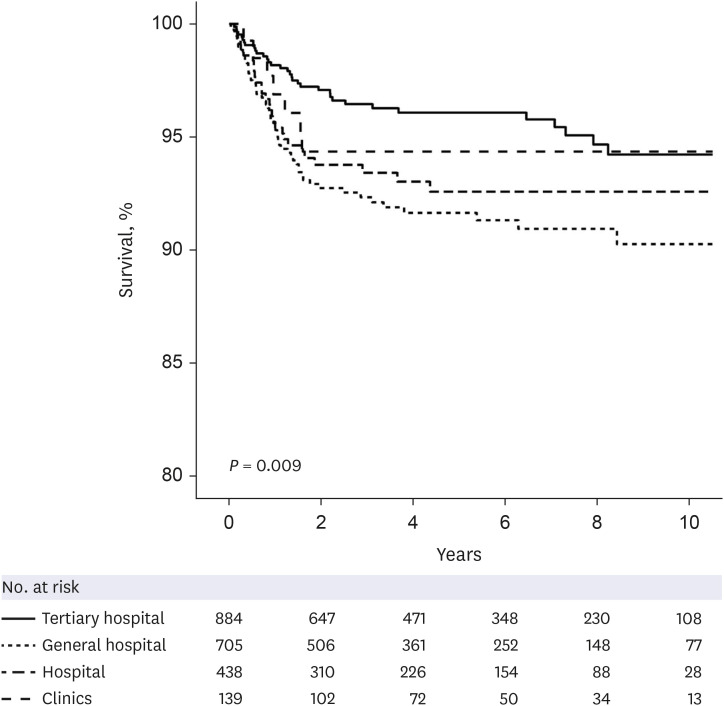
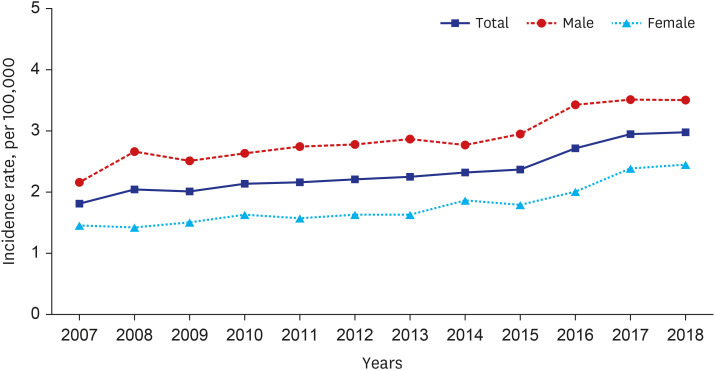
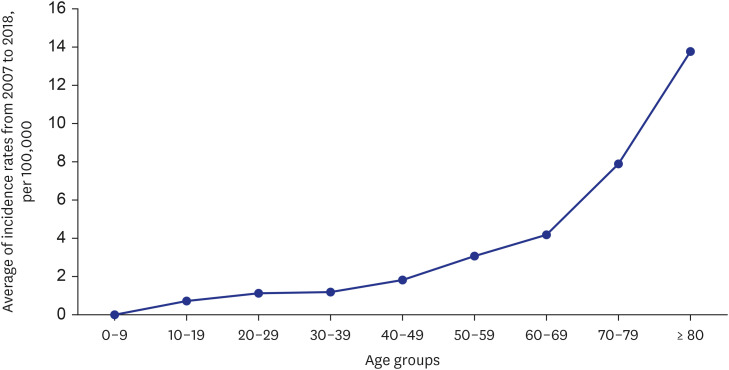
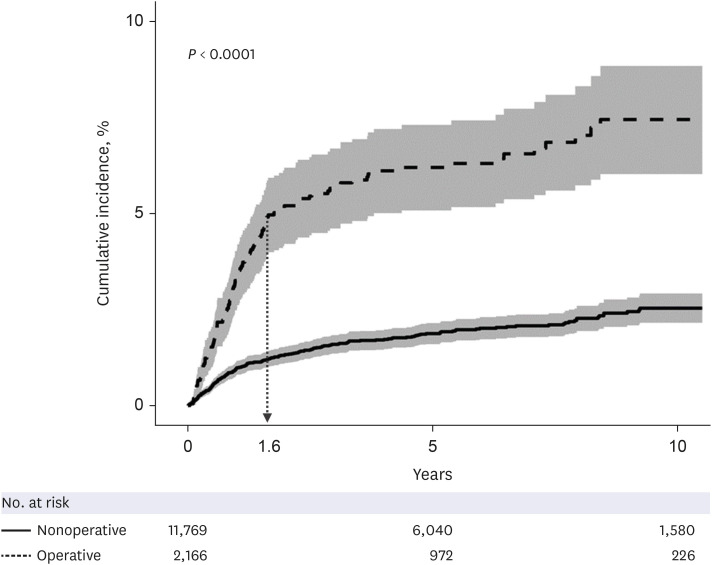
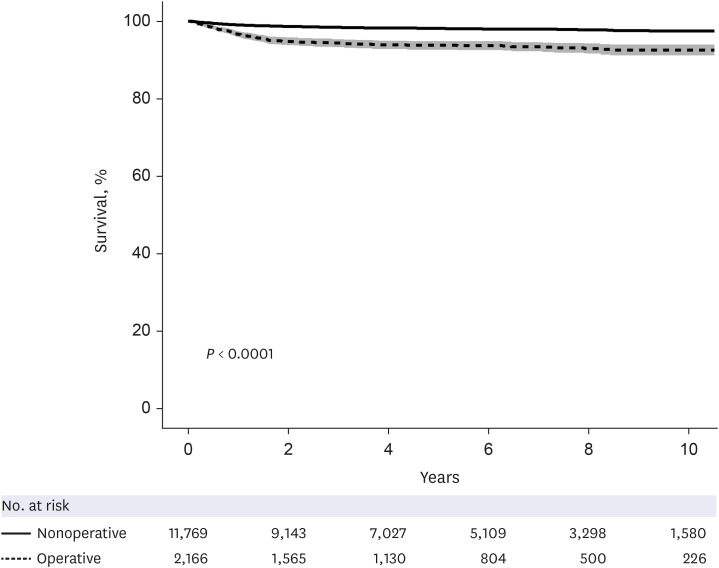
The incidence rate of acetabular fractures increased by 28% between 2007 and 2018. Acetabular fractures were more common in men (62%) than women (38%), and most common in the patients older than 80 years. The number of acetabular fractures was estimated to increase 1.7-fold in 2030 compared to 2018. Operative treatment accounted for 16% of cases, and nonoperative treatment for 84%. The incidence of subsequent THA was higher in the operative treatment group than in the nonoperative group ( < 0.001). The higher rate in the operative treatment group is probably related with the severity of the fracture type. The rate of subsequent THA was higher in patients who initially treated in general hospitals compared with those who were initially treated in tertiary hospitals.
The incidence of acetabular fractures is increasing in South Korea, in line with global trends. Most acetabular fractures are treated conservatively, and those who receive surgery are more likely to require a subsequent THA. Patients who were operated in general hospitals had highest possibility of subsequent THA after acetabular fractures.
髋臼骨折是骨科医生面临的最具挑战性的骨折之一,在不同国家和地区的发病率差异很大,治疗方式的差异更大。在本研究中,我们旨在调查髋臼骨折的流行病学情况,并使用医疗理赔数据库比较韩国非手术治疗和手术治疗后全髋关节置换术(THA)的发生率。
这是一项使用韩国健康保险审查与评估数据库的回顾性研究。通过国际疾病分类第10版代码识别2007年1月至2018年12月因髋臼骨折入院的患者。采用Kaplan-Meier生存分析比较两组THA的累积发生率。我们还根据机构类型评估了手术组的生存率。
2007年至2018年期间,髋臼骨折的发病率上升了28%。髋臼骨折在男性(62%)中比女性(38%)更常见,在80岁以上患者中最为常见。预计2030年髋臼骨折的数量将比2018年增加1.7倍。手术治疗占病例的16%,非手术治疗占84%。手术治疗组后续THA的发生率高于非手术组(<0.001)。手术治疗组较高的发生率可能与骨折类型的严重程度有关。与最初在三级医院接受治疗的患者相比,最初在综合医院接受治疗的患者后续THA的发生率更高。
韩国髋臼骨折的发病率正在上升,与全球趋势一致。大多数髋臼骨折采用保守治疗,接受手术的患者更有可能需要后续的THA。在综合医院接受手术的髋臼骨折患者后续发生THA的可能性最高。