Saeki Kohei, Ha Desiree, Chang Gregory, Mori Hitomi, Yoshitake Ryohei, Wu Xiwei, Wang Jinhui, Wang Yuan-Zhong, Wang Xiaoqiang, Tzeng Tony, Shim Hyun Jeong, Neuhausen Susan L, Chen Shiuan
Department of Cancer Biology and Molecular Medicine, Beckman Research Institute of City of Hope, 1500 East Duarte Road, Duarte, CA, 91010, USA.
Faculty of Veterinary Medicine, Okayama University of Science, Ehime, Japan.
J Mammary Gland Biol Neoplasia. 2024 Jul 17;29(1):15. doi: 10.1007/s10911-024-09569-x.
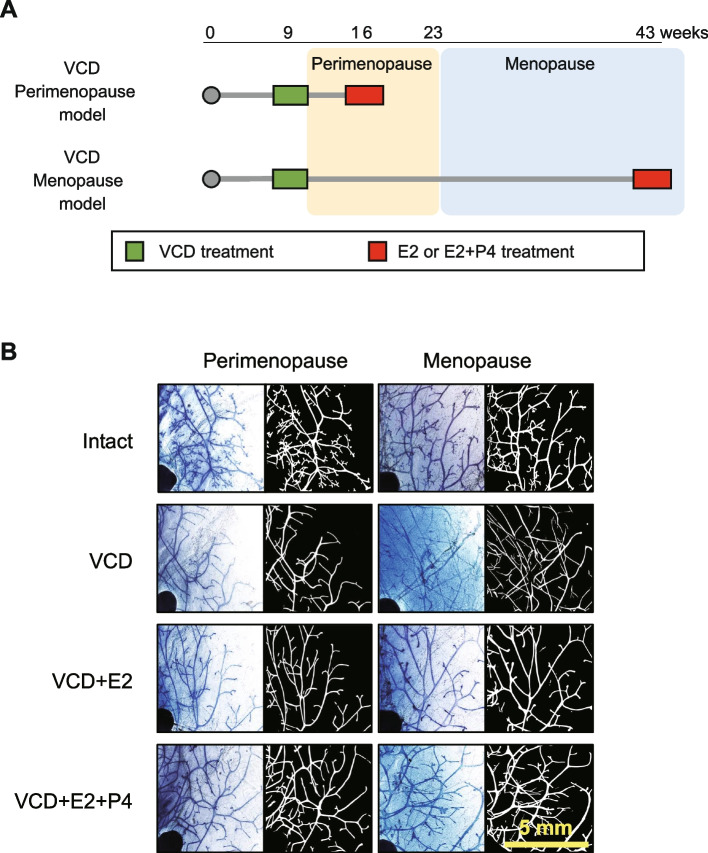
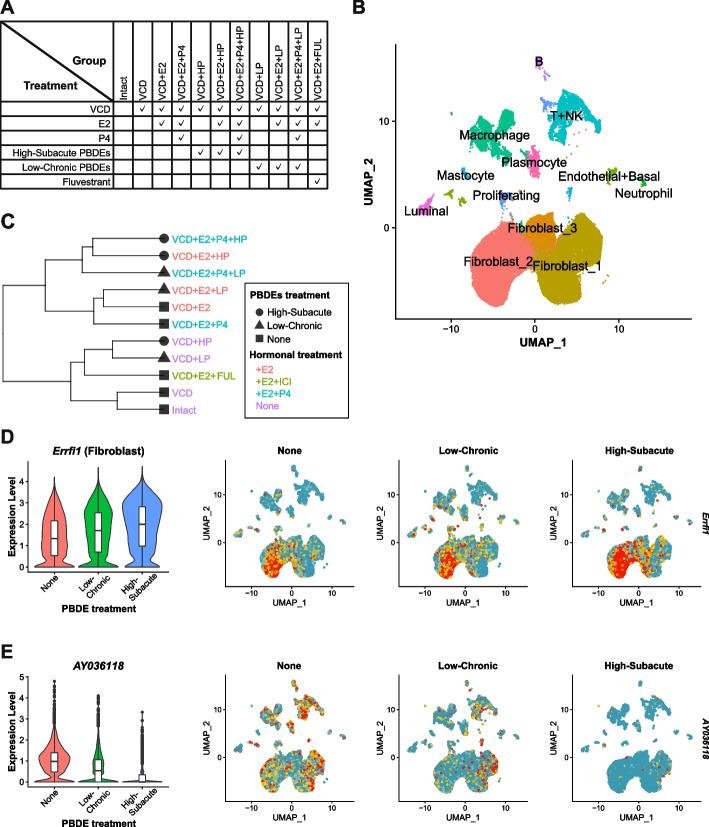
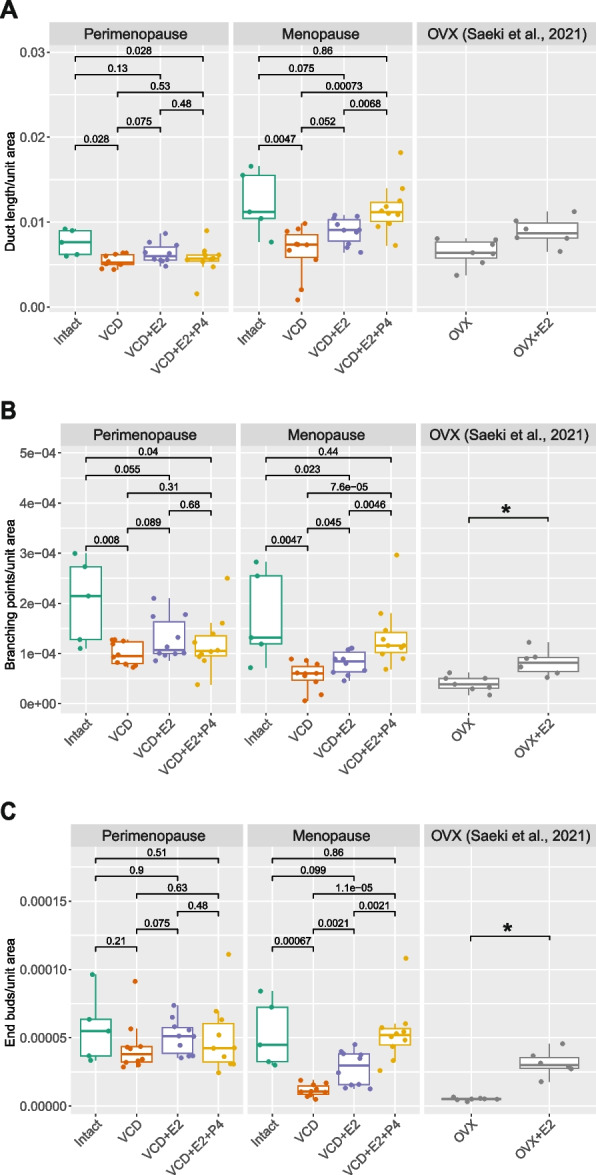
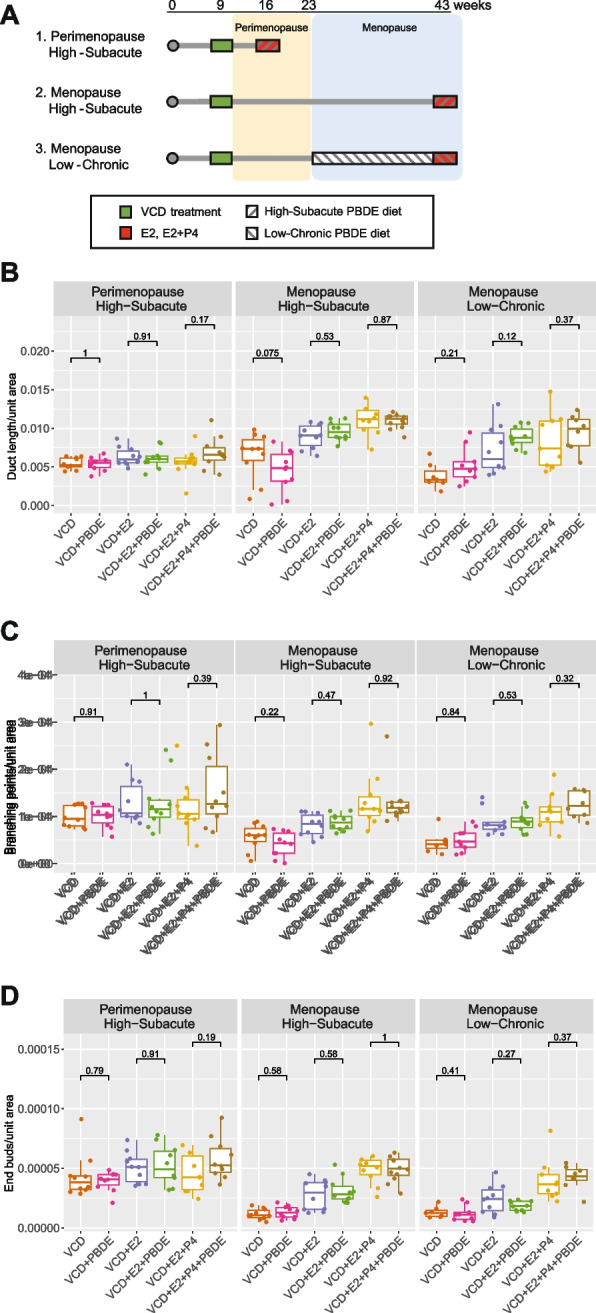
As both perimenopausal and menopausal periods are recognized critical windows of susceptibility for breast carcinogenesis, development of a physiologically relevant model has been warranted. The traditional ovariectomy model causes instant removal of the entire hormonal repertoire produced by the ovary, which does not accurately approximate human natural menopause with gradual transition. Here, we characterized the mammary glands of 4-vinylcyclohexene diepoxide (VCD)-treated animals at different time points, revealing that the model can provide the mammary glands with both perimenopausal and menopausal states. The perimenopausal gland showed moderate regression in ductal structure with no responsiveness to external hormones, while the menopausal gland showed severe regression with hypersensitivity to hormones. Leveraging the findings on the VCD model, effects of a major endocrine disruptor (polybrominated diphenyl ethers, PBDEs) on the mammary gland were examined during and after menopausal transition, with the two exposure modes; low-dose, chronic (environmental) and high-dose, subacute (experimental). All conditions of PBDE exposure did not augment or compromise the macroscopic ductal reorganization resulting from menopausal transition and/or hormonal treatments. Single-cell RNA sequencing revealed that the experimental PBDE exposure during the post-menopausal period caused specific transcriptomic changes in the non-epithelial compartment such as Errfi1 upregulation in fibroblasts. The environmental PBDE exposure resulted in similar transcriptomic changes to a lesser extent. In summary, the VCD mouse model provides both perimenopausal and menopausal windows of susceptibility for the breast cancer research community. PBDEs, including all tested models, may affect the post-menopausal gland including impacts on the non-epithelial compartments.
由于围绝经期和绝经后期被认为是乳腺癌发生易感性的关键窗口期,因此有必要建立一个生理相关模型。传统的卵巢切除术模型会立即去除卵巢产生的全部激素,这并不能准确模拟人类自然绝经的逐渐过渡过程。在这里,我们对4-乙烯基环己烯二环氧化物(VCD)处理的动物在不同时间点的乳腺进行了表征,发现该模型可以使乳腺呈现围绝经期和绝经后期状态。围绝经期乳腺的导管结构出现中度退化,对外源激素无反应,而绝经后期乳腺则出现严重退化,对激素高度敏感。利用VCD模型的研究结果,我们在绝经过渡期间和之后,采用低剂量、慢性(环境暴露)和高剂量、亚急性(实验暴露)两种暴露模式,研究了一种主要的内分泌干扰物(多溴二苯醚,PBDEs)对乳腺的影响。所有PBDE暴露条件均未增强或损害绝经过渡和/或激素治疗引起的宏观导管重组。单细胞RNA测序显示,绝经后期的实验性PBDE暴露在非上皮细胞区室引起了特定的转录组变化,如成纤维细胞中Errfi1上调。环境PBDE暴露在较小程度上导致了类似的转录组变化。总之,VCD小鼠模型为乳腺癌研究界提供了围绝经期和绝经后期的易感性窗口期。包括所有测试模型在内的PBDEs可能会影响绝经后期乳腺,包括对非上皮细胞区室的影响。