Fatima Summera, Bibi Asia, Qureshi Sara Samad, Khan Suman
Department of Zoology, The Women University Multan, Multan 60000, Pakistan.
Nishtar Medical University & Hospital, Multan 60000, Pakistan.
Ecancermedicalscience. 2024 May 16;18:1703. doi: 10.3332/ecancer.2024.1703. eCollection 2024.
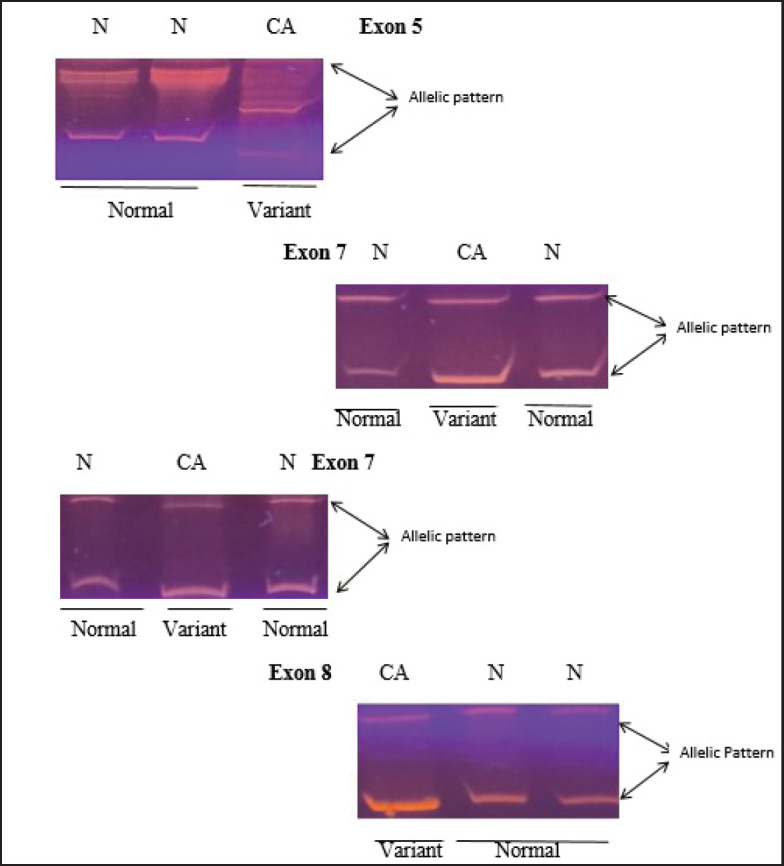
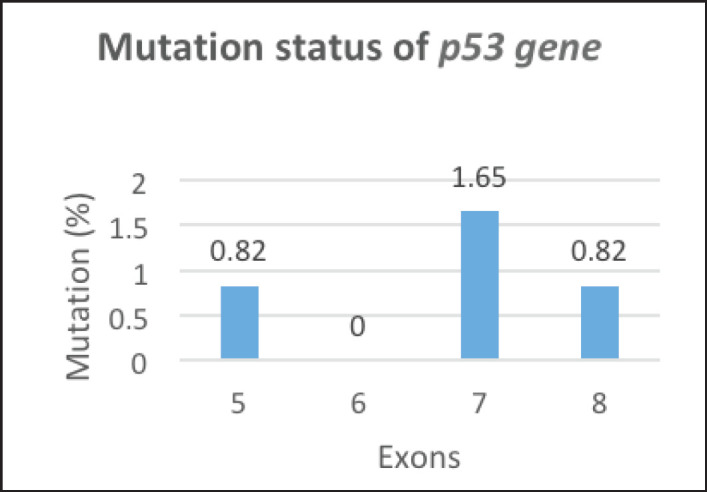
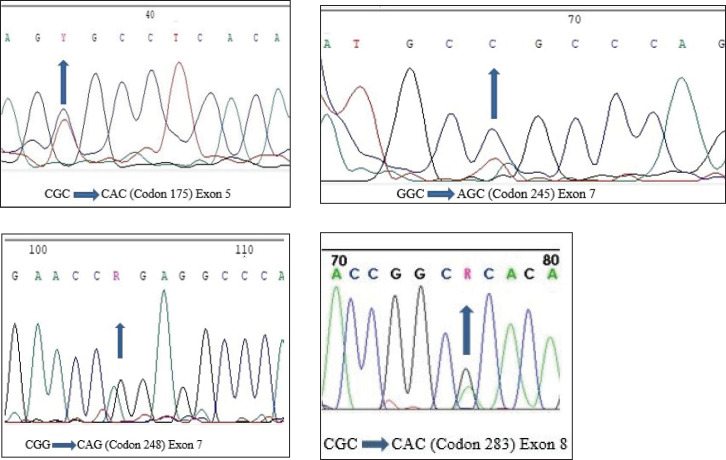
The aim of this study was to determine the frequency of mutation among Pakistani head and neck cancer (HNC) patients who visited Nishtar Hospital Multan and Nishtar Institute of Dentistry (NID), Multan, Pakistan. While significant research has been conducted on the role of in HNC throughout the world, this study is the first of its kind in Southern Punjab, Pakistan. A total of 242 samples (121 cases and 121 controls) were collected from Nishtar Hospital Multan and NID, Multan, Pakistan. After histopathological analysis to determine the stage type and grade of malignancy, DNA extraction and sequencing were carried out to assess any mutations in the region (exons 5-8). Genetic screening was performed by the polymerase chain reaction (PCR)-single strand conformation polymorphism (SSCP) technique and Chromas 2.6.6 was used to visualise the sequencing results. The mean age of cases was 50.73 ±16.41 years and controls were 37.55 ± 15.51 years. The frequency of HNC was higher in male patients (65.28%) than in female patients (34.71%). Overall, this cancer was found to be significantly more prevalent in the age group of >35-55 years ( < 0.001). Smoking (51% versus 14%), naswar usage (15.7% versus 6.6%), poor oral hygiene (52.9% versus 29.8%) and anemic status (57.0% versus 4.1%) were significantly associated with cases ( ≤ 0.05) compared to controls. Only 04 samples exon 5 (1 sample), exon 7 (2 samples) and exon 8 (1 sample) with changed mobility patterns were found on the SSCP gel. All mutations were missense and heterozygous. Out of four mutant samples, three mutations were in the hotspot regions (codon 175, 245 and 248) of Based on this study, there may be a weak association between the exon 5-8 mutation and HNC patients in Southern Punjab, Pakistan.
本研究的目的是确定前往巴基斯坦木尔坦尼什塔尔医院和木尔坦尼什塔尔牙科学院(NID)就诊的巴基斯坦头颈癌(HNC)患者中的突变频率。虽然全世界都在对[具体基因]在头颈癌中的作用进行大量研究,但本研究是巴基斯坦旁遮普省南部此类研究中的首例。总共从巴基斯坦木尔坦尼什塔尔医院和NID收集了242份样本(121例病例和121例对照)。在进行组织病理学分析以确定恶性肿瘤的分期类型和分级后,进行DNA提取和测序,以评估[具体基因]区域(外显子5 - 8)的任何突变。通过聚合酶链反应(PCR)-单链构象多态性(SSCP)技术进行基因筛查,并使用Chromas 2.6.6可视化测序结果。病例的平均年龄为50.73±16.41岁,对照的平均年龄为37.55±15.51岁。男性患者(65.28%)的头颈癌发病率高于女性患者(34.71%)。总体而言,发现这种癌症在>35 - 55岁年龄组中明显更为普遍(P<0.001)。与对照组相比,吸烟(51%对14%)、嚼鼻烟习惯(15.7%对6.6%)、口腔卫生差(52.9%对29.8%)和贫血状态(57.0%对4.1%)与病例显著相关(P≤0.05)。在SSCP凝胶上仅发现4个外显子5(1个样本)、外显子7(2个样本)和外显子8(1个样本)的迁移模式发生改变。所有突变均为错义突变且为杂合子。在四个突变样本中,三个突变位于[具体基因]的热点区域(密码子175、245和248)。基于本研究,在巴基斯坦旁遮普省南部,[具体基因]外显子5 - 8突变与头颈癌患者之间可能存在弱关联。