Minea Radu O, Thein Thu Zan, Yang Zhuoyue, Campan Mihaela, Ward Pamela M, Schönthal Axel H, Chen Thomas C
Department of Neurological Surgery, Keck School of Medicine (KSOM), University of Southern California (USC), Los Angeles, California, USA.
Norris Comprehensive Cancer Center, KSOM, USC, Los Angeles, California, USA.
Neurooncol Adv. 2024 Jun 11;6(1):vdae095. doi: 10.1093/noajnl/vdae095. eCollection 2024 Jan-Dec.
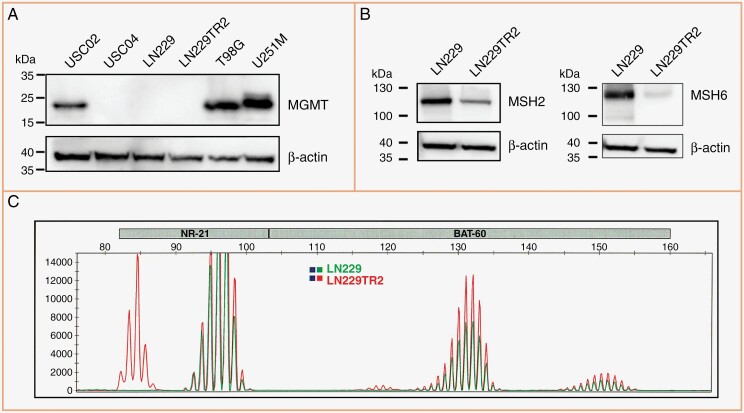
The chemotherapeutic standard of care for patients with glioblastoma (GB) is radiation therapy (RT) combined with temozolomide (TMZ). However, during the twenty years since its introduction, this so-called Stupp protocol has revealed major drawbacks, because nearly half of all GBs harbor intrinsic treatment resistance mechanisms. Prime among these are the increased expression of the DNA repair protein O6-guanine-DNA methyltransferase (MGMT) and cellular deficiency in DNA mismatch repair (MMR). Patients with such tumors receive very little, if any, benefit from TMZ. We are developing a novel molecule, NEO212 (TMZ conjugated to NEO100), that harbors the potential to overcome these limitations.
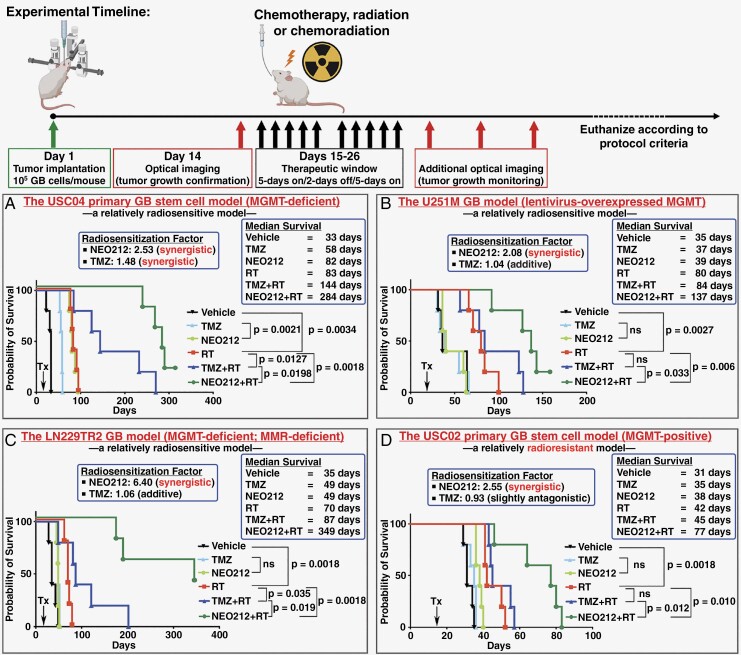
We used mouse models that were orthotopically implanted with GB cell lines or primary, radioresistant human GB stem cells, representing different treatment resistance mechanisms. Animals received NEO212 (or TMZ for comparison) without or with RT. Overall survival was recorded, and histology studies quantified DNA damage, apoptosis, microvessel density, and impact on bone marrow.
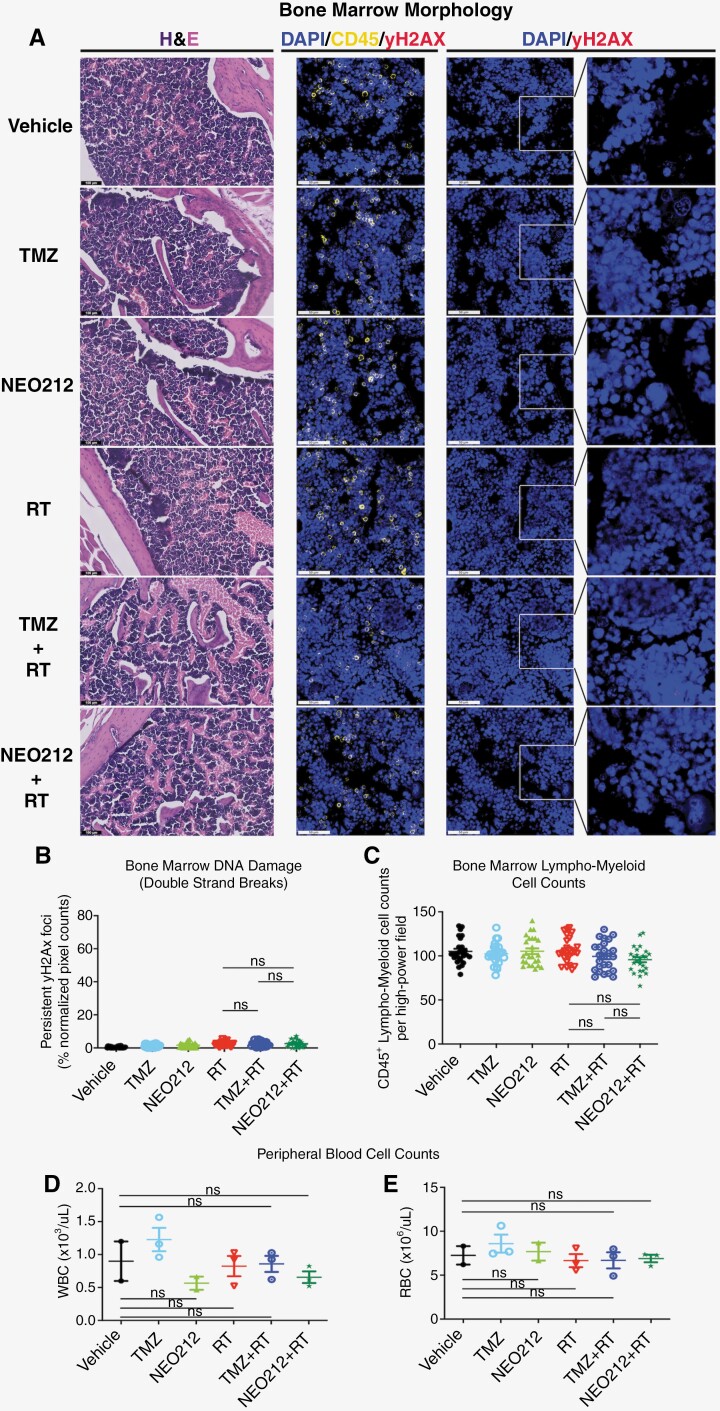
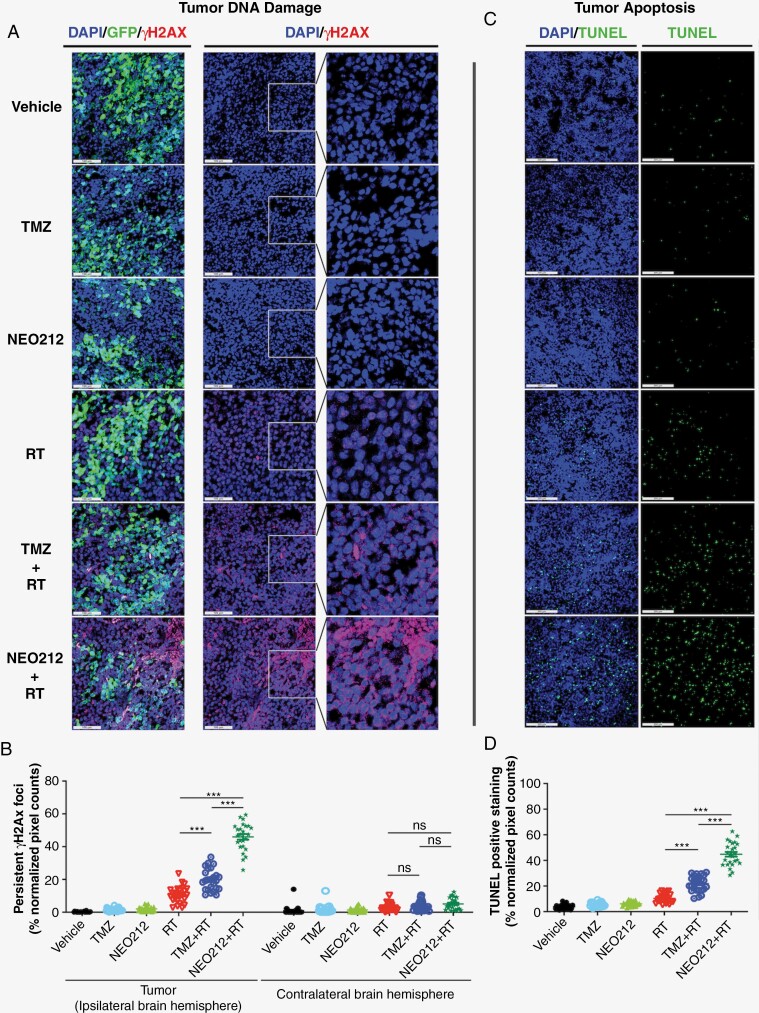
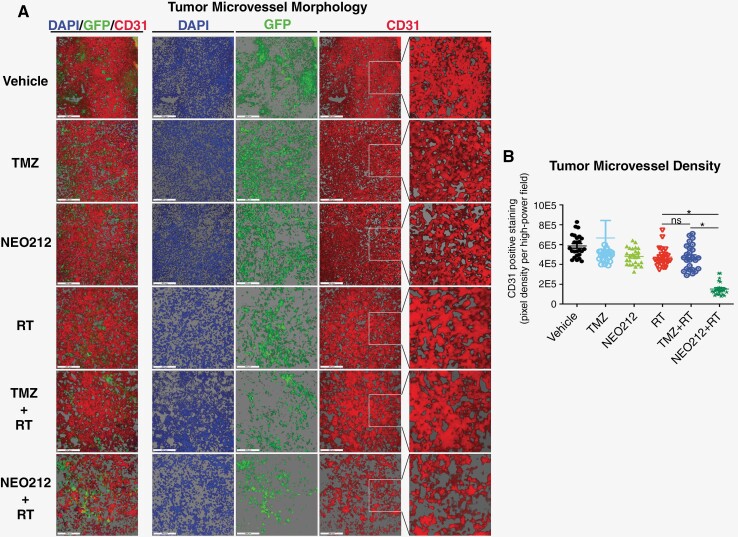
In all tumor models, replacing TMZ with NEO212 in a schedule designed to mimic the Stupp protocol achieved a strikingly superior extension of survival, especially in TMZ-resistant and RT-resistant models. While NEO212 displayed pronounced radiation-sensitizing, DNA-damaging, pro-apoptotic, and anti-angiogenic effects in tumor tissue, it did not cause bone marrow toxicity.
NEO212 is a candidate drug to potentially replace TMZ within the standard Stupp protocol. It has the potential to become the first chemotherapeutic agent to significantly extend overall survival in TMZ-resistant patients when combined with radiation.
胶质母细胞瘤(GB)患者的化疗标准治疗方案是放射治疗(RT)联合替莫唑胺(TMZ)。然而,自该方案引入二十年来,这个所谓的Stupp方案已暴露出重大缺陷,因为几乎一半的胶质母细胞瘤都存在内在的治疗抵抗机制。其中最主要的是DNA修复蛋白O6-鸟嘌呤-DNA甲基转移酶(MGMT)表达增加以及DNA错配修复(MMR)细胞缺陷。患有此类肿瘤的患者从替莫唑胺中获益甚微,甚至没有获益。我们正在研发一种新型分子NEO212(与NEO100偶联的替莫唑胺),它有潜力克服这些局限性。
我们使用了原位植入胶质母细胞瘤细胞系或原发性、耐放射的人类胶质母细胞瘤干细胞的小鼠模型,这些模型代表了不同的治疗抵抗机制。动物接受NEO212(或作为对照的替莫唑胺),有无放射治疗。记录总体生存期,并通过组织学研究对DNA损伤、细胞凋亡、微血管密度以及对骨髓的影响进行量化。
在所有肿瘤模型中,按照模拟Stupp方案的给药方案用NEO212替代替莫唑胺,生存期显著延长,尤其是在替莫唑胺耐药和放射耐药模型中。虽然NEO212在肿瘤组织中显示出明显的放射增敏、DNA损伤、促凋亡和抗血管生成作用,但它不会引起骨髓毒性。
NEO212是一种有可能在标准Stupp方案中替代替莫唑胺的候选药物。它有可能成为第一种与放射治疗联合使用时能显著延长替莫唑胺耐药患者总体生存期的化疗药物。