Department of Epidemiology & Biostatistics, University of California San Francisco, San Francisco, CA, USA.
Department of Obstetrics, Gynecology & Reproductive Sciences, University of California San Francisco, San Francisco, CA, USA.
BMC Public Health. 2024 Jul 19;24(1):1936. doi: 10.1186/s12889-024-19155-9.
Safer conception services are needed to minimize HIV transmission among HIV sero-discordant couples desiring pregnancy. Few studies have evaluated the choices couples make when they are offered multiple safer conception methods or real-world method acceptability. This paper addresses an important knowledge gap regarding factors that influence the choice of safer conception methods, couples' actual experiences using safer conception methods, and why some couples switch safer conception methods.
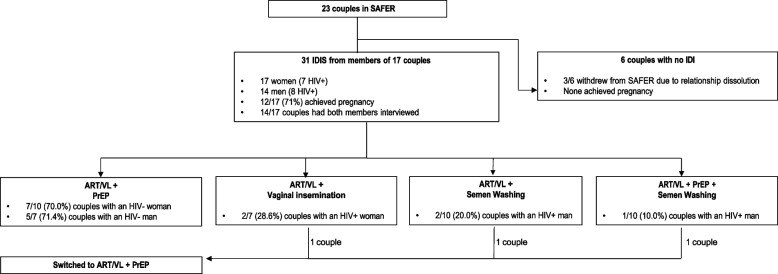
Between February and June 2019, we conducted semi-structured in-depth interviews among 14 men and 17 women, representing 17 couples who exited the SAFER study-a pilot safer conception study for HIV sero-discordant couples in Zimbabwe that offered couples a choice of ART with monthly viral load monitoring (ART/VL), oral PrEP, vaginal insemination, and semen washing. All couples in SAFER had used at least two safer conception methods.
We found that safer conception method choice often centered around a desire for intimacy, condomless sex, and certainty in the conception process, particularly for men. Method-related attributes such as familiarity, perceived ease of use, side effects, and perceived level of effectiveness in preventing HIV and achieving pregnancy influenced method choice, switching, and satisfaction. Concerns were expressed about each safer conception method and couples were willing to try different methods until they found method(s) that worked for them. The majority of participants reported having positive experiences using safer conception, especially those using ART/VL + PrEP, citing that they were able to attempt pregnancy for the first time with peace of mind and experienced joy and satisfaction from being able to achieve pregnancy safely.
The differences in method preferences and experiences voiced by participants in this study and in other studies from the region point to the importance of having a variety of safer conception options in the service delivery package and addressing concerns about paternity, intimacy, and method-related attributes to enable HIV sero-discordant couples to safely achieve their reproductive goals.
需要更安全的受孕服务,以最大程度地减少艾滋病毒血清不一致的夫妇在怀孕时的艾滋病毒传播。很少有研究评估过当夫妇提供多种更安全的受孕方法或现实世界的方法可接受性时,他们所做的选择。本文解决了一个重要的知识差距,即影响更安全的受孕方法选择的因素、夫妇实际使用更安全的受孕方法的经验,以及为什么有些夫妇会切换更安全的受孕方法。
在 2019 年 2 月至 6 月期间,我们对来自津巴布韦的 17 对夫妇中的 14 名男性和 17 名女性进行了半结构化深入访谈,这些夫妇参加了 SAFER 研究,这是一项针对艾滋病毒血清不一致的夫妇的更安全的受孕研究,为夫妇提供了选择抗逆转录病毒疗法联合每月病毒载量监测(ART/VL)、口服 PrEP、阴道内授精和精子洗涤的机会。SAFER 中的所有夫妇都至少使用了两种更安全的受孕方法。
我们发现,更安全的受孕方法选择往往围绕着亲密、无保护的性行为和受孕过程的确定性,特别是对男性而言。与方法相关的属性,如熟悉程度、使用的难易程度、副作用以及预防艾滋病毒和怀孕的有效性感知,影响了方法的选择、转换和满意度。每个更安全的受孕方法都存在顾虑,夫妇们愿意尝试不同的方法,直到找到适合他们的方法。大多数参与者报告说,他们在使用更安全的受孕方法时都有积极的体验,特别是那些使用 ART/VL+PrEP 的人,他们表示能够第一次安心尝试怀孕,并因能够安全怀孕而感到喜悦和满足。
这项研究和该地区其他研究中参与者表达的方法偏好和经验的差异,表明在服务提供包中提供各种更安全的受孕选择的重要性,以及解决关于父权、亲密关系和方法相关属性的担忧,以使艾滋病毒血清不一致的夫妇能够安全地实现他们的生殖目标。