Department of Hepatic Surgery and Liver Transplantation Center of The Third Affiliated Hospital, Organ Transplantation Institute, Sun Yat-sen University, Organ Transplantation Research Center of Guangdong Province, Guangdong Province Engineering Laboratory for Transplantation Medicine, Guangzhou, 510630, China.
Guangdong Key Laboratory of Liver Disease Research, The Third Affiliated Hospital of Sun Yat-sen University, Guangzhou, 510630, China.
Adv Sci (Weinh). 2024 Aug;11(32):e2404171. doi: 10.1002/advs.202404171. Epub 2024 Jun 20.
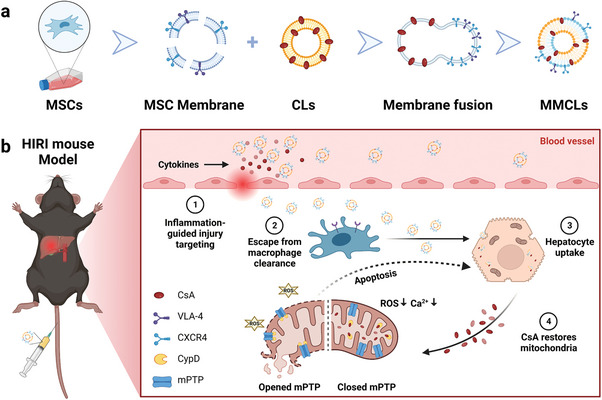
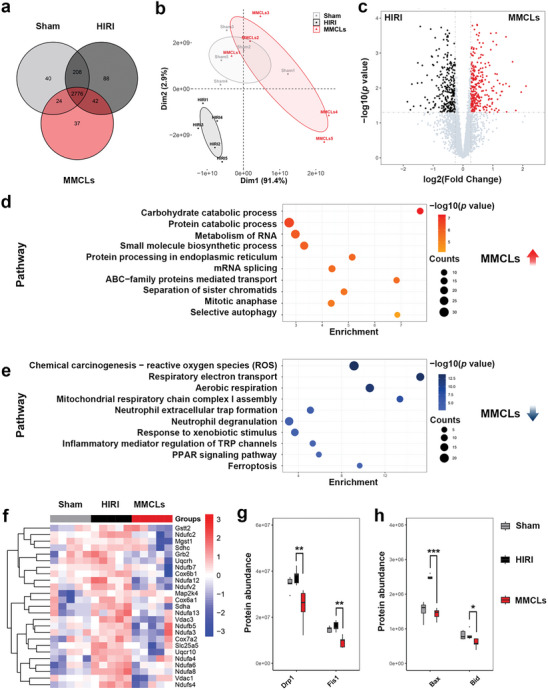
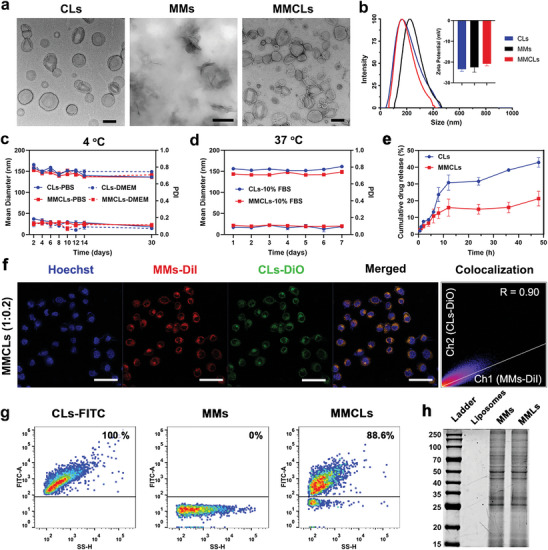
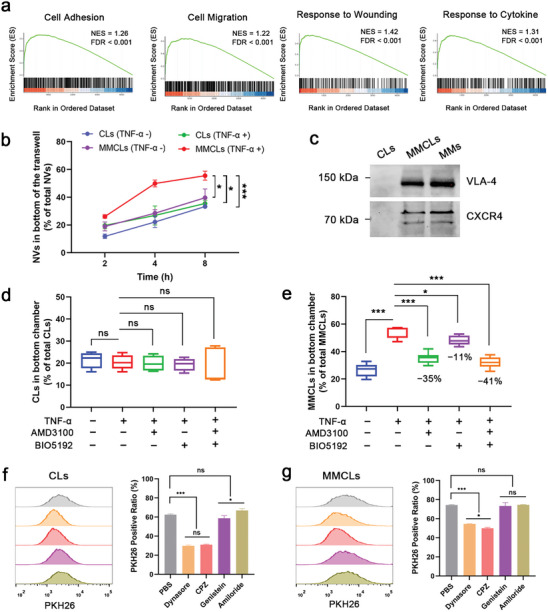
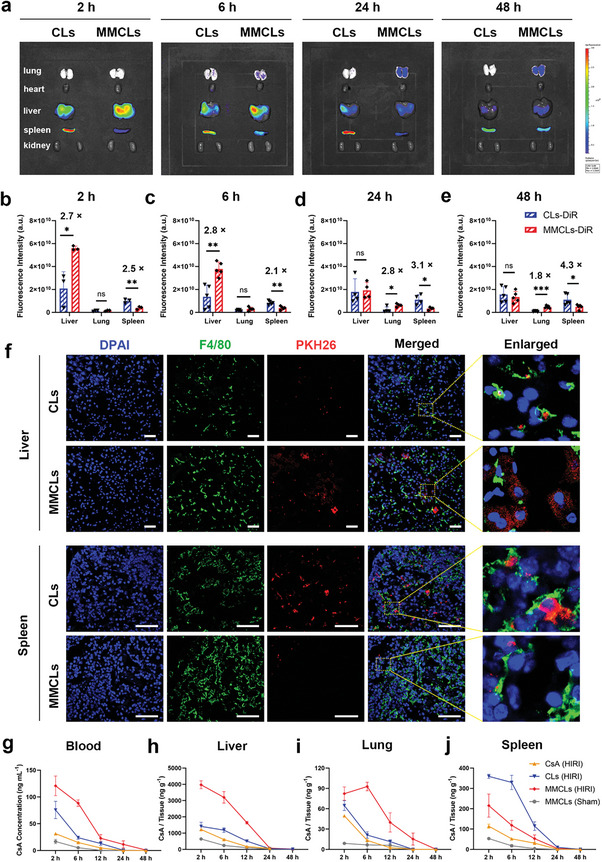
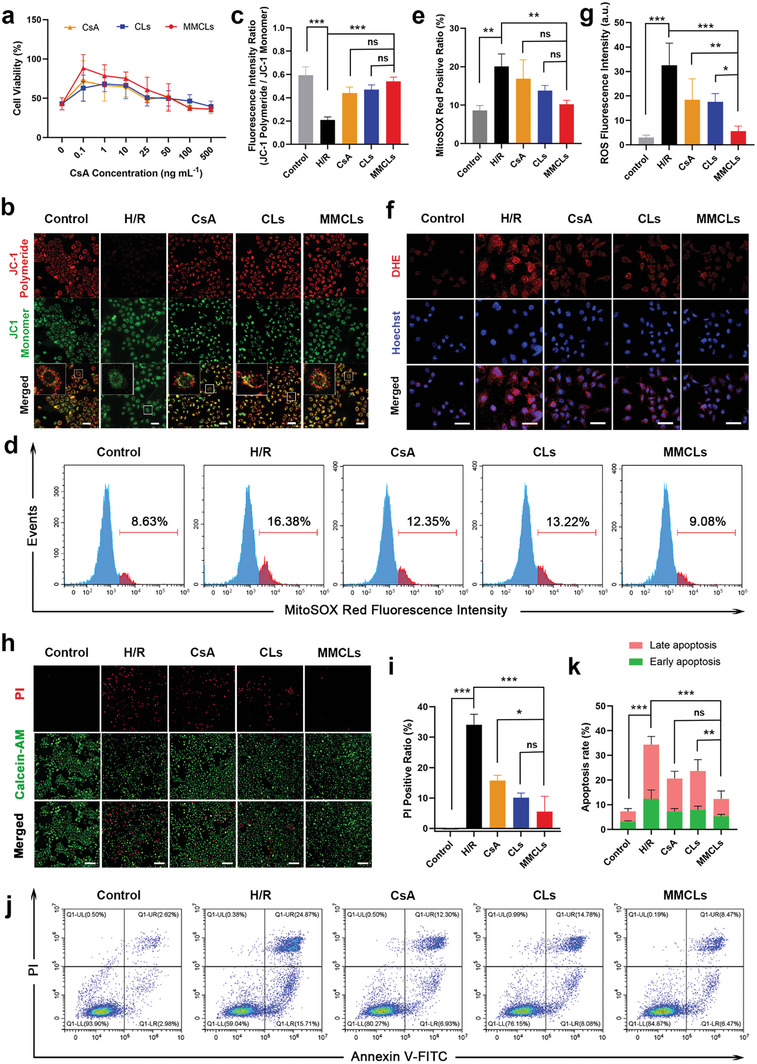
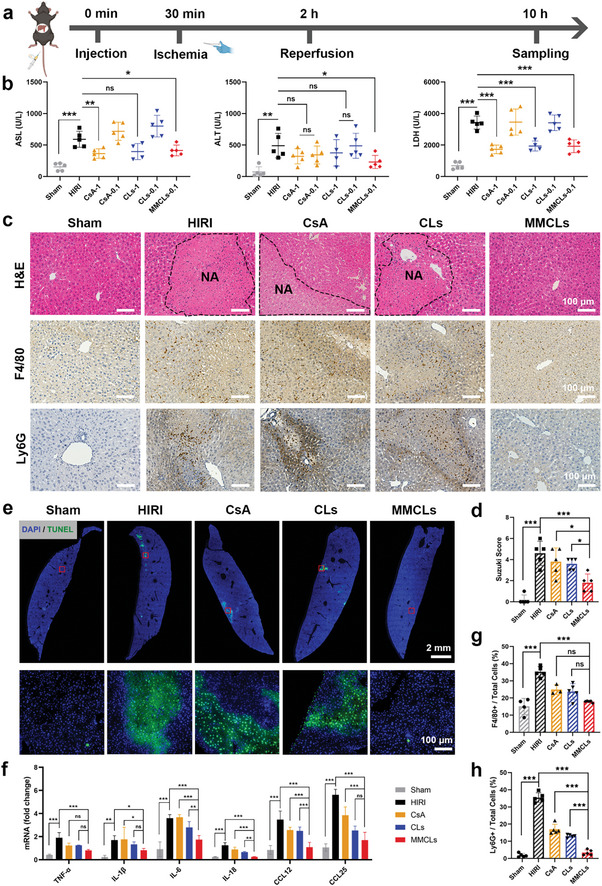
Hepatic ischemia-reperfusion injury (HIRI) is a prevalent issue during liver resection and transplantation, with currently no cure or FDA-approved therapy. A promising drug, Cyclosporin A (CsA), ameliorates HIRI by maintaining mitochondrial homeostasis but has systemic side effects due to its low bioavailability and high dosage requirements. This study introduces a biomimetic CsA delivery system that directly targets hepatic lesions using mesenchymal stem cell (MSC) membrane-camouflaged liposomes. These hybrid nanovesicles (NVs), leveraging MSC-derived proteins, demonstrate efficient inflammatory chemotaxis, transendothelial migration, and drug-loading capacity. In a HIRI mouse model, the biomimetic NVs accumulated at liver injury sites entered hepatocytes, and significantly reduced liver damage and restore function using only one-tenth of the CsA dose typically required. Proteomic analysis verifies the protection mechanism, which includes reactive oxygen species inhibition, preservation of mitochondrial integrity, and reduced cellular apoptosis, suggesting potential for this biomimetic strategy in HIRI intervention.
肝缺血再灌注损伤(HIRI)是肝切除和肝移植过程中普遍存在的问题,目前尚无治愈方法或获得 FDA 批准的治疗方法。环孢素 A(CsA)是一种有前途的药物,通过维持线粒体稳态来减轻 HIRI,但由于其生物利用度低和高剂量要求,存在全身副作用。本研究介绍了一种仿生 CsA 递药系统,该系统使用间充质干细胞(MSC)膜伪装的脂质体直接靶向肝病变。这些混合纳米囊泡(NVs)利用 MSC 衍生的蛋白质,表现出高效的炎症趋化性、跨内皮迁移和药物装载能力。在 HIRI 小鼠模型中,仿生 NVs 在肝损伤部位聚集,并进入肝细胞,仅使用通常所需 CsA 剂量的十分之一,就显著减轻了肝损伤并恢复了肝功能。蛋白质组学分析验证了保护机制,包括抑制活性氧、维持线粒体完整性和减少细胞凋亡,这表明这种仿生策略在 HIRI 干预中有潜在应用。