Unit of Infectious Diseases and Hepatology, University Hospital of Parma, Parma, Italy.
Department of Medicine and Surgery, University of Parma, Parma, Italy.
Gut. 2024 Sep 9;73(10):1737-1748. doi: 10.1136/gutjnl-2024-332290.
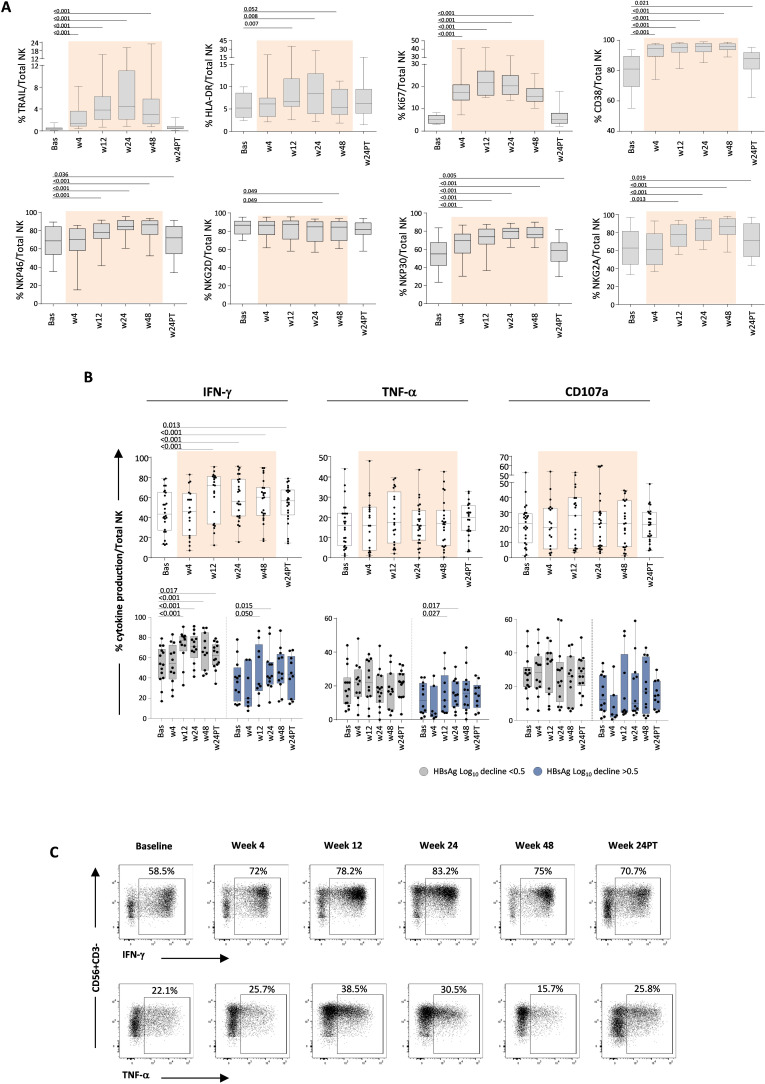
Selected populations of patients with chronic hepatitis B (CHB) may benefit from a combined use of pegylated interferon-alpha (pegIFN-α) and nucleos(t)ides (NUCs). The aim of our study was to assess the immunomodulatory effect of pegIFN-α on T and natural killer (NK) cell responses in NUC-suppressed patients to identify cellular and/or serological parameters to predict better T cell-restoring effect and better control of infection in response to pegIFN-α for a tailored application of IFN-α add-on.
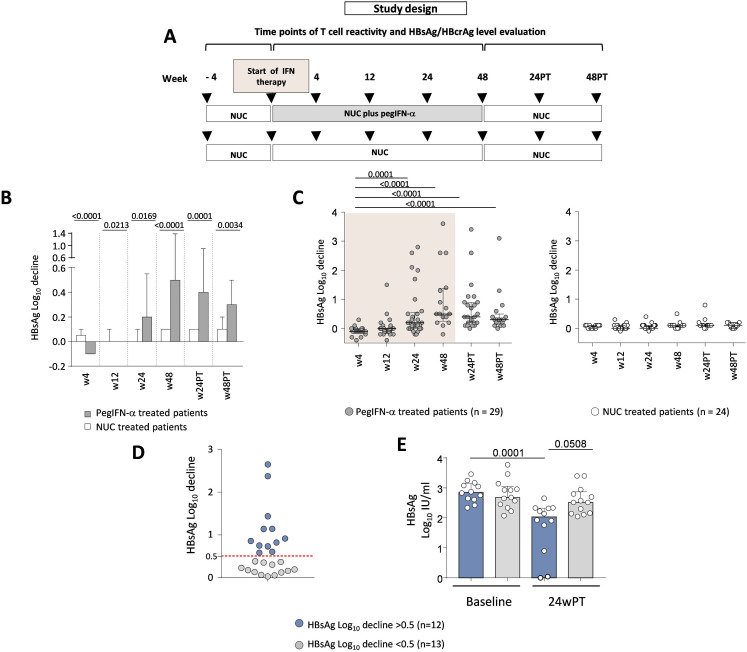
53 HBeAg-negative NUC-treated patients with CHB were randomised at a 1:1 ratio to receive pegIFN-α-2a for 48 weeks, or to continue NUC therapy and then followed up for at least 6 months maintaining NUCs. Serum hepatitis B surface antigen (HBsAg) and hepatitis B core-related antigen (HBcrAg) levels as well as peripheral blood NK cell phenotype and function and HBV-specific T cell responses upon in vitro stimulation with overlapping HBV peptides were measured longitudinally before, during and after pegIFN-α therapy.
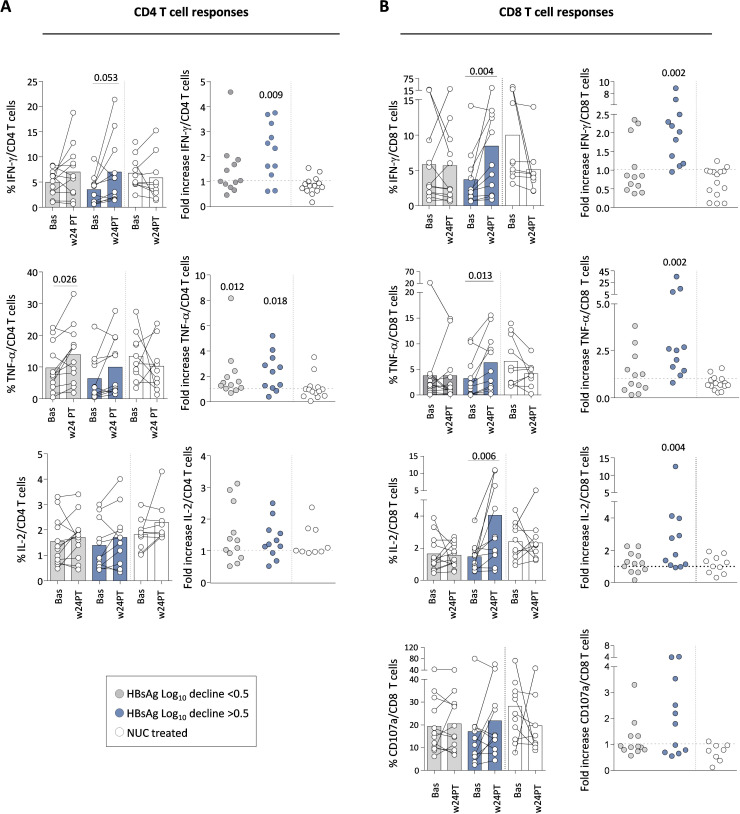
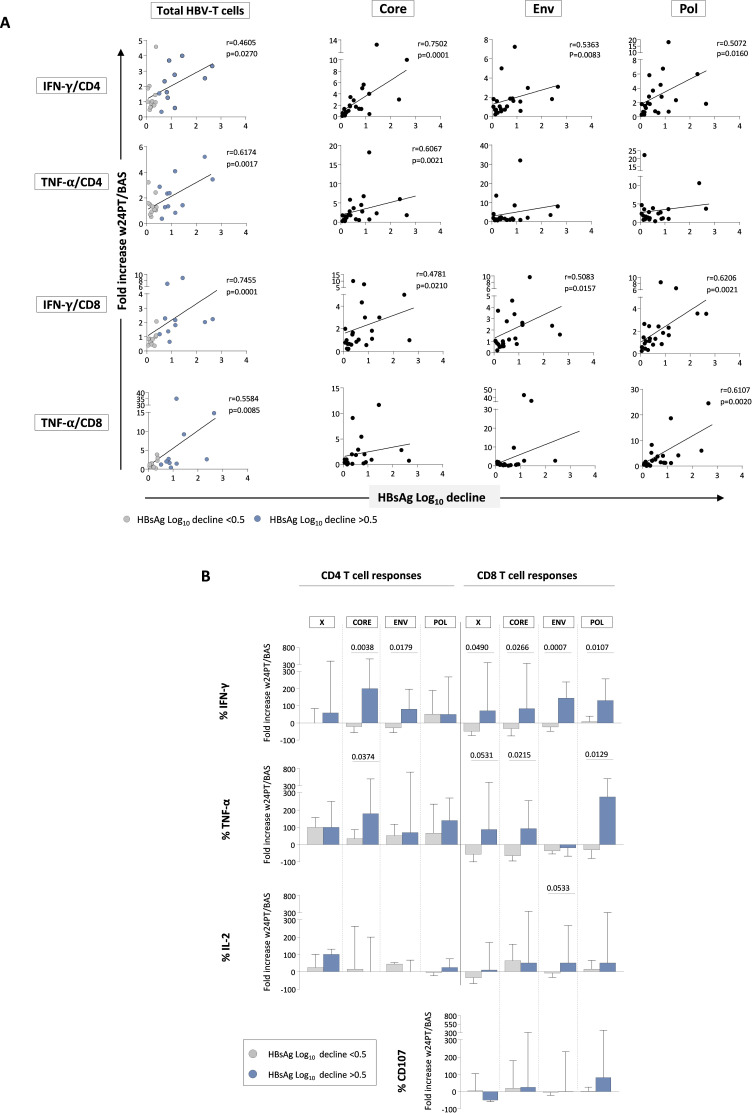
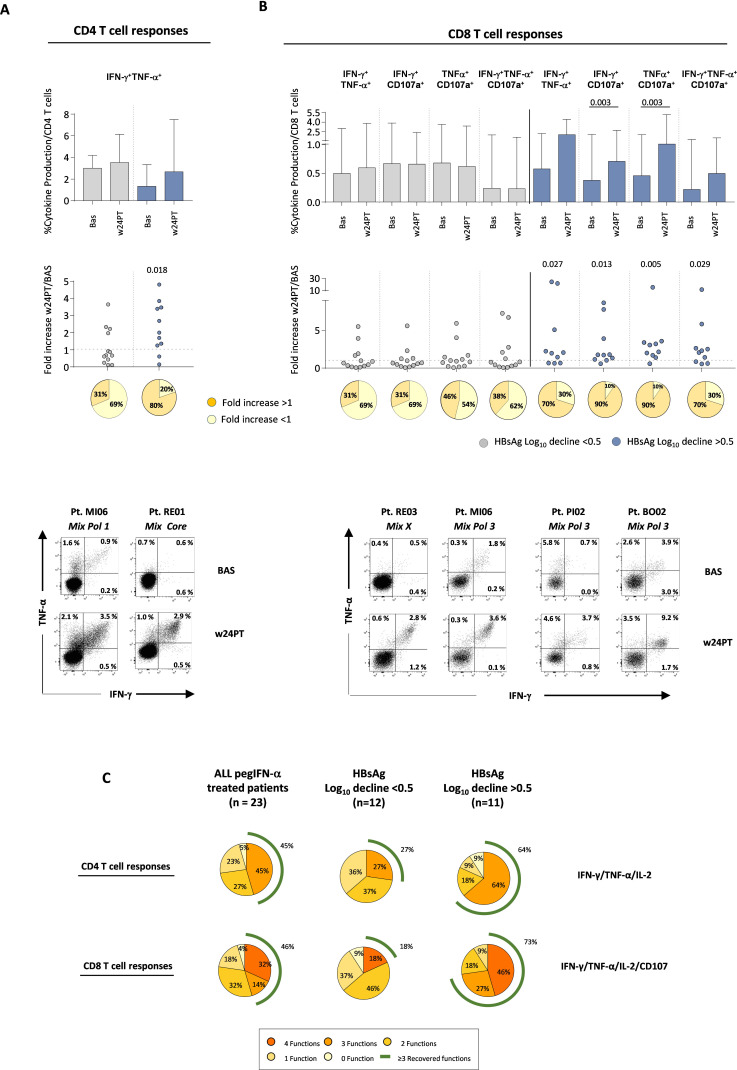
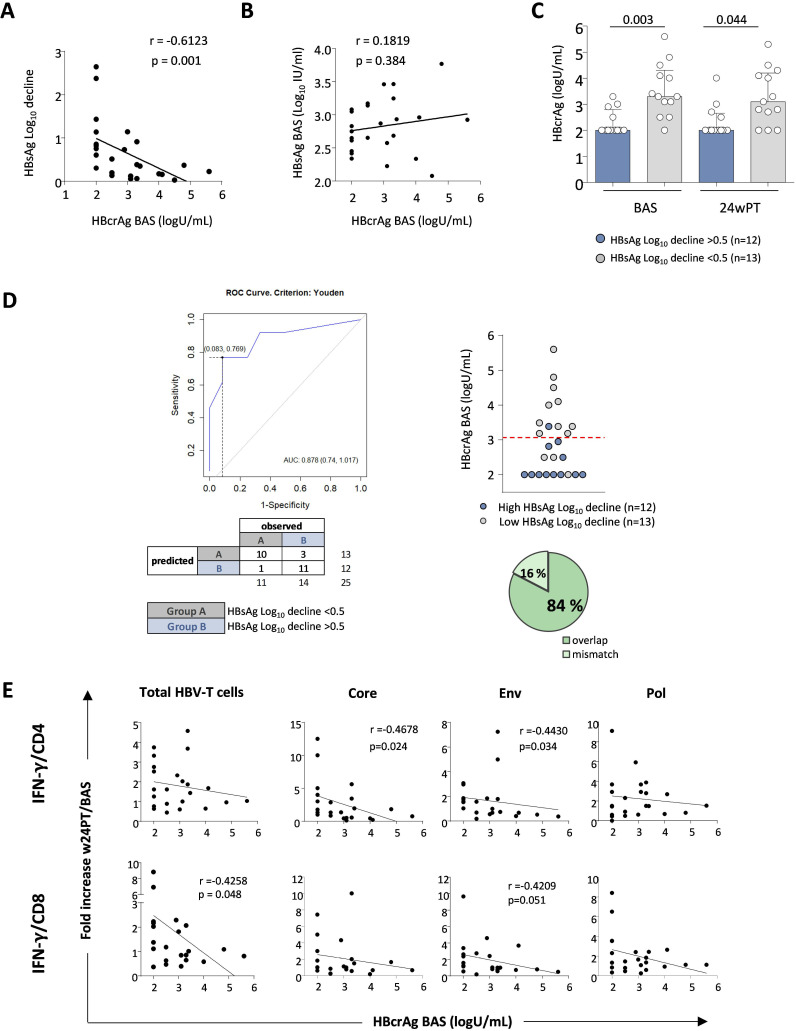
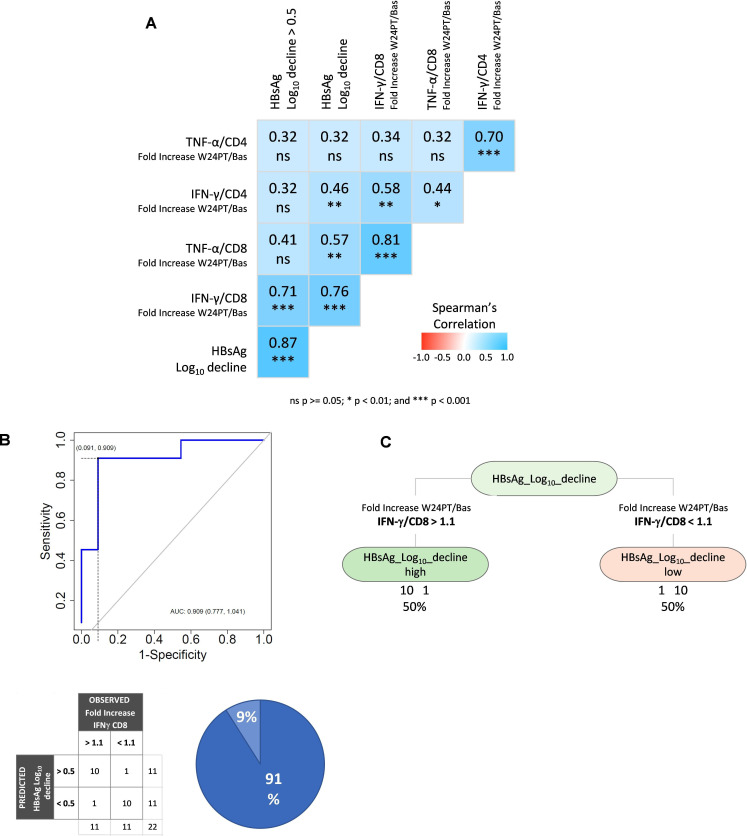
Two cohorts of pegIFN-α treated patients were identified according to HBsAg decline greater or less than 0.5 log at week 24 post-treatment. PegIFN-α add-on did not significantly improve HBV-specific T cell responses during therapy but elicited a significant multispecific and polyfunctional T cell improvement at week 24 post-pegIFN-α treatment compared with baseline. This improvement was maximal in patients who had a higher drop in serum HBsAg levels and a lower basal HBcrAg values.
PegIFN-α treatment can induce greater functional T cell improvement and HBsAg decline in patients with lower baseline HBcrAg levels. Thus, HBcrAg may represent an easily and reliably applicable parameter to select patients who are more likely to achieve better response to pegIFN-α add-on to virally suppressed patients.
聚乙二醇干扰素-α(pegIFN-α)与核苷(酸)(NUCs)联合使用可能使部分慢性乙型肝炎(CHB)患者受益。本研究旨在评估 pegIFN-α 对 NUC 抑制患者 T 细胞和自然杀伤(NK)细胞反应的免疫调节作用,以确定细胞和/或血清学参数,从而预测更好的 T 细胞恢复效果,并更好地控制感染,以实现 pegIFN-α 的个体化应用。
53 例 HBeAg 阴性的 NUC 治疗的 CHB 患者按 1:1 的比例随机分为两组,一组接受 pegIFN-α-2a 治疗 48 周,另一组继续 NUC 治疗,然后至少随访 6 个月,维持 NUCs。在 pegIFN-α 治疗前、治疗期间和治疗后,纵向测量血清乙型肝炎表面抗原(HBsAg)和乙型肝炎核心相关抗原(HBcrAg)水平以及外周血 NK 细胞表型和功能,以及体外用重叠 HBV 肽刺激后的 HBV 特异性 T 细胞反应。
根据治疗 24 周时 HBsAg 下降大于或小于 0.5log,确定了两组 pegIFN-α 治疗患者。pegIFN-α 添加治疗并未显著改善治疗期间的 HBV 特异性 T 细胞反应,但与基线相比,在 pegIFN-α 治疗后 24 周时可显著改善多特异性和多功能 T 细胞反应。这种改善在 HBsAg 血清水平下降较大和基线 HBcrAg 值较低的患者中更为明显。
pegIFN-α 治疗可诱导较低基线 HBcrAg 水平的患者产生更大的功能性 T 细胞改善和 HBsAg 下降。因此,HBcrAg 可能代表一种易于和可靠应用的参数,用于选择更有可能对 NUC 抑制患者的 pegIFN-α 添加治疗产生更好反应的患者。