
应激性高血糖比值与心力衰竭患者临床结局的关系:一项荟萃分析。
Stress hyperglycemia ratio and the clinical outcome of patients with heart failure: a meta-analysis.
机构信息
Department of Geriatric Medicine, Fourth Medical Center of PLA General Hospital, Beijing, China.
出版信息
Front Endocrinol (Lausanne). 2024 Jul 5;15:1404028. doi: 10.3389/fendo.2024.1404028. eCollection 2024.
BACKGROUND
Stress hyperglycemia ratio (SHR) is a newly suggested measure of stress-induced hyperglycemia that combines both short-term and long-term glycemic conditions. The study aimed to explore the association between SHR and the incidence of adverse clinical events with heart failure (HF) through a meta-analysis.
METHODS
Cohort studies relevant to the aim of the meta-analysis were retrieved by search of electronic databases including PubMed, Web of Science, Embase, Wanfang, and CNKI. A random-effects model was used to combine the data by incorporating the influence of between-study heterogeneity.
RESULTS
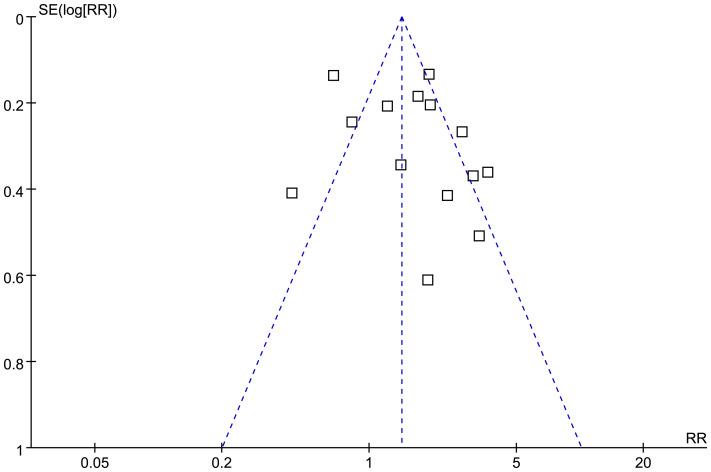
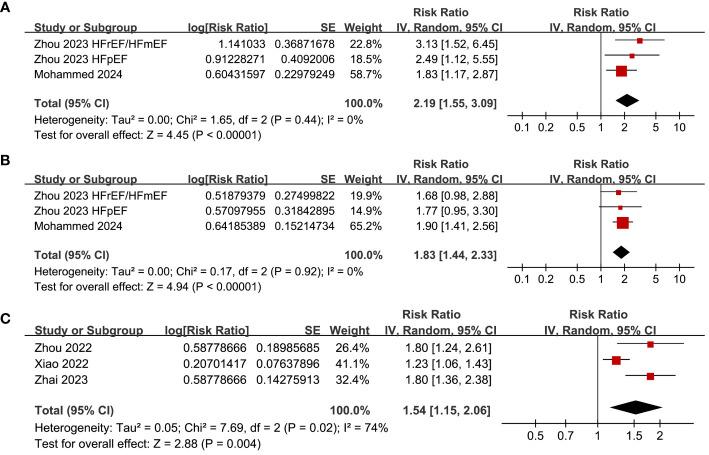
Ten studies involving 15250 patients with HF were included. Pooled results showed that compared to patients with lower SHR at baseline, those with a higher SHR were associated with an increased risk of all-cause mortality during follow-up (risk ratio [RR]: 1.61, 95% confidence interval [CI]: 1.17 to 2.21, p = 0.003; I = 82%). Further meta-regression analysis suggests that different in the cutoff of SHR significantly modify the results (coefficient = 1.22, p = 0.02), and the subgroup analysis suggested a more remarkable association between SHR and all-cause mortality in studies with cutoff of SHR ≥ 1.05 than those with cutoff of SHR < 1.05 (RR: 2.29 versus 1.08, p for subgroup difference < 0.001). Subsequent meta-analyses also showed that a high SHR at baseline was related to the incidence of cardiovascular death (RR: 2.19, 95% CI: 1.55 to 3.09, p < 0.001; I = 0%), HF-rehospitalization (RR: 1.83, 95% CI: 1.44 to 2.33, p < 0.001; I = 0%), and major adverse cardiovascular events (RR: 1.54, 95% CI: 1.15 to 2.06, p = 0.004; I = 74%) during follow-up.
CONCLUSION
A high SHR at baseline is associated with a poor clinical prognosis of patients with HF.
SYSTEMATIC REVIEW REGISTRATION
https://inplasy.com, identifier INPLASY202430080.
背景
应激性高血糖比值(SHR)是一种新提出的应激性高血糖测量方法,它结合了短期和长期的血糖状况。本研究旨在通过荟萃分析探讨 SHR 与心力衰竭(HF)不良临床事件发生率之间的关系。
方法
通过检索电子数据库(包括 PubMed、Web of Science、Embase、万方和中国知网),检索与荟萃分析目的相关的队列研究。采用随机效应模型,通过纳入研究间异质性的影响来合并数据。
结果
共纳入 10 项纳入 HF 患者的研究,共 15250 例患者。汇总结果显示,与基线 SHR 较低的患者相比,基线 SHR 较高的患者在随访期间发生全因死亡的风险增加(风险比[RR]:1.61,95%置信区间[CI]:1.17 至 2.21,p = 0.003;I = 82%)。进一步的元回归分析表明,SHR 截断值的不同显著改变了结果(系数= 1.22,p = 0.02),亚组分析表明,在 SHR 截断值≥1.05的研究中,SHR 与全因死亡率之间的关联更为显著,而在 SHR 截断值<1.05的研究中则不显著(RR:2.29 与 1.08,p 对于亚组差异<0.001)。随后的荟萃分析还表明,基线时 SHR 较高与心血管死亡(RR:2.19,95%CI:1.55 至 3.09,p < 0.001;I = 0%)、HF 再住院(RR:1.83,95%CI:1.44 至 2.33,p < 0.001;I = 0%)和主要不良心血管事件(RR:1.54,95%CI:1.15 至 2.06,p = 0.004;I = 74%)的发生率升高相关。
结论
基线时 SHR 较高与 HF 患者的临床预后不良相关。
系统综述注册
https://inplasy.com,注册号 INPLASY202430080。


 Zotero 插件