Department of Chemistry, Indiana University, Bloomington, Indiana 47405, United States.
Acc Chem Res. 2024 Aug 6;57(15):2067-2079. doi: 10.1021/acs.accounts.4c00172. Epub 2024 Jul 22.
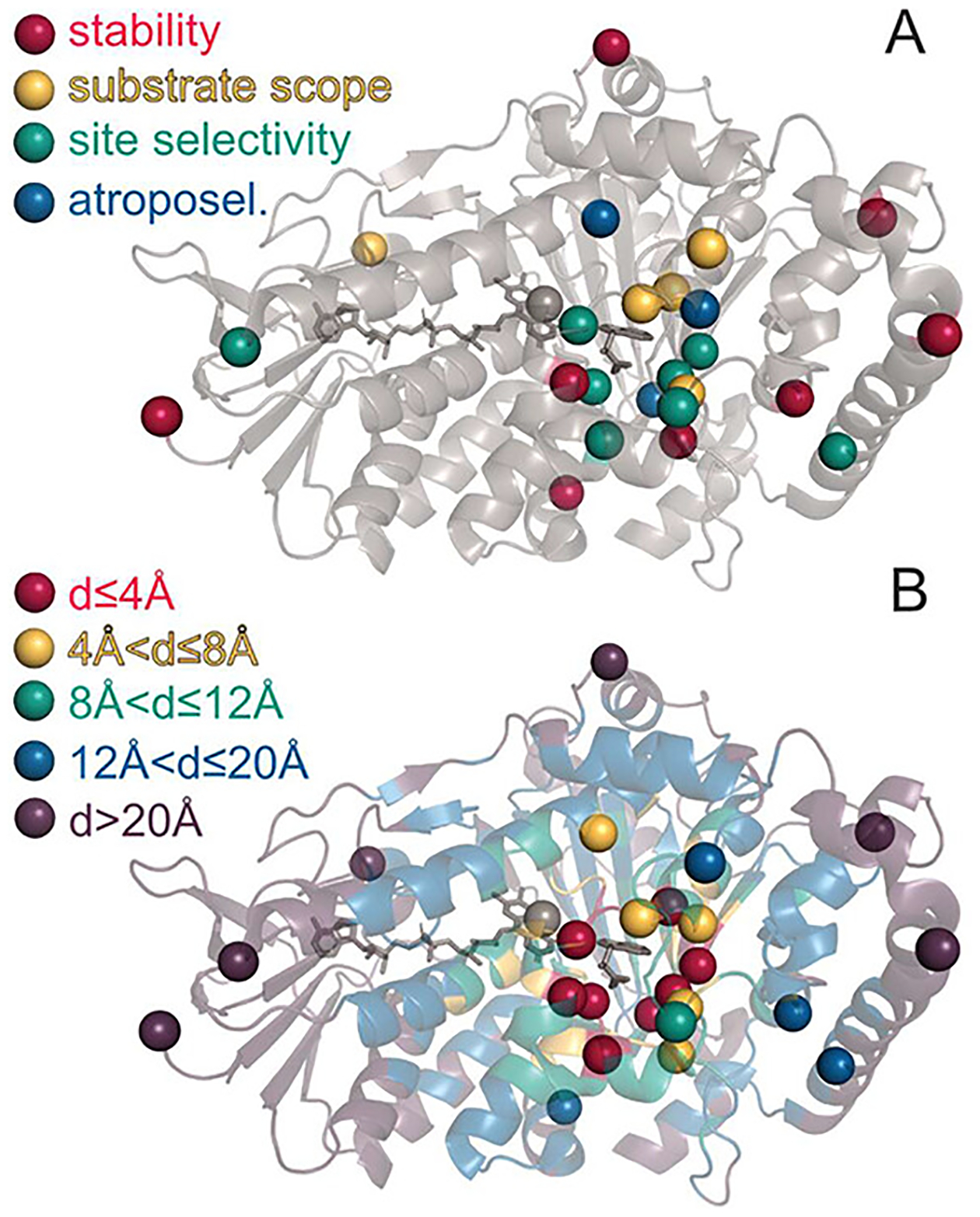
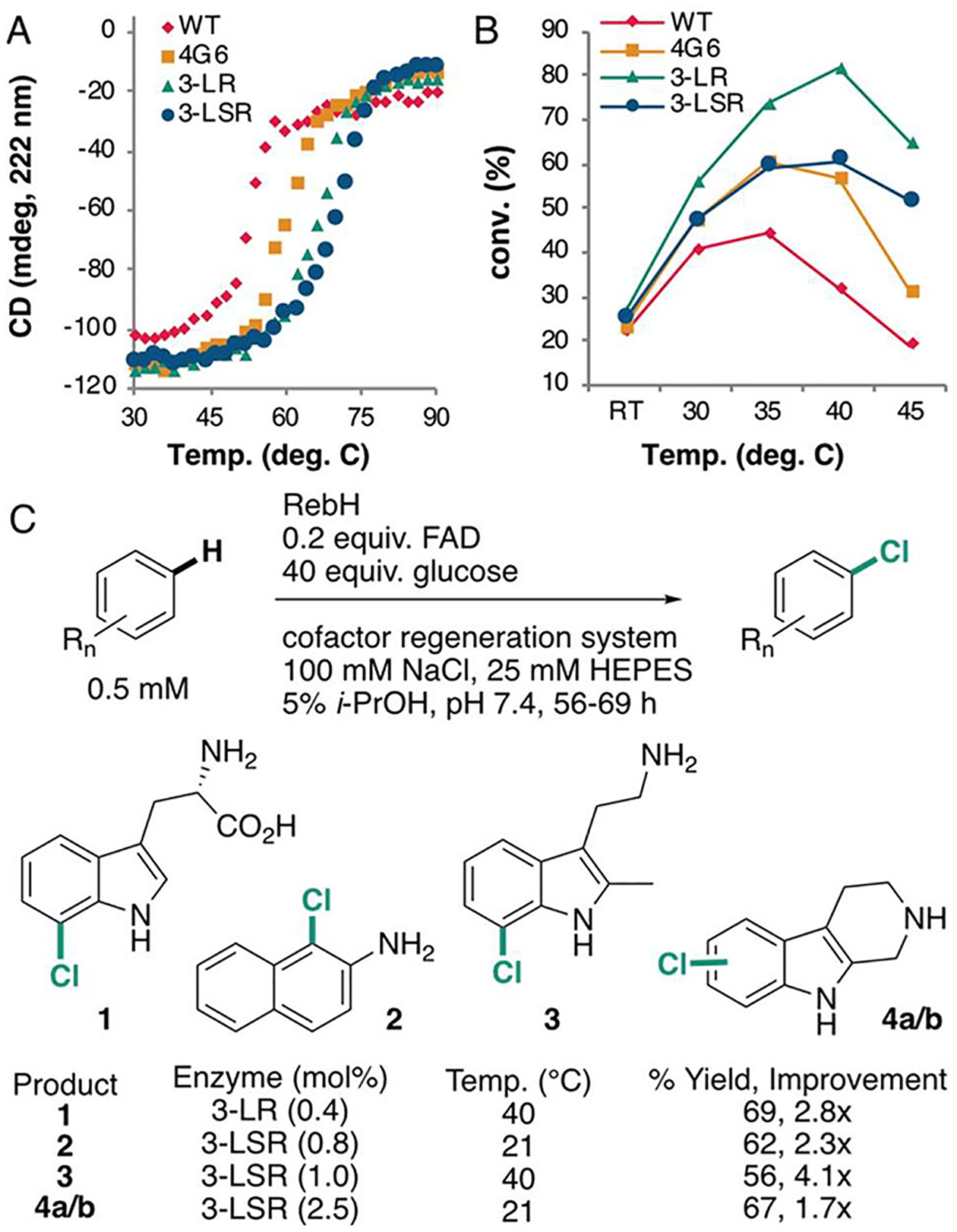
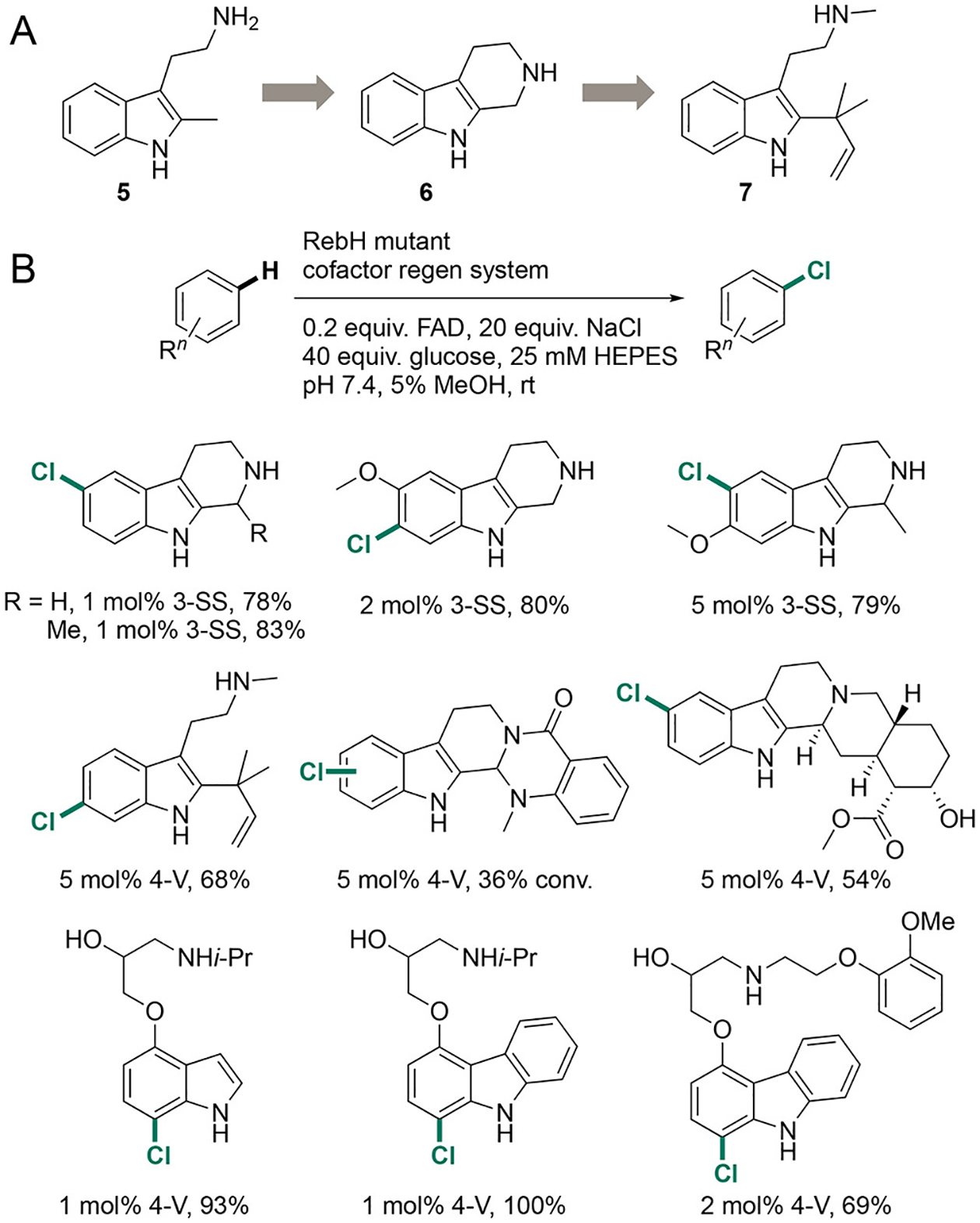
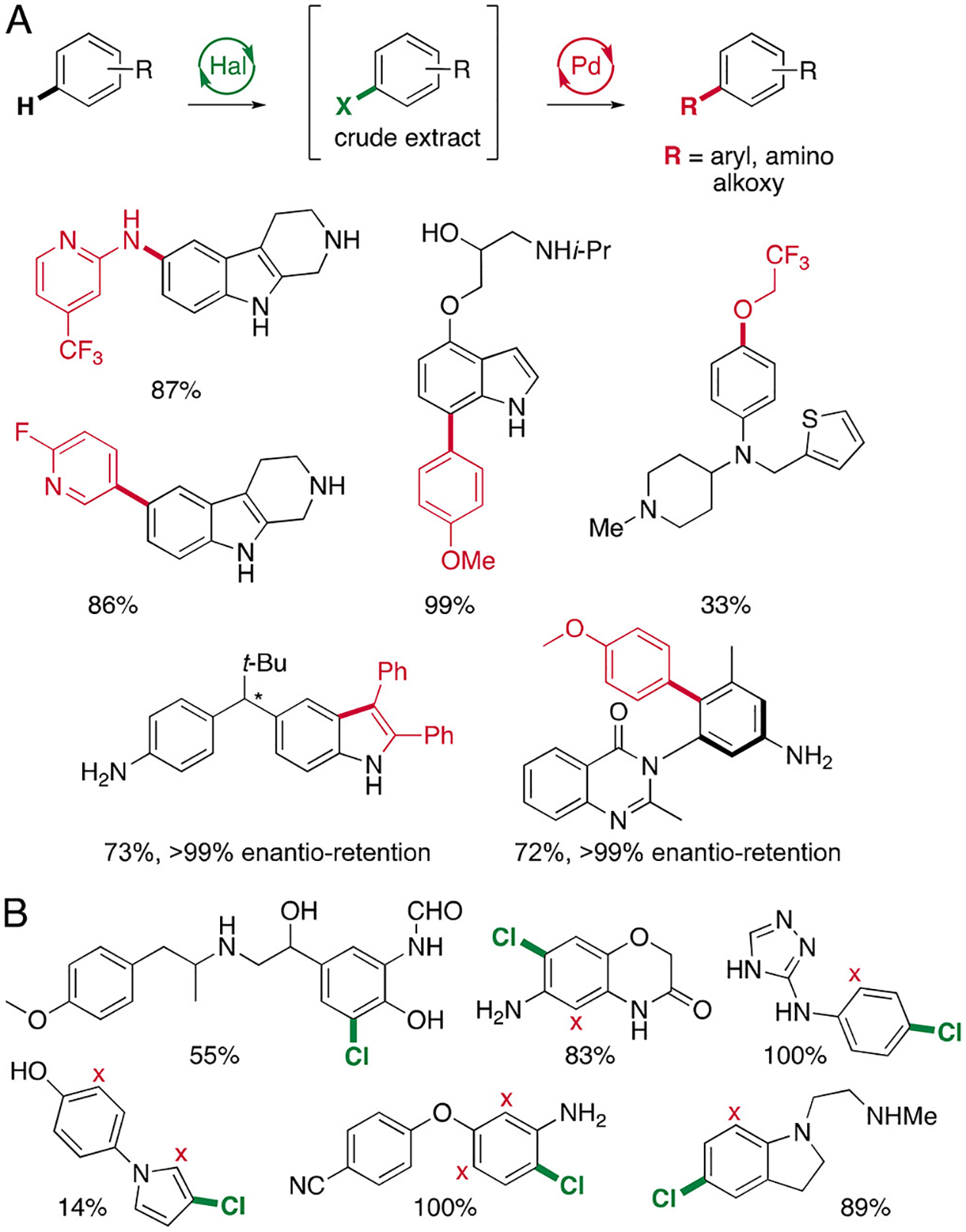
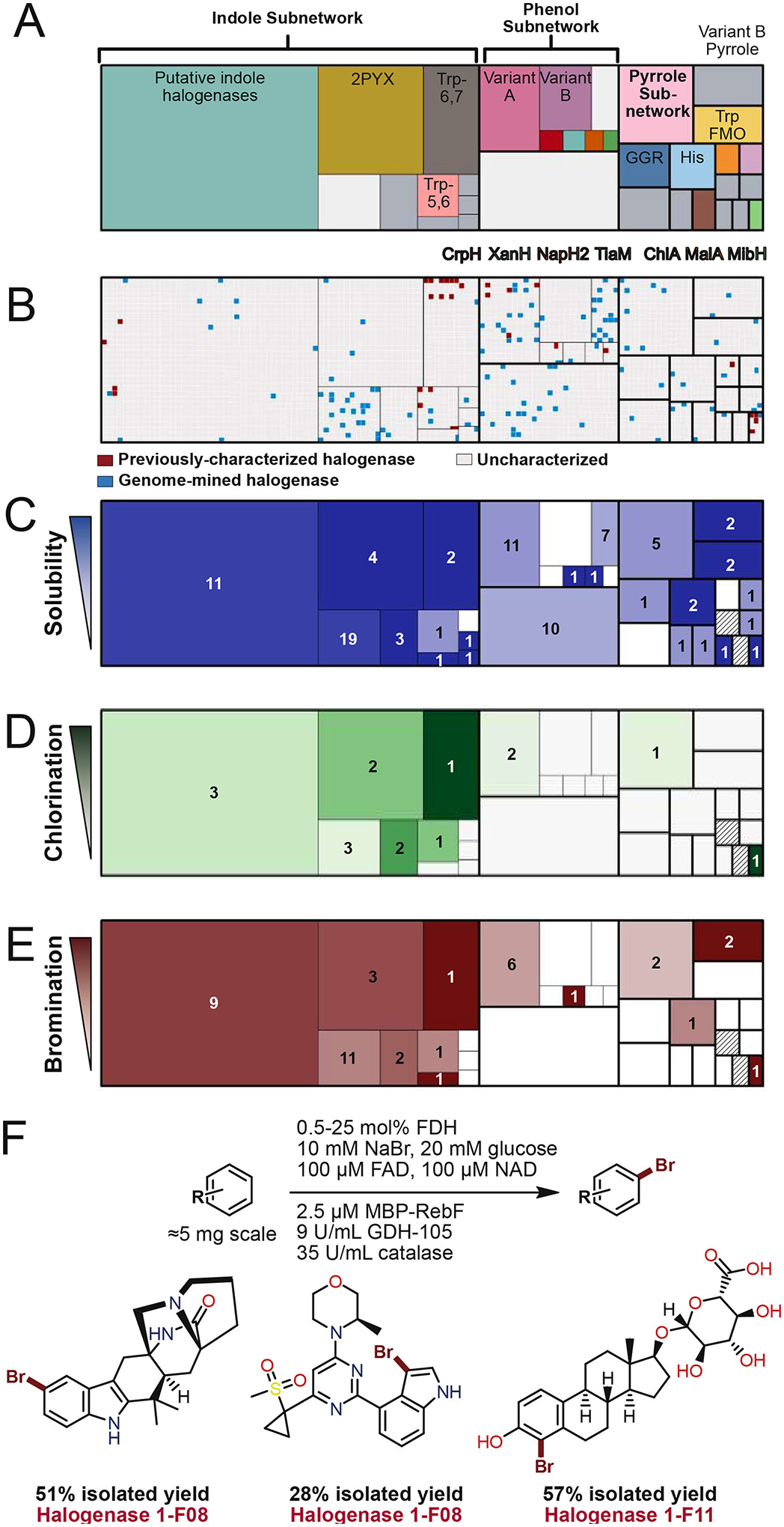
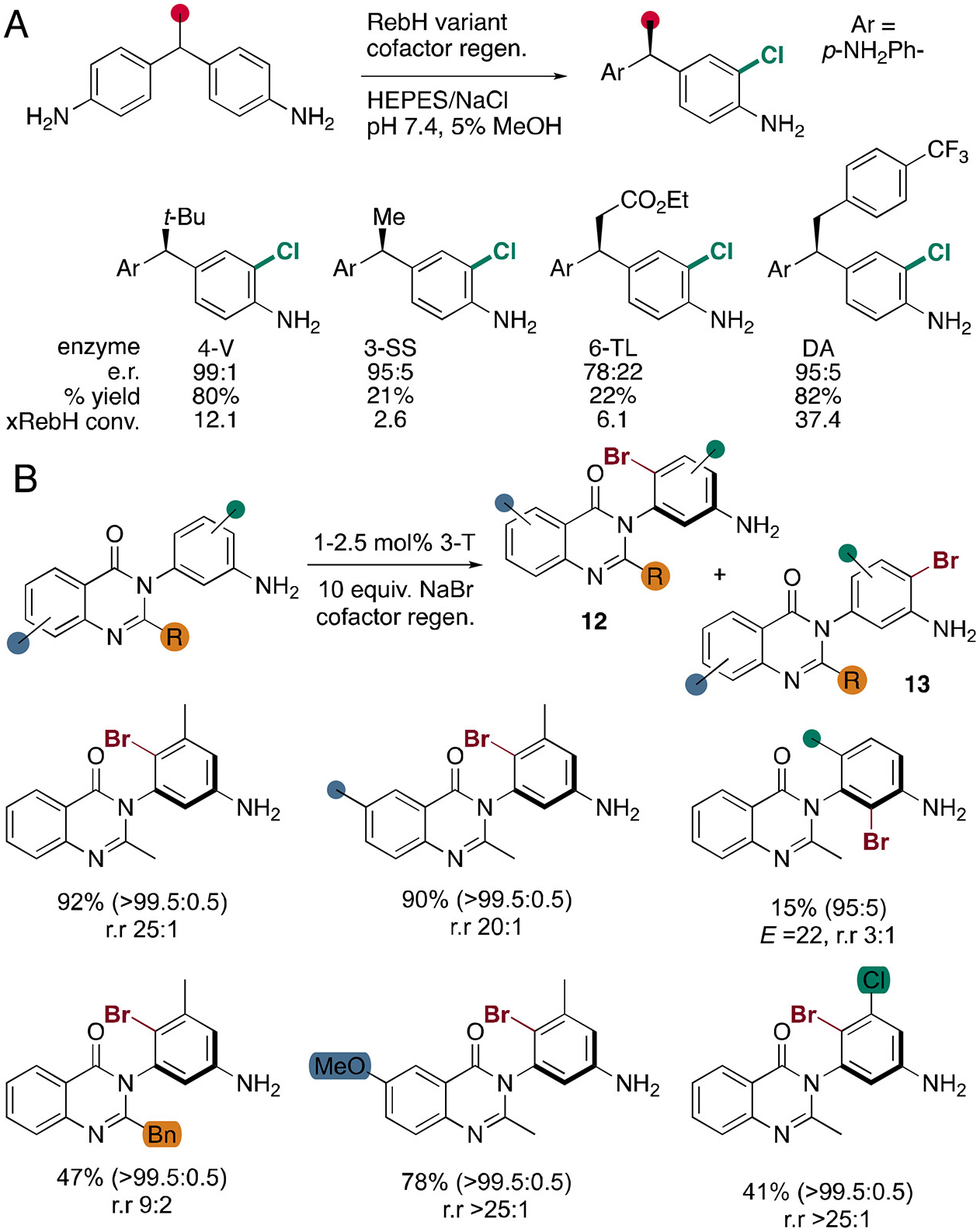
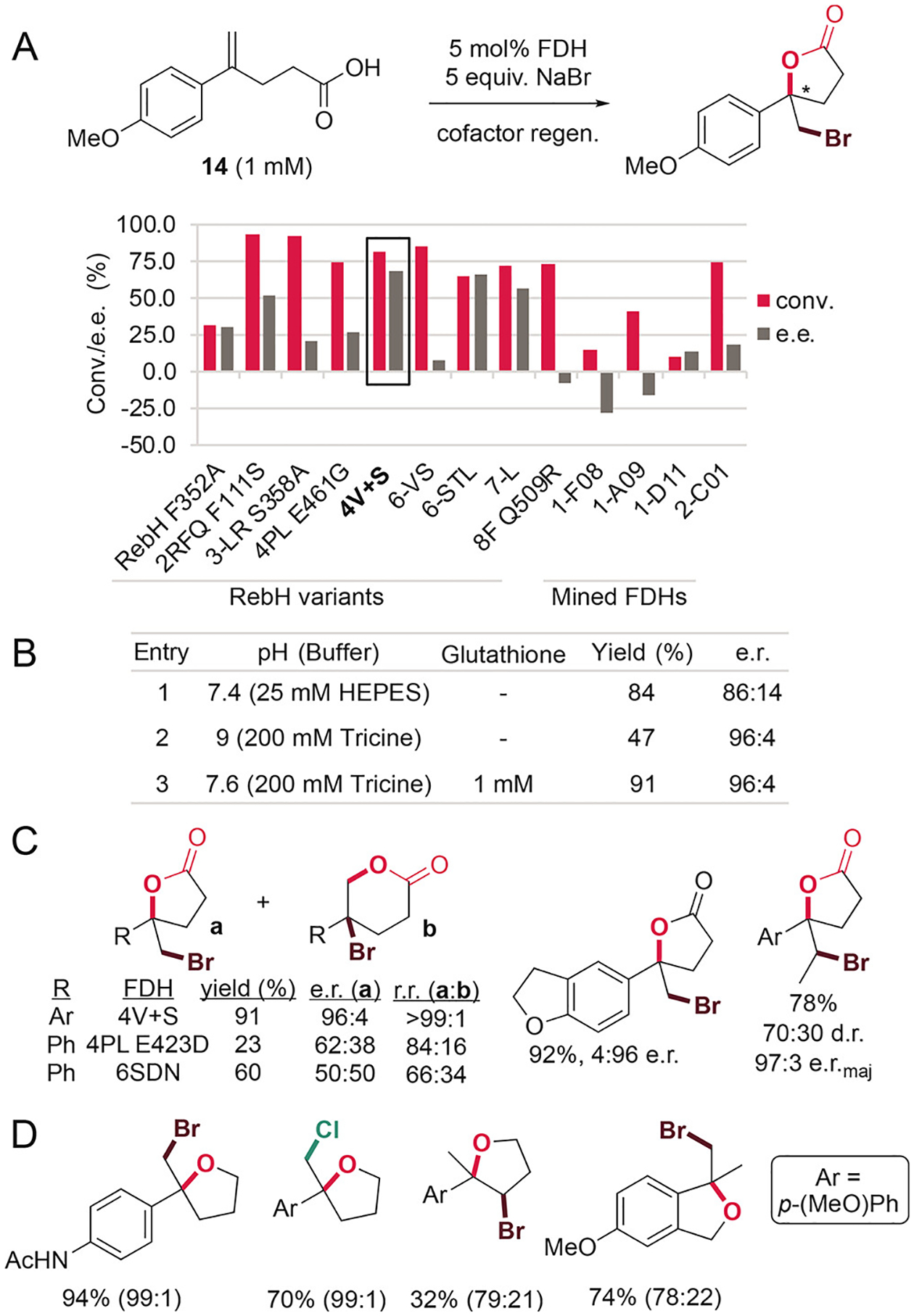
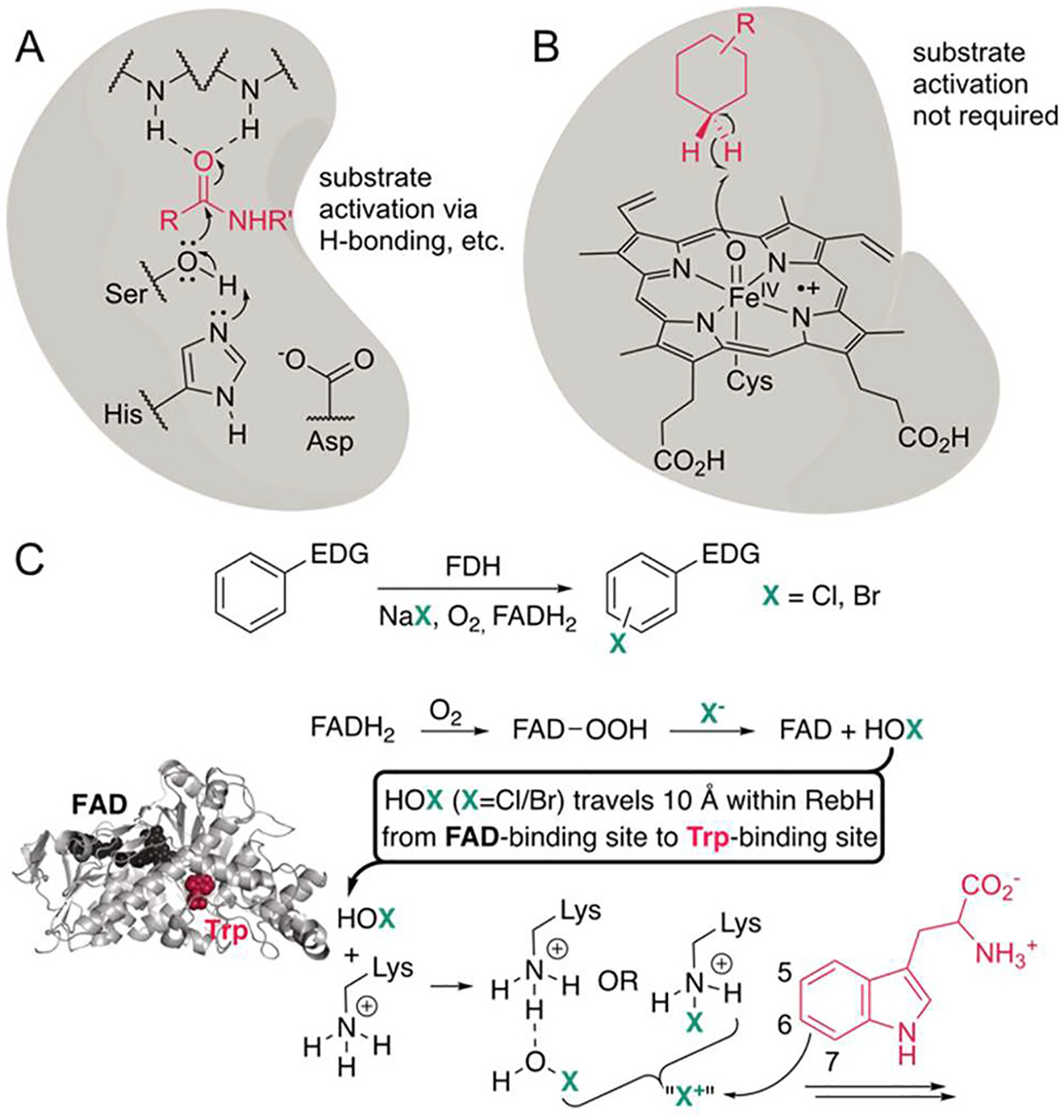
ConspectusOrganohalogen compounds are extensively used as building blocks, intermediates, pharmaceuticals, and agrochemicals due to their unique chemical and biological properties. Installing halogen substituents, however, frequently requires functionalized starting materials and multistep functional group interconversion. Several classes of halogenases evolved in nature to enable halogenation of a different classes of substrates; for example, site-selective halogenation of electron rich aromatic compounds is catalyzed by flavin-dependent halogenases (FDHs). Mechanistic studies have shown that these enzymes use FADH to reduce O to water with concomitant oxidation of X to HOX (X = Cl, Br, I). This species travels through a tunnel within the enzyme to access the FDH active site. Here, it is believed to interact with an active site lysine proximal to bound substrate, enabling electrophilic halogenation with selectivity imparted via molecular recognition, rather than directing groups or strong electronic activation.The unique selectivity of FDHs led to several early biocatalysis efforts, preparative halogenation was rare, and the hallmark catalyst-controlled selectivity of FDHs did not translate to non-native substrates. FDH engineering was limited to site-directed mutagenesis, which resulted in modest changes in site-selectivity or substrate preference. To address these limitations, we optimized expression conditions for the FDH RebH and its cognate flavin reductase (FRed), RebF. We then showed that RebH could be used for preparative halogenation of non-native substrates with catalyst-controlled selectivity. We reported the first examples in which the stability, substrate scope, and site selectivity of a FDH were improved to synthetically useful levels via directed evolution. X-ray crystal structures of evolved FDHs and reversion mutations showed that random mutations throughout the RebH structure were critical to achieving high levels of activity and selectivity on diverse aromatic substrates, and these data were used in combination with molecular dynamics simulations to develop predictive model for FDH selectivity. Finally, we used family wide genome mining to identify a diverse set of FDHs with novel substrate scope and complementary regioselectivity on large, three-dimensionally complex compounds.The diversity of our evolved and mined FDHs allowed us to pursue synthetic applications beyond simple aromatic halogenation. For example, we established that FDHs catalyze enantioselective reactions involving desymmetrization, atroposelective halogenation, and halocyclization. These results highlight the ability of FDH active sites to tolerate different substrate topologies. This utility was further expanded by our recent studies on the single component FDH/FRed, AetF. While we were initially drawn to AetF because it does not require a separate FRed, we found that it halogenates substrates that are not halogenated efficiently or at all by other FDHs and provides high enantioselectivity for reactions that could only be achieved using RebH variants after extensive mutagenesis. Perhaps most notably, AetF catalyzes site-selective aromatic iodination and enantioselective iodoetherification. Together, these studies highlight the origins of FDH engineering, the utility and limitations of the enzymes developed to date, and the promise of FDHs for an ever-expanding range of biocatalytic halogenation reactions.
摘要
由于其独特的化学和生物学性质,有机卤化物被广泛用作建筑块、中间体、药物和农用化学品。然而,安装卤原子通常需要功能化的起始材料和多步官能团转化。自然界中进化出了几类卤化酶,使不同类别的底物能够发生卤化;例如,电子丰富的芳香族化合物的选择性卤化由黄素依赖性卤化酶(FDH)催化。 机制研究表明,这些酶使用 FADH 将 O 还原为水,同时将 X 氧化为 HOX(X = Cl、Br、I)。该物种通过酶内的隧道进入 FDH 活性部位。在这里,它被认为与结合底物附近的活性位点赖氨酸相互作用,通过分子识别赋予亲电卤化选择性,而不是通过定向基团或强电子活化来赋予选择性。FDH 的独特选择性导致了一些早期的生物催化努力,但很少有制备性卤化,FDH 标志性的催化剂控制的选择性并没有转化为非天然底物。FDH 的工程仅限于定点突变,这导致了对位点选择性或底物偏好的适度改变。为了解决这些限制,我们优化了 FDH RebH 及其同源黄素还原酶(FRed)RebF 的表达条件。然后,我们表明 RebH 可用于非天然底物的制备性卤化,具有催化剂控制的选择性。我们首次报道了通过定向进化将 FDH 的稳定性、底物范围和位点选择性提高到合成有用水平的例子。进化后的 FDH 的 X 射线晶体结构和回复突变表明,RebH 结构中的随机突变对于在各种芳香族底物上达到高活性和选择性水平至关重要,这些数据与分子动力学模拟结合使用,开发了用于 FDH 选择性的预测模型。最后,我们使用全家族基因组挖掘来鉴定一组具有新型底物范围和互补区域选择性的新型 FDH,用于大型三维复杂化合物。 我们进化和挖掘的 FDH 的多样性使我们能够超越简单的芳香族卤化来追求合成应用。例如,我们证明 FDH 可以催化涉及去对称化、对映选择性卤化和卤环化的对映选择性反应。这些结果突出了 FDH 活性部位能够耐受不同底物拓扑结构的能力。我们最近对单组分 FDH/FRed AetF 的研究进一步扩展了这种用途。虽然我们最初被 AetF 吸引是因为它不需要单独的 FRed,但我们发现它可以卤化那些其他 FDH 不能有效卤化或根本不能卤化的底物,并为只能通过广泛突变获得 RebH 变体才能实现的反应提供高对映选择性。也许最值得注意的是,AetF 催化选择性芳香族碘化和对映选择性碘醚化。这些研究共同强调了 FDH 工程的起源、迄今为止开发的酶的用途和局限性,以及 FDH 用于不断扩展的生物催化卤化反应范围的前景。