Karimi Mohammad, Nadi Azade
Rehabilitation Sciences, Research Center, Shiraz University of Medical sciences, Shiraz, Iran.
Department of Orthotics and Prosthetics, Faculty of Rehabilitation Sciences, Isfahan University of Medical Sciences, Isfahan, Iran.
N Am Spine Soc J. 2024 Jun 3;19:100337. doi: 10.1016/j.xnsj.2024.100337. eCollection 2024 Sep.
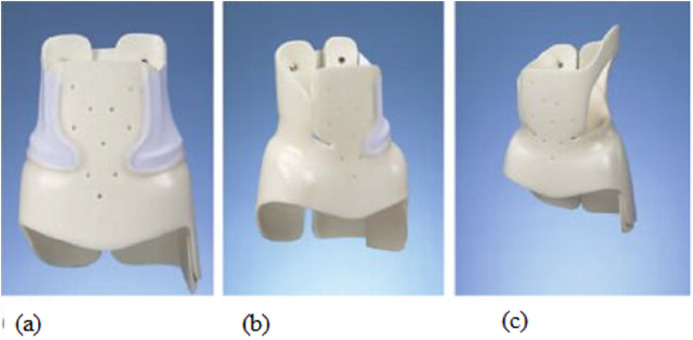
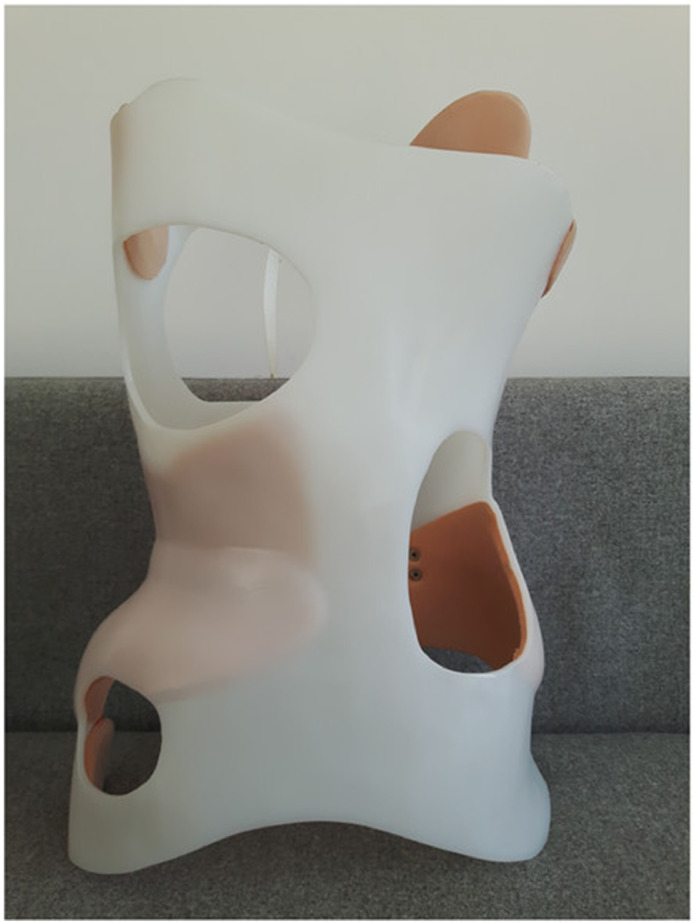
Scoliosis, characterized by the lateral curvature of the spine, impacts the spine's alignment in three dimensions. Braces are commonly employed as a conservative treatment for individuals with scoliosis, particularly those with curves ranging from 20° to 40°. This treatment approach's primary objectives include arresting the deformity's progression, enhancing clinical appearance, alleviating pain, improving overall quality of life, and circumventing the need for surgical intervention. The aim of this study was to compare the effectiveness of Boston and Cheneau braces in individuals with scoliosis.
In this retrospective study, 51 subjects were included and monitored over 2 years. The primary parameters under evaluation encompassed the severity of both primary and secondary curves and compliance with the prescribed treatment. The subjects were classified into 2 groups: those utilizing the Cheneau brace and those employing the Boston brace.
The initial mean values of the primary and secondary curves during the first visit were 37.6 (±7.4) and 30.1 (±9.7) degrees, respectively. However, the in-brace curve measurements for the primary and secondary curves were 31.5 (±1.3) and 22.3 (±13.3) degrees, respectively (p-value=.0). The mean compliance values of subjects using Boston and Cheneau braces were 16.8 and 17.3 h per day, respectively (p-value=.1). No significant difference was observed in the correction achieved with the Boston and Cheneau braces during the follow-up period.
The results of this study demonstrated a significant reduction in the scoliotic curve while under brace conditions. However, the degree of correction achieved did not significantly differ during the follow-up periods. Additionally, there was no notable variance in the correction obtained between the Boston and Cheneau braces.
脊柱侧弯的特征是脊柱侧弯,会在三个维度上影响脊柱的排列。支具通常被用作脊柱侧弯患者的保守治疗方法,尤其是对于那些侧弯角度在20°至40°之间的患者。这种治疗方法的主要目标包括阻止畸形进展、改善临床外观、减轻疼痛、提高整体生活质量以及避免手术干预。本研究的目的是比较波士顿支具和施诺支具对脊柱侧弯患者的疗效。
在这项回顾性研究中,纳入了51名受试者并进行了为期2年的监测。评估的主要参数包括主弯和次弯的严重程度以及对规定治疗的依从性。受试者被分为两组:使用施诺支具的组和使用波士顿支具的组。
首次就诊时主弯和次弯的初始平均值分别为37.6(±7.4)度和30.1(±9.7)度。然而,支具内主弯和次弯的测量值分别为31.5(±1.3)度和22.3(±13.3)度(p值 = 0.0)。使用波士顿支具和施诺支具的受试者的平均依从性值分别为每天16.8小时和17.3小时(p值 = 0.1)。在随访期间,波士顿支具和施诺支具所实现的矫正效果没有显著差异。
本研究结果表明,在佩戴支具的情况下,脊柱侧弯曲线有显著降低。然而,在随访期间所实现的矫正程度没有显著差异。此外,波士顿支具和施诺支具之间所获得的矫正效果也没有明显差异。