Ouellet Susanne M, Dettmer Jan, Lato Matthew J, Cole Steve, Hutchinson D Jean, Karrenbach Martin, Dashwood Ben, Chambers Jonathan E, Crickmore Roger
Department of Earth, Energy and Environment, University of Calgary, Calgary, AB, Canada.
BGC Engineering, Ottawa, ON, Canada.
Nat Commun. 2024 Jul 24;15(1):6239. doi: 10.1038/s41467-024-50604-6.
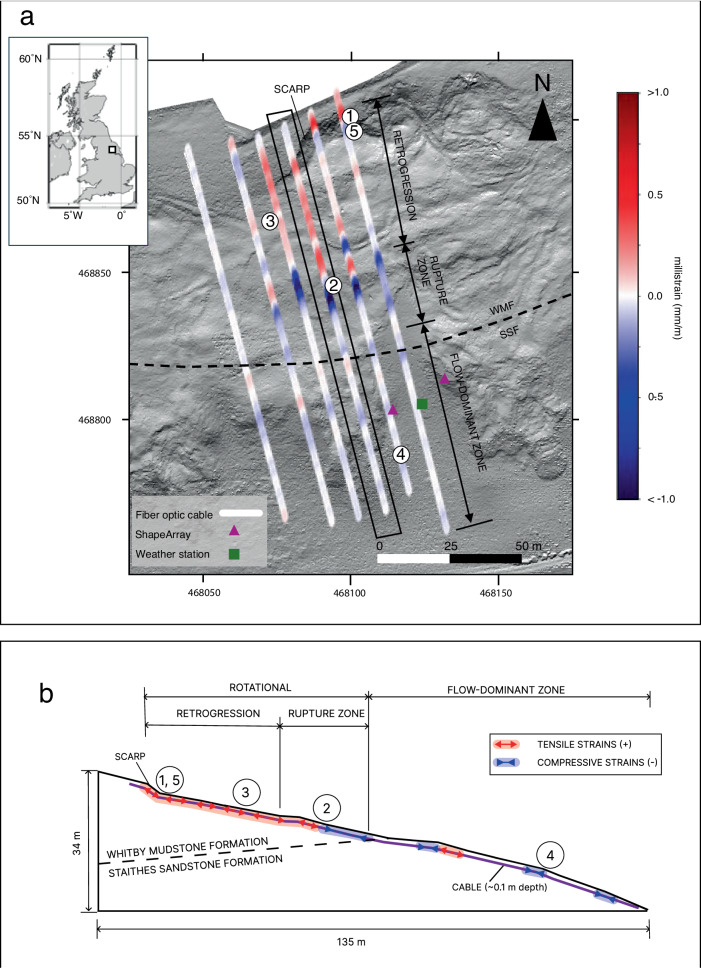
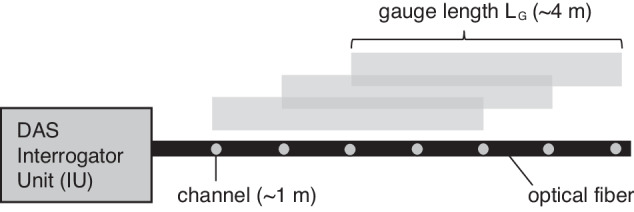
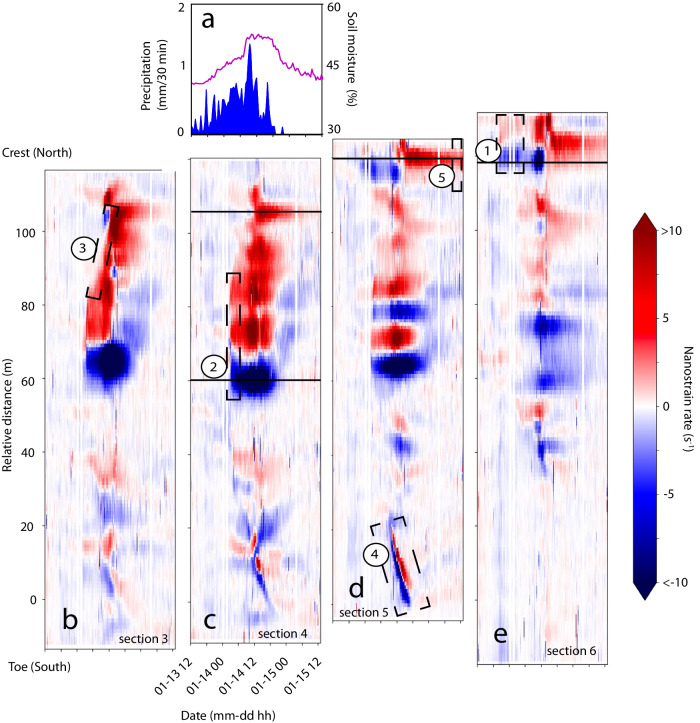
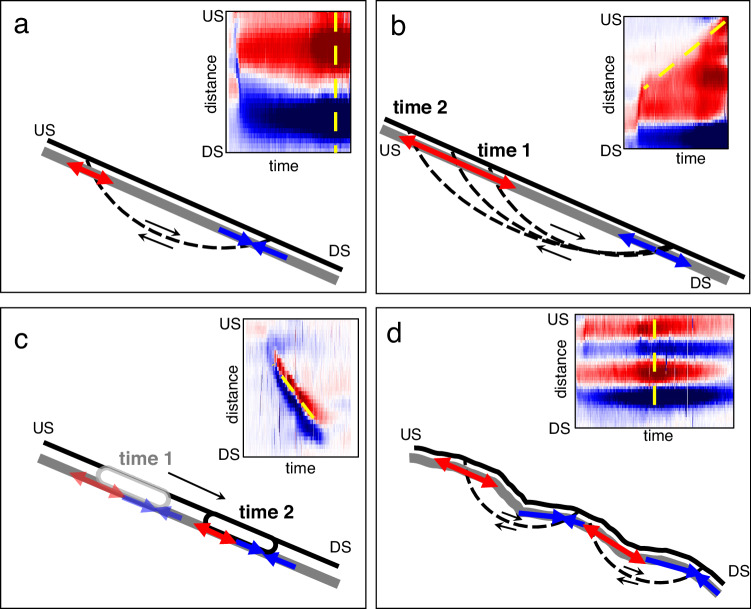
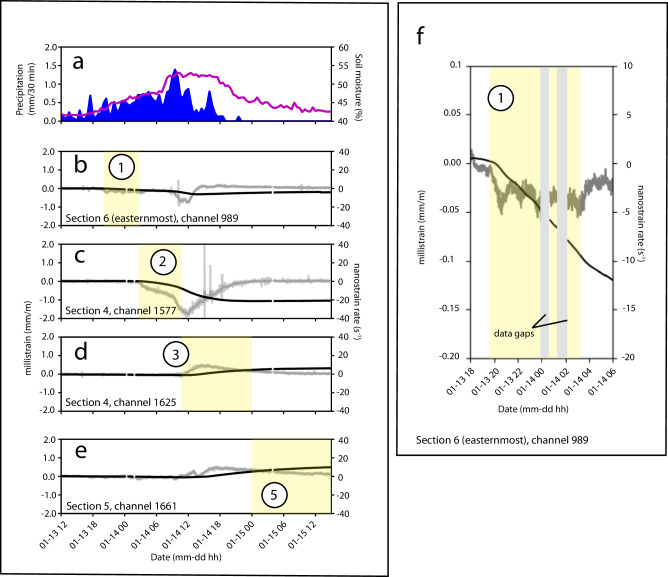
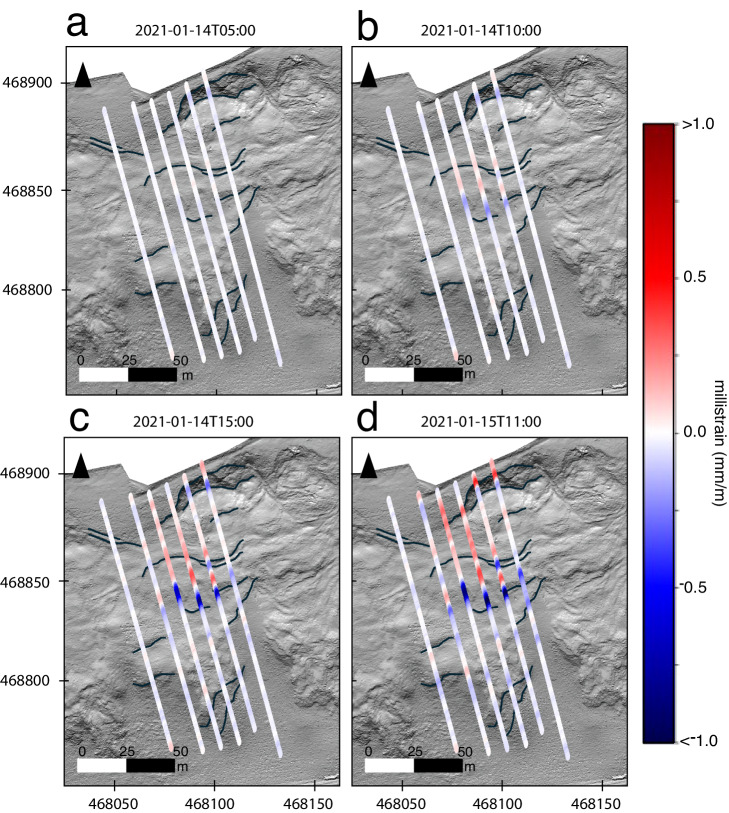
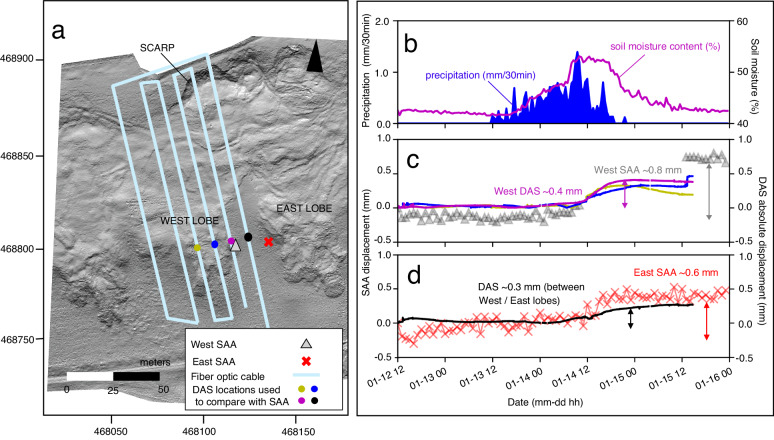
Landslides sometimes creep for decades before undergoing runaway acceleration and catastrophic failure. Observing and monitoring the evolution of strain in time and space is crucial to understand landslide processes, including the transition from slow to fast movement. However, the limited spatial or temporal resolution of existing landslide monitoring instrumentation limits the study of these processes. We employ distributed acoustic sensing strain data below 1 Hertz frequency during a three-day rainfall at the Hollin Hill landslide and quantify strain-rate changes at meter and sub-minute scales. We observe near-surface strain onset at the head scarp, strain acceleration at a developing rupture zone, retrogression towards the scarp, and flow-lobe activity. These processes with displacements of less than 0.5 mm are undetected using other methods. However, the millimeter processes over three days agree with previously observed seasonal landslide patterns. Here, we show landslide processes occurring with nanostrain-rate sensitivity at spatiotemporal resolution previously not possible.
山体滑坡有时会缓慢移动数十年,然后才会经历失控加速和灾难性破坏。及时、全面地观测和监测应变的时空演化对于理解山体滑坡过程至关重要,包括从缓慢移动到快速移动的转变。然而,现有山体滑坡监测仪器有限的空间或时间分辨率限制了对这些过程的研究。我们在霍林山山体滑坡三天降雨期间,利用低于1赫兹频率的分布式声学传感应变数据,量化了米级和亚分钟级的应变率变化。我们观测到在滑坡壁顶部出现近地表应变,在发育中的破裂带应变加速,向滑坡壁退缩,以及出现流状叶活动。使用其他方法无法检测到这些位移小于0.5毫米的过程。然而,三天内的毫米级过程与之前观测到的季节性山体滑坡模式一致。在此,我们展示了以前所不可能达到的时空分辨率下,以纳米应变率灵敏度发生的山体滑坡过程。