Richter Bertram, Ulbrich Lisa, Herbers Max, Marx Steffen
Institute of Concrete Structures, TUD Dresden University of Technology, 01062 Dresden, Germany.
Hentschke Bau GmbH, Zeppelinstr. 15, 02625 Bautzen, Germany.
Sensors (Basel). 2024 Nov 22;24(23):7454. doi: 10.3390/s24237454.
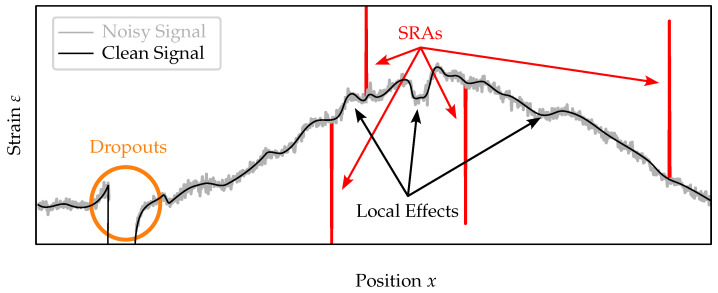
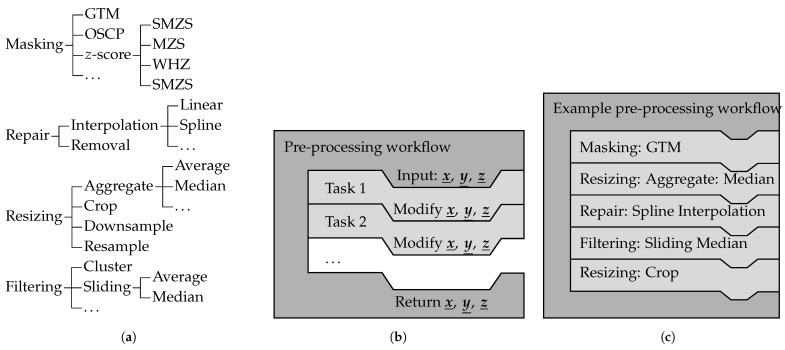
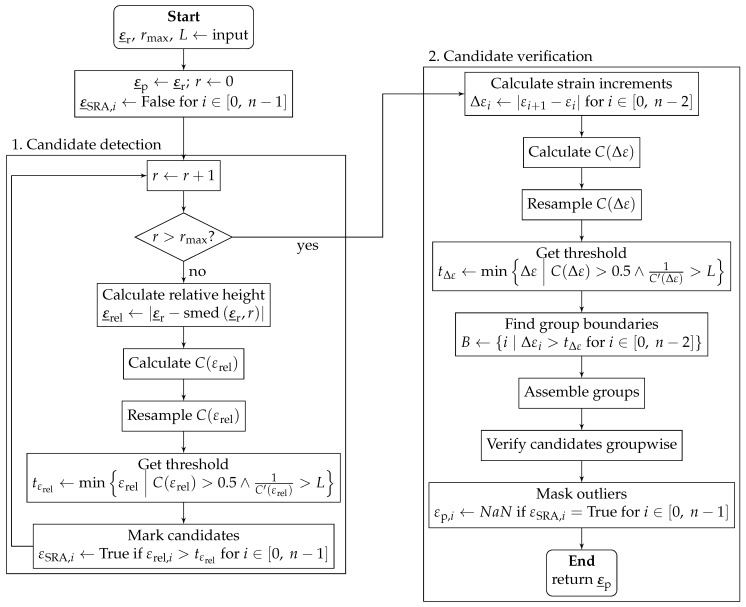
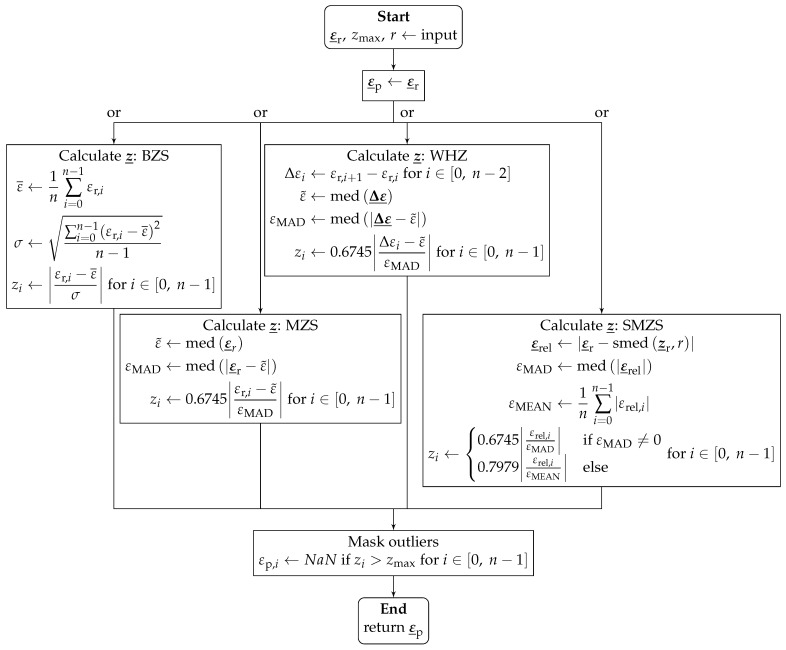
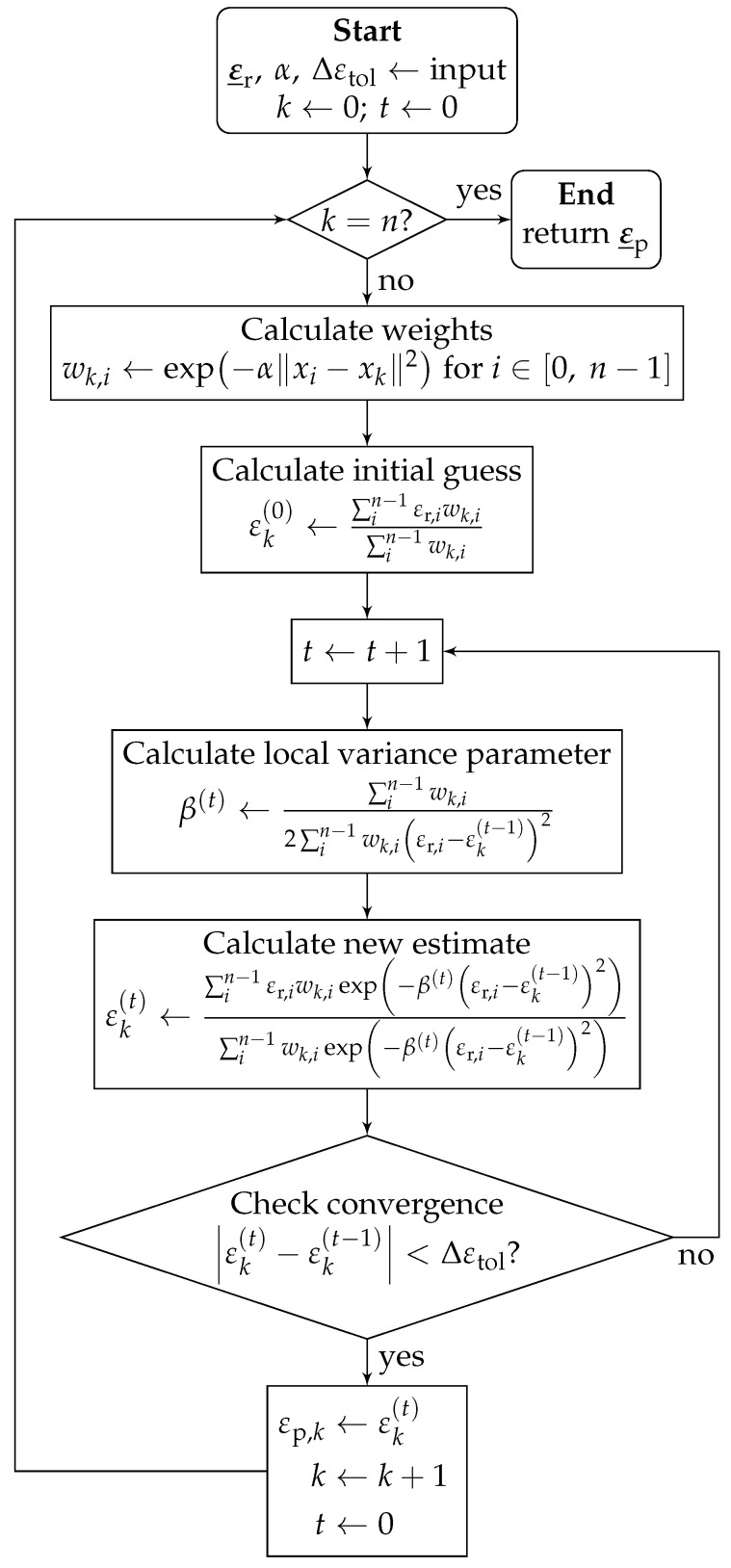
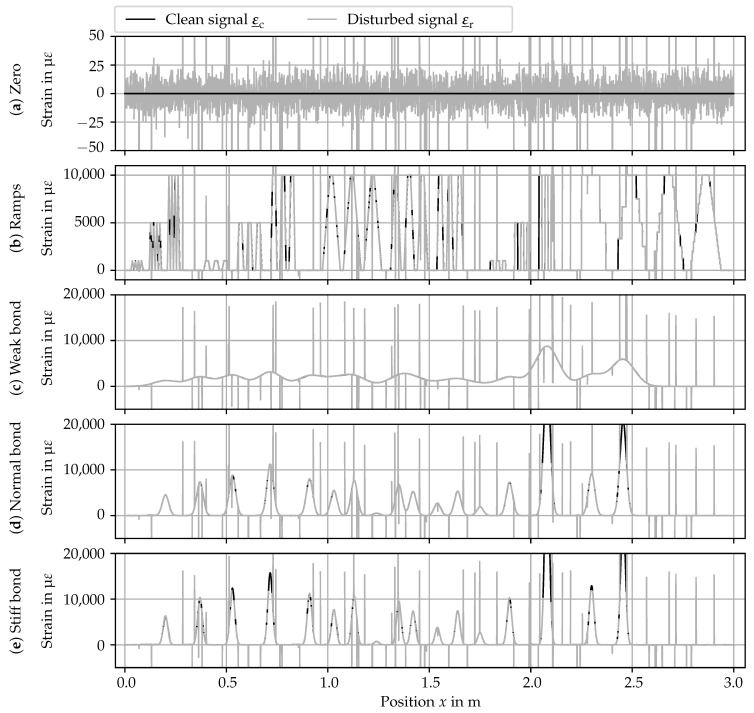
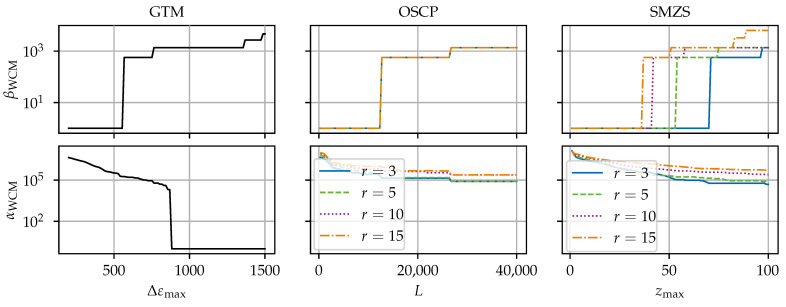
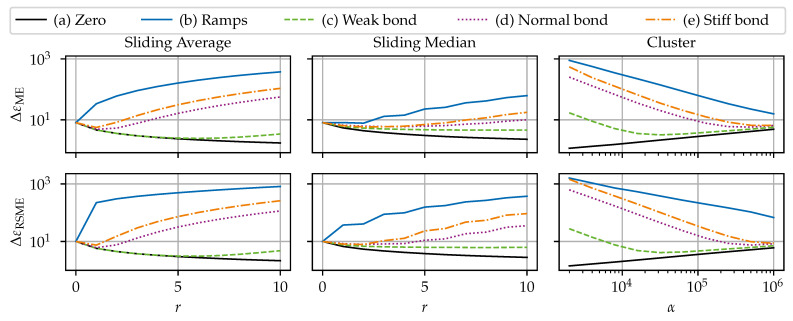
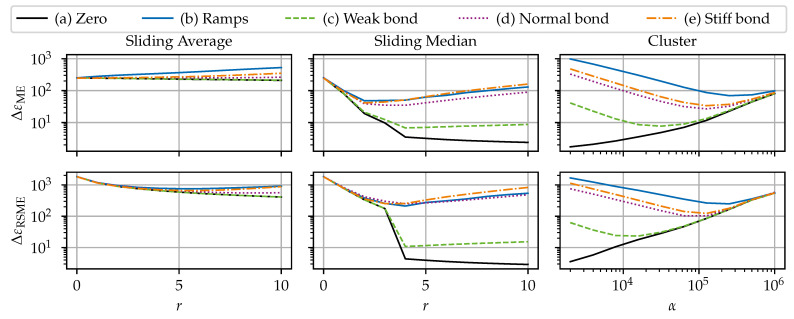
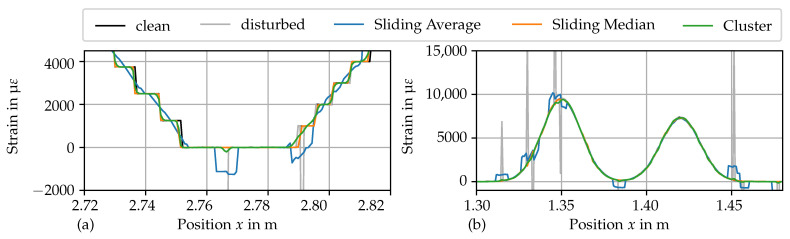
Because of their high spatial resolution over extended lengths, distributed fiber optic sensors (DFOS) enable us to monitor a wide range of structural effects and offer great potential for diverse structural health monitoring (SHM) applications. However, even under controlled conditions, the useful signal in distributed strain sensing (DSS) data can be concealed by different types of measurement principle-related disturbances: strain reading anomalies (SRAs), dropouts, and noise. These disturbances can render the extraction of information for SHM difficult or even impossible. Hence, cleaning the raw measurement data in a pre-processing stage is key for successful subsequent data evaluation and damage detection on engineering structures. To improve the capabilities of pre-processing procedures tailored to DSS data, characteristics and common remediation approaches for SRAs, dropouts, and noise are discussed. Four advanced pre-processing algorithms (geometric threshold method (GTM), outlier-specific correction procedure (OSCP), sliding modified -score (SMZS), and the cluster filter) are presented. An artificial but realistic benchmark data set simulating different measurement scenarios is used to discuss the features of these algorithms. A flexible and modular pre-processing workflow is implemented and made available with the algorithms. Dedicated algorithms should be used to detect and remove SRAs. GTM, OSCP, and SMZS show promising results, and the sliding average is inappropriate for this purpose. The preservation of crack-induced strain peaks' tips is imperative for reliable crack monitoring.
由于分布式光纤传感器(DFOS)在较长长度上具有高空间分辨率,使其能够监测广泛的结构效应,并为各种结构健康监测(SHM)应用提供巨大潜力。然而,即使在受控条件下,分布式应变传感(DSS)数据中的有用信号也可能被不同类型的与测量原理相关的干扰所掩盖:应变读数异常(SRA)、数据丢失和噪声。这些干扰会使从SHM中提取信息变得困难甚至不可能。因此,在预处理阶段清理原始测量数据是后续成功进行数据评估和工程结构损伤检测的关键。为了提高针对DSS数据的预处理程序的能力,讨论了SRA、数据丢失和噪声的特征以及常见的修复方法。提出了四种先进的预处理算法(几何阈值法(GTM)、异常值特定校正程序(OSCP)、滑动修正分数(SMZS)和聚类滤波器)。使用一个模拟不同测量场景的人工但现实的基准数据集来讨论这些算法的特征。实现了一个灵活且模块化的预处理工作流程,并与算法一起提供。应使用专用算法来检测和去除SRA。GTM、OSCP和SMZS显示出有希望的结果,而滑动平均值不适用于此目的。对于可靠的裂纹监测,保留裂纹引起的应变峰值的尖端至关重要。