Department of Clinical Laboratory, Peking University People's Hospital, Beijing, 100044, China.
Institute of Medical Technology, Peking University Health Science Center, Beijing, China.
Microbiome. 2024 Jul 23;12(1):137. doi: 10.1186/s40168-024-01855-4.
Haematological patients exhibit immune system abnormalities that make them susceptible to viral infections. Understanding the relationship between the virome in the blood plasma of haematological patients and their clinical characteristic is crucial for disease management. We aimed to explore the presence of viral pathogens and identify close associations between viral infections and various clinical features.
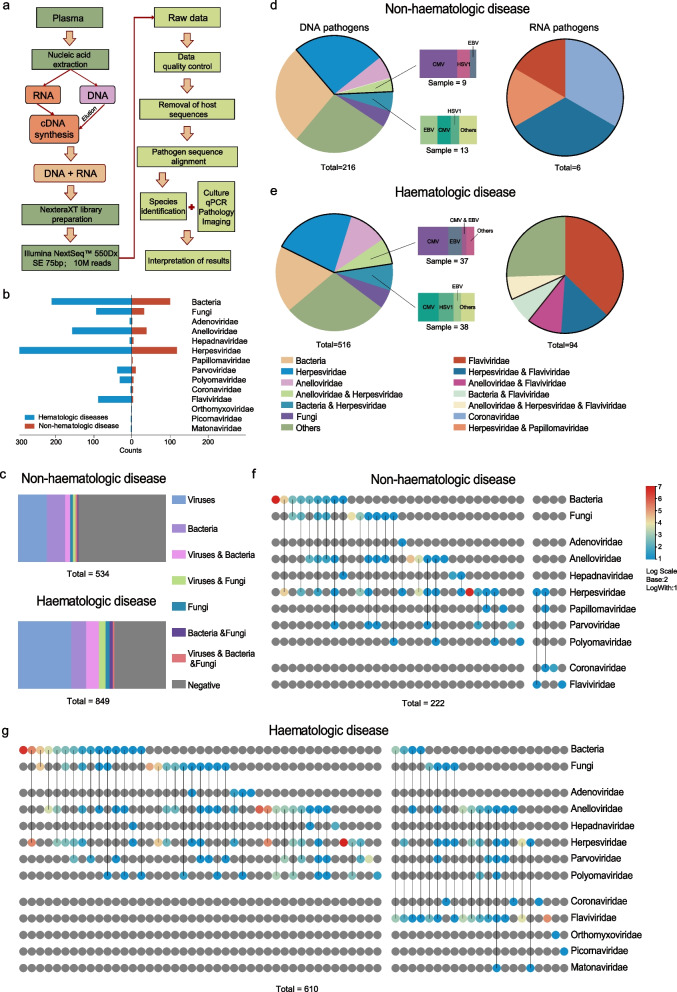
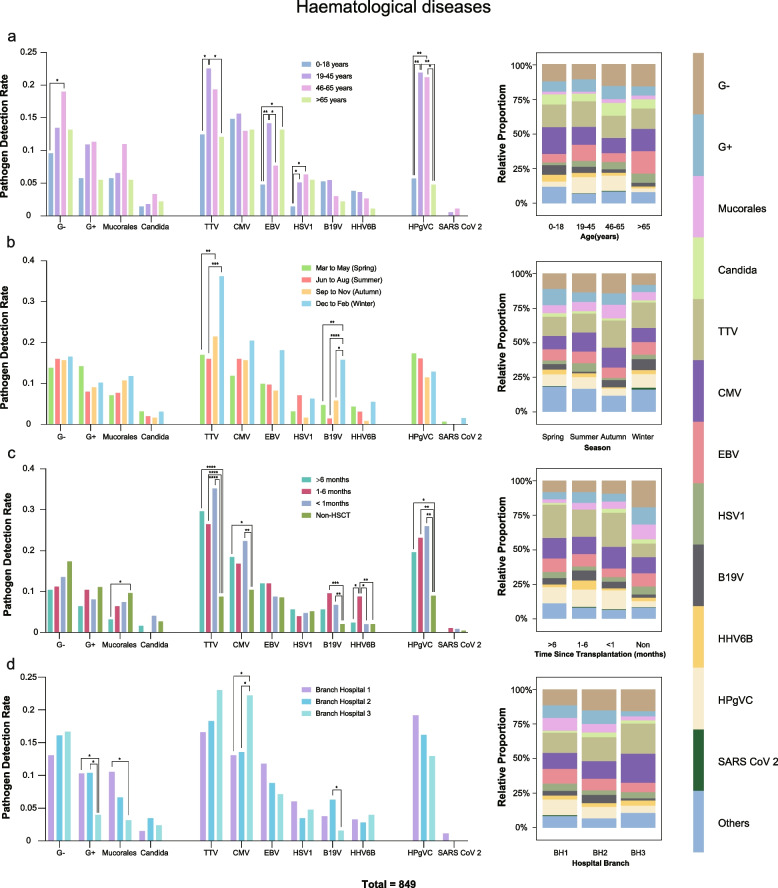
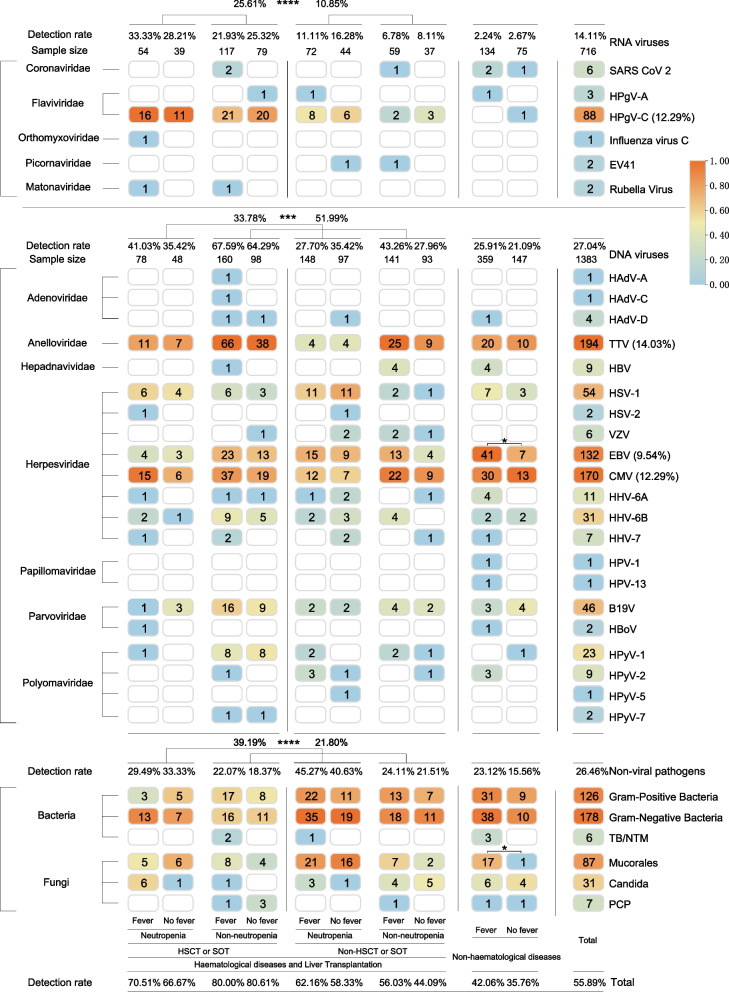
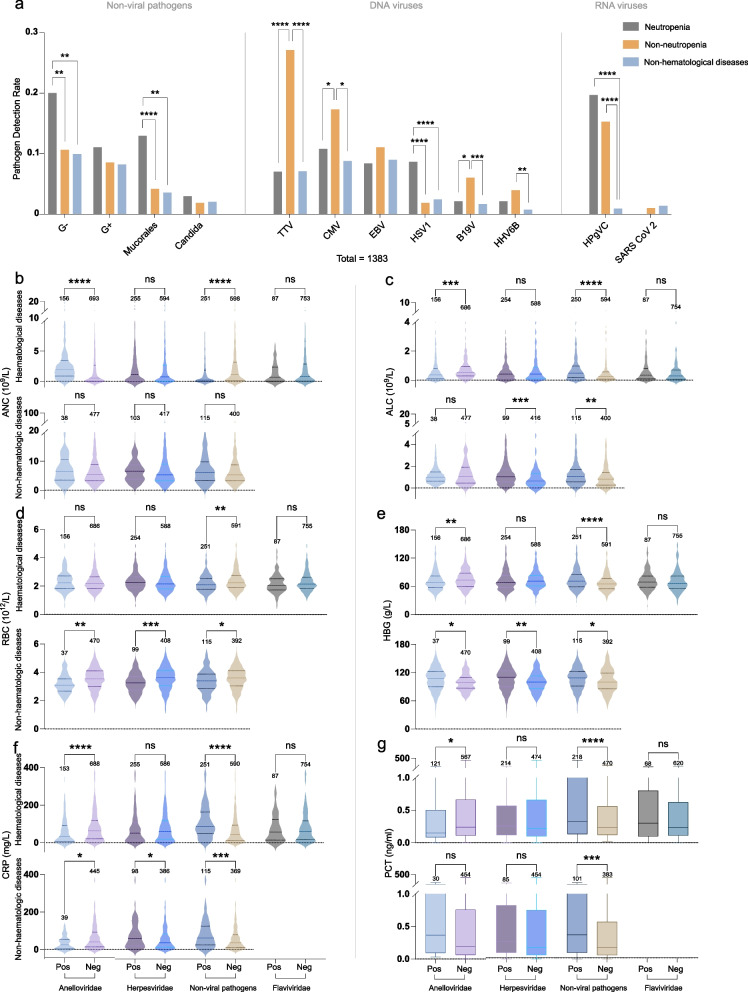
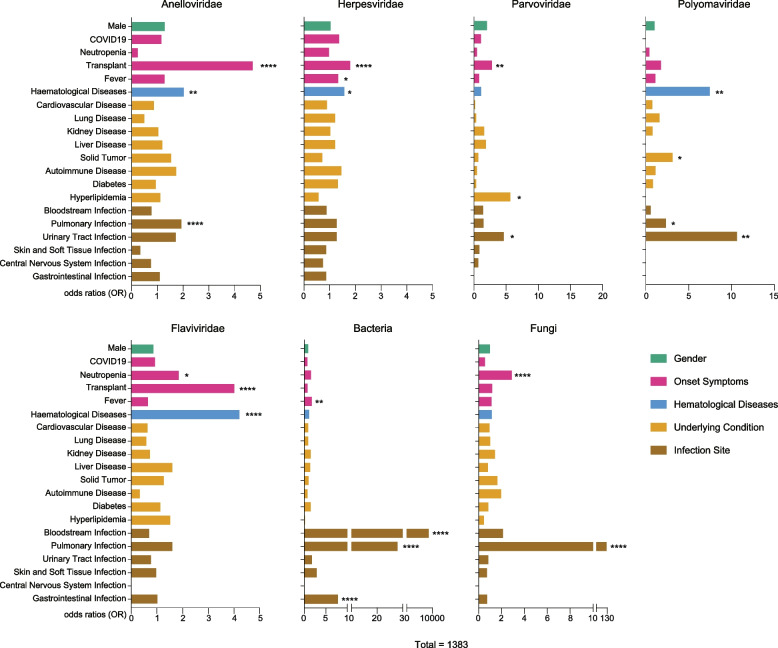
A total of 21 DNA viruses and 6 RNA viruses from 12 virus families were identified from 1383 patients. Patients with haematological diseases exhibited significantly higher diversity, prevalence, and co-detection rates of viral pathogens. During fever episodes, pathogen detection was notably higher, with Epstein-Barr virus (EBV) and Mucorales infections being the most probable culprits for fever symptoms in non-haematological patients. The detection rate of torque teno virus (TTV) significantly increases in haematological patients after transplantation and during primary lung infections. Additionally, TTV-positive patients demonstrate significantly higher absolute neutrophil counts, while C-reactive protein and procalcitonin levels are notably lower. Furthermore, TTV, cytomegalovirus, and parvovirus B19 (B19V) were found to be more prevalent in non-neutropenic patients, while non-viral pathogenic infections, such as Gram-negative bacteria and Mucorales, were more common in neutropenic patients. Pegivirus C (HPgV-C) infection often occurred post-transplantation, regardless of neutropenia. Additionally, some viruses such as TTV, B19V, EBV, and HPgV-C showed preferences for age and seasonal infections.
Analysis of the plasma virome revealed the susceptibility of haematological patients to plasma viral infections at specific disease stages, along with the occurrence of mixed infections with non-viral pathogens. Close associations were observed between the plasma virome and various clinical characteristics, as well as clinical detection parameters. Understanding plasma virome aids in auxiliary clinical diagnosis and treatment, enabling early prevention to reduce infection rates in patients and improve their quality of life. Video Abstract.
血液系统疾病患者的免疫系统存在异常,容易发生病毒感染。了解血液系统疾病患者血浆病毒组与临床特征的关系,对于疾病的管理至关重要。本研究旨在探索病毒病原体的存在,并确定病毒感染与各种临床特征之间的密切关联。
从 1383 例患者中共鉴定出 12 个病毒科的 21 种 DNA 病毒和 6 种 RNA 病毒。血液系统疾病患者的病毒病原体多样性、流行率和共同检出率显著更高。发热患者的病原体检出率明显更高,非血液系统患者发热的最可能病原体是 EBV 和毛霉目感染。移植后和原发性肺部感染期间,血液系统患者的 TTV(torque teno virus)检出率显著增加。此外,TTV 阳性患者的绝对中性粒细胞计数显著升高,而 C 反应蛋白和降钙素原水平显著降低。此外,TTV、巨细胞病毒和细小病毒 B19(B19V)在非中性粒细胞减少患者中更为常见,而非病毒病原体感染,如革兰阴性菌和毛霉目,在中性粒细胞减少患者中更为常见。无论是否中性粒细胞减少, pegivirus C(HPgV-C)感染常发生于移植后。此外,一些病毒如 TTV、B19V、EBV 和 HPgV-C 表现出对年龄和季节性感染的偏好。
对血浆病毒组的分析揭示了血液系统疾病患者在特定疾病阶段对血浆病毒感染的易感性,以及与非病毒病原体混合感染的发生。血浆病毒组与各种临床特征以及临床检测参数密切相关。了解血浆病毒组有助于辅助临床诊断和治疗,通过早期预防降低患者的感染率,提高其生活质量。