Sorokin Mikhail Yu, Neznanov Nikolay G, Lutova Natalia B, Wied Viktor D
Consort Psychiatr. 2021 Nov 5;2(3):17-25. doi: 10.17816/CP93. eCollection 2021.
The limited practice of depot antipsychotics and psychoeducation use, recommended for overcoming the noncompliance of patients with severe mental disorders, is linked to a high incidence of treatment violation. Therefore, the development of personalized mental healthcare approaches is a crucial healthcare task.
To describe and differentiate the role of clinical, social and psychological factors that lead to different level of treatment engagement of psychiatric inpatients.
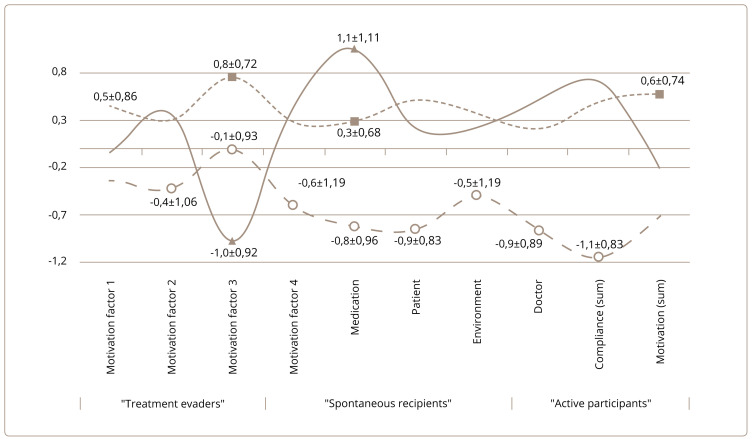
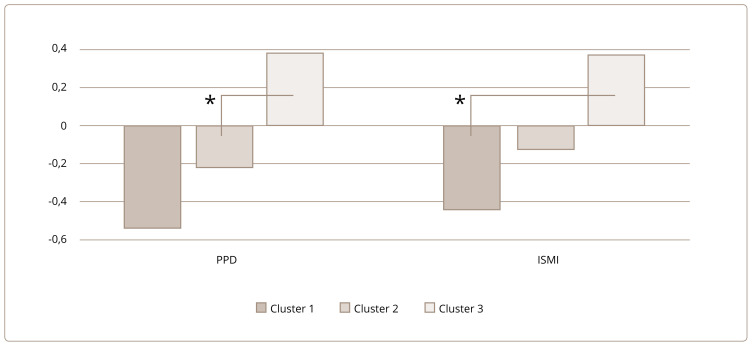
Secondary analysis of findings from 91 inpatients, based on the Treatment Motivation Assessment Questionnaire and Medication Compliance Scale, as well as the Scale of Internalized Stigma of Mental Illness and Perceived Discrimination and Devaluation Scale. Factorial analysis, cluster analysis and analysis of variance with p-level=0.05 and the calculation of the effect size (ES) according to Cohen's d and Cramer's V were used.
The nature of therapy compliance in various categories of patients is mediated differentially, including: the severity of negative symptoms (ES=0.29), the global level of functioning and work maladjustment (ES=0.23-0.26), various motivational and behavioral styles (ES≥0.74) and the intensity of psychiatric stigmatization (ES≥0.88).
Consideration of the clinical, social and psychological factors should empirically determine the strategies for the personalized use of prolonged antipsychotics and socio-psychotherapeutic interventions when developing an individual treatment plan for psychiatric in-patients.
长效抗精神病药物的使用和心理教育实践有限,而这两者被推荐用于克服重症精神障碍患者的不依从性,这与治疗中断的高发生率相关。因此,开发个性化的精神卫生保健方法是一项至关重要的医疗任务。
描述并区分导致精神科住院患者治疗参与程度不同的临床、社会和心理因素的作用。
基于治疗动机评估问卷、药物依从性量表、精神疾病内化耻辱感量表以及感知歧视和贬值量表,对91名住院患者的研究结果进行二次分析。使用因子分析、聚类分析和方差分析(p值 = 0.05),并根据科恩d系数和克莱默V系数计算效应量(ES)。
各类患者治疗依从性的性质受到不同因素的介导,包括:阴性症状的严重程度(ES = 0.29)、整体功能水平和工作适应不良(ES = 0.23 - 0.26)、各种动机和行为方式(ES≥0.74)以及精神耻辱感的强度(ES≥0.88)。
在为精神科住院患者制定个性化治疗计划时,考虑临床、社会和心理因素应凭经验确定长期使用抗精神病药物和社会心理治疗干预措施的个性化策略。