Department of Hematology, Yuebei People's Hospital Affiliated to Medical College of Shantou University, Shaoguan, China.
Physical Examination Center, Yuebei People's Hospital Affiliated to Medical College of Shantou University, Shaoguan, China.
J Cell Mol Med. 2024 Jul;28(14):e18539. doi: 10.1111/jcmm.18539.
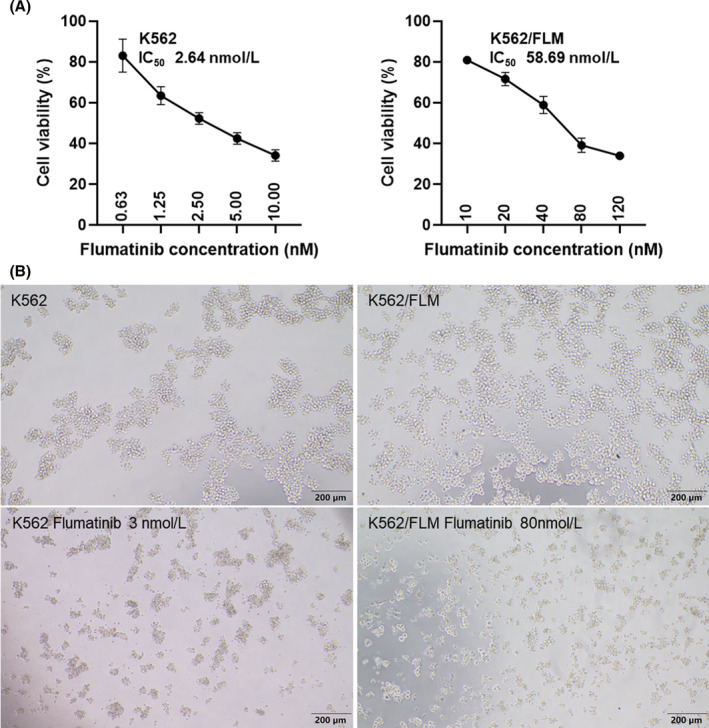
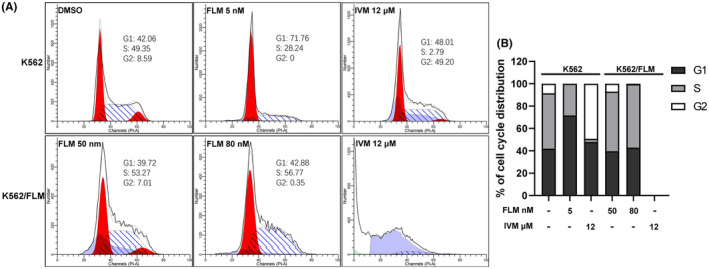
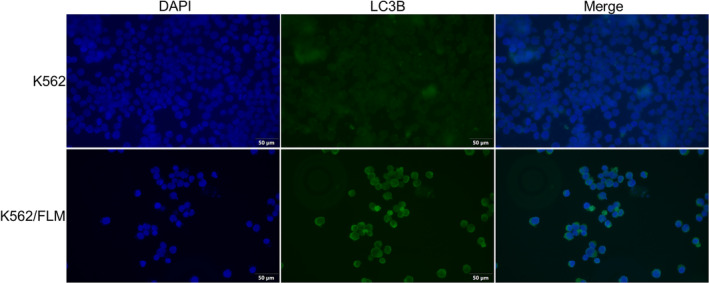
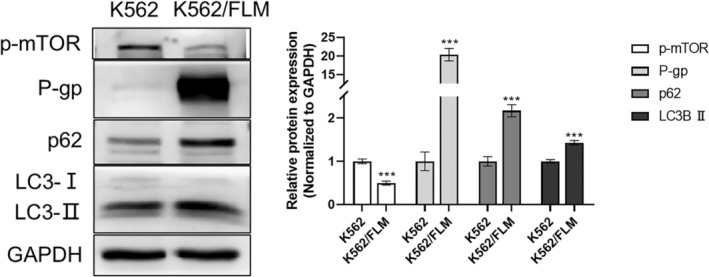
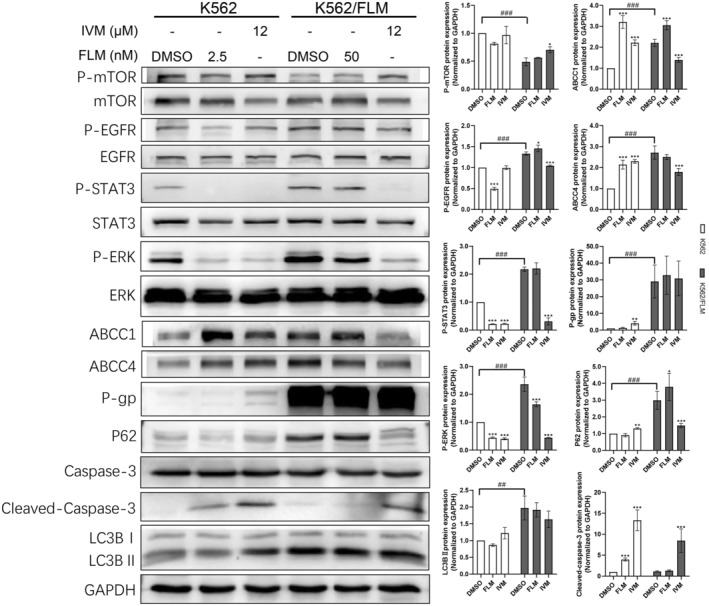
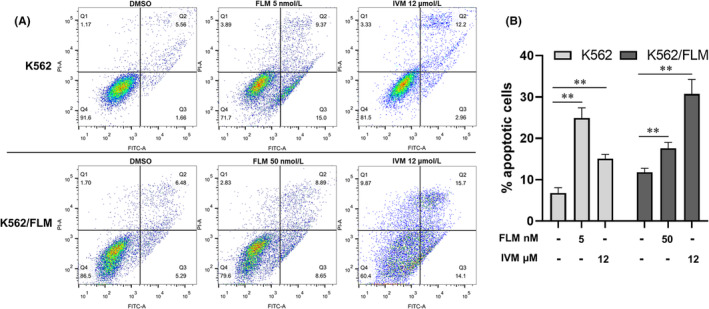
Chronic myeloid leukaemia (CML) is a haematological malignancy characterized by the constitutive tyrosine kinase activity of the BCR-ABL1 fusion protein. Flumatinib, a second-generation tyrosine kinase inhibitor, has exhibited superior clinical efficacy compared to its precursor, imatinib. However, with increased clinical use, resistance to flumatinib has emerged as a significant challenge. To investigate the mechanisms of flumatinib resistance in CML, we induced the human CML cell line K562 using a flumatinib concentration gradient method in vitro, successfully establishing a flumatinib-resistant K562/FLM cell line. This cell line exhibited cross-resistance to imatinib and doxorubicin, but remained sensitive to the antiparasitic agent ivermectin, which possesses antitumoural effects. Through cellular experimentation, we explored the resistance mechanisms, which indicated that K562/FLM cells evade flumatinib cytotoxicity by enhancing autophagy, increasing the expression of membrane transport proteins, particularly P-glycoprotein, ABCC1 and ABCC4, as well as enhancing phosphorylation of p-EGFR, p-ERK and p-STAT3 proteins. Moreover, it was found that ivermectin effectively suppressed the expression of autophagy and transport proteins in K562/FLM cells, reduced the activity of the aforementioned phosphoproteins, and promoted apoptotic cell death. Collectively, the increased autophagy, higher expression of drug-efflux proteins and hyperactivation of the EGFR/ERK/STAT3 signalling pathway were identified as pivotal elements promoting resistance to flumatinib. The significant effects of ivermectin might offer a novel therapeutic strategy to overcome flumatinib resistance and optimize the treatment outcomes of CML.
慢性髓性白血病(CML)是一种血液系统恶性肿瘤,其特征为 BCR-ABL1 融合蛋白的组成性酪氨酸激酶活性。氟马替尼是一种第二代酪氨酸激酶抑制剂,与前体伊马替尼相比,具有更优异的临床疗效。然而,随着临床应用的增加,氟马替尼耐药性已成为一个重大挑战。为了研究 CML 中氟马替尼耐药的机制,我们在体外采用氟马替尼浓度梯度法诱导人 CML 细胞系 K562,成功建立了氟马替尼耐药的 K562/FLM 细胞系。该细胞系对伊马替尼和阿霉素表现出交叉耐药性,但对具有抗肿瘤作用的驱虫药伊维菌素仍保持敏感。通过细胞实验,我们探讨了耐药机制,结果表明 K562/FLM 细胞通过增强自噬、增加膜转运蛋白的表达,特别是 P-糖蛋白、ABCC1 和 ABCC4,以及增强 p-EGFR、p-ERK 和 p-STAT3 蛋白的磷酸化来逃避氟马替尼的细胞毒性。此外,还发现伊维菌素能有效抑制 K562/FLM 细胞中自噬和转运蛋白的表达,降低上述磷酸化蛋白的活性,并促进细胞凋亡。综上所述,自噬增加、药物外排蛋白表达增加以及 EGFR/ERK/STAT3 信号通路过度激活被认为是促进氟马替尼耐药的关键因素。伊维菌素的显著作用可能为克服氟马替尼耐药提供一种新的治疗策略,并优化 CML 的治疗效果。