Division of Endocrinology, CSIR-Central Drug Research Institute, Lucknow, India.
Academy of Scientific and Innovative Research (AcSIR), Ghaziabad, India.
Reprod Biol Endocrinol. 2024 Jul 24;22(1):87. doi: 10.1186/s12958-024-01249-z.
Spermatogenesis is a temperature-sensitive process, and elevation in temperature hampers this process quickly and significantly. We studied the molecular effects of testicular heating on piRNAs and gene expression in rat testicular germ cells.
We generated a cryptorchid rat model by displacing the testis from the scrotal sac (34 °C) to the abdominal area (37 °C) and sacrificed animals after 1 day, 3 days, and 5 days. Pachytene spermatocytes and round spermatids were purified using elutriation centrifugation and percoll gradient methods. We performed transcriptome sequencing in pachytene spermatocytes and round spermatids to identify differentially expressed piRNAs and their probable targets, i.e., TE transcripts and mRNAs.
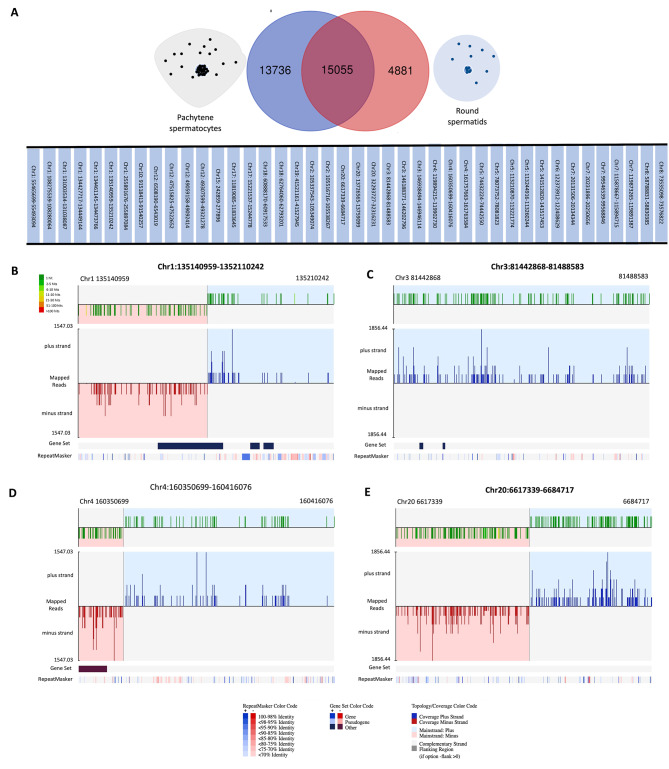
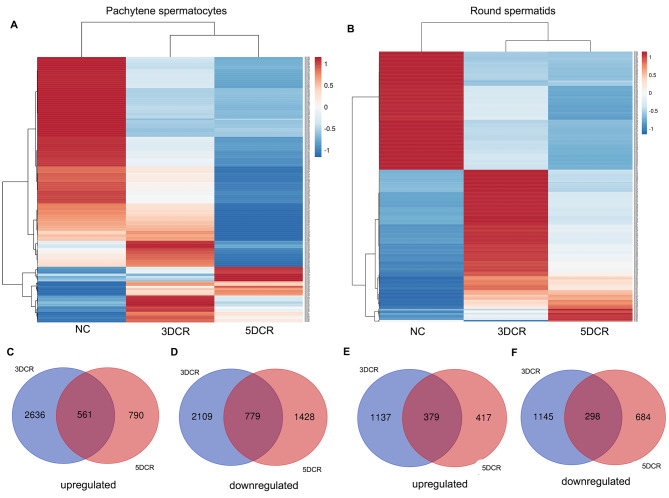
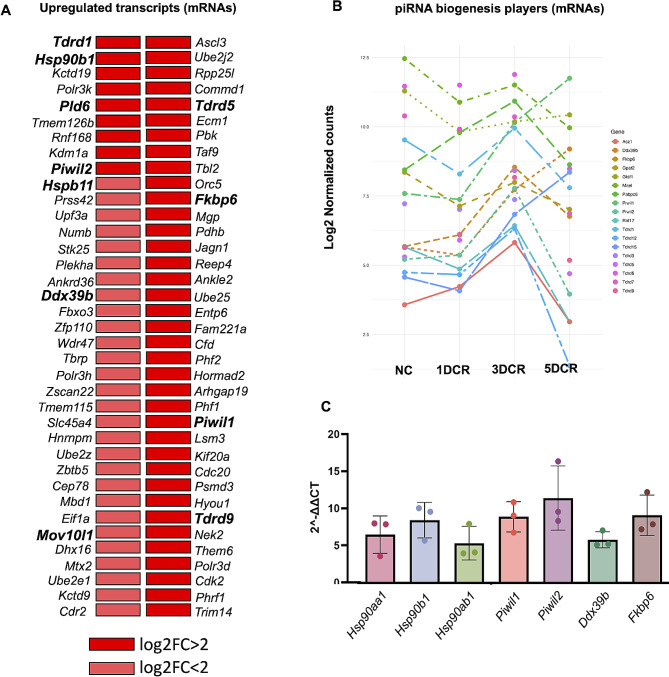
As a result of heat stress, we observed significant upregulation of piRNAs and TE transcripts in testicular germ cells. In addition to this, piRNA biogenesis machinery and heat shock proteins (Hsp70 and Hsp90 family members) were upregulated. mRNAs have also been proposed as targets for piRNAs; therefore, we shortlisted certain piRNA-mRNA pairs with an inverse relationship of expression. We observed that in testicular heat stress, the heat shock proteins go hand-in-hand with the upregulation of piRNA biogenesis machinery. The dysregulation of piRNAs in heat-stressed germ cells, increased ping-pong activity, and disturbed expression of piRNA target transcripts suggest a connection between piRNAs, mRNAs, and TE transcripts.
In heat stress, piRNAs, piRNA machinery, and heat shock proteins are activated to deal with low levels of stress, which is followed by a rescue approach in prolonged stressaccompained by high TE activity to allow genetic mutations, perhaps for survival and adaptability.
精子发生是一个对温度敏感的过程,而升高的温度会迅速且显著地阻碍这一过程。我们研究了睾丸加热对大鼠睾丸生殖细胞中 piRNA 和基因表达的分子影响。
我们通过将睾丸从阴囊(34°C)移位到腹部(37°C)来创建隐睾大鼠模型,并在 1 天、3 天和 5 天后处死动物。使用淘洗离心和聚蔗糖梯度法分离出精母细胞和圆形精子细胞。我们对精母细胞和圆形精子细胞进行转录组测序,以鉴定差异表达的 piRNA 及其可能的靶标,即 TE 转录本和 mRNAs。
由于热应激,我们观察到睾丸生殖细胞中 piRNA 和 TE 转录本的显著上调。除此之外,piRNA 生物发生机制和热休克蛋白(Hsp70 和 Hsp90 家族成员)也上调。mRNAs 也被认为是 piRNA 的靶标;因此,我们列出了某些具有相反表达关系的 piRNA-mRNA 对。我们观察到在睾丸热应激中,热休克蛋白与 piRNA 生物发生机制的上调密切相关。应激生殖细胞中 piRNA 的失调、乒乓反应的增加以及 piRNA 靶标转录本的表达失调表明 piRNA、mRNAs 和 TE 转录本之间存在联系。
在热应激中,piRNA、piRNA 机制和热休克蛋白被激活以应对低水平的应激,随后在长时间应激中采取挽救措施,同时伴随着 TE 活性的升高,以允许遗传突变,也许是为了生存和适应性。