
犬股骨、胫骨和髌骨几何形态的统计形状建模。
Statistical shape modeling of the geometric morphology of the canine femur, tibia, and patella.
作者信息
Huart Jeremy, Pozzi Antonio, Bleedorn Jason, Lu Tung-Wu, Knell Sebastian, Park Brian
机构信息
Clinic for Small Animal Surgery, Department for Small Animals, Vetsuisse Faculty University of Zurich, Zürich, Switzerland.
Department of Veterinary Clinical Sciences, Colorado State University, Fort Collins, CO, United States.
出版信息
Front Vet Sci. 2024 Jul 10;11:1366827. doi: 10.3389/fvets.2024.1366827. eCollection 2024.
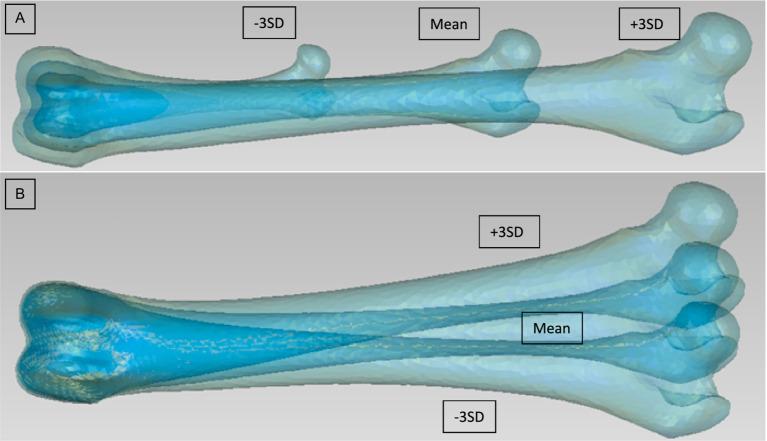
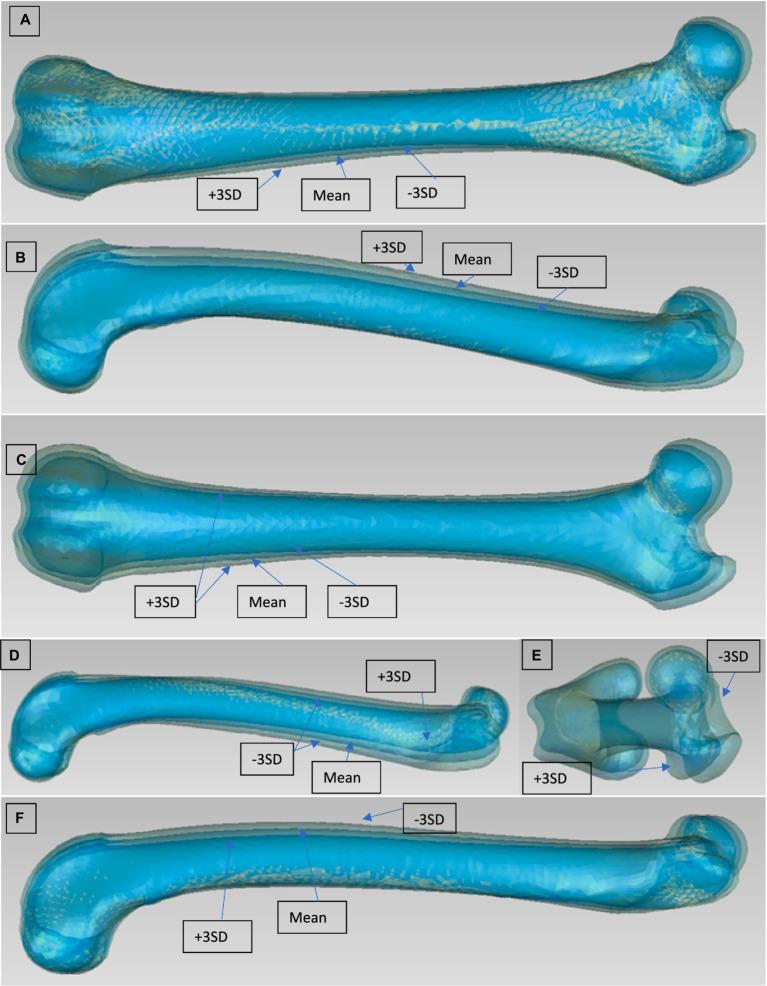
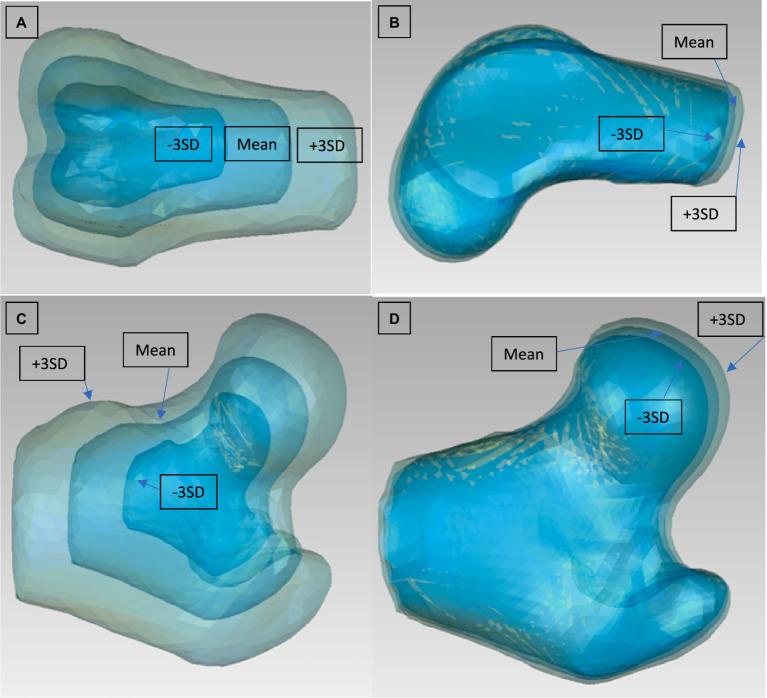
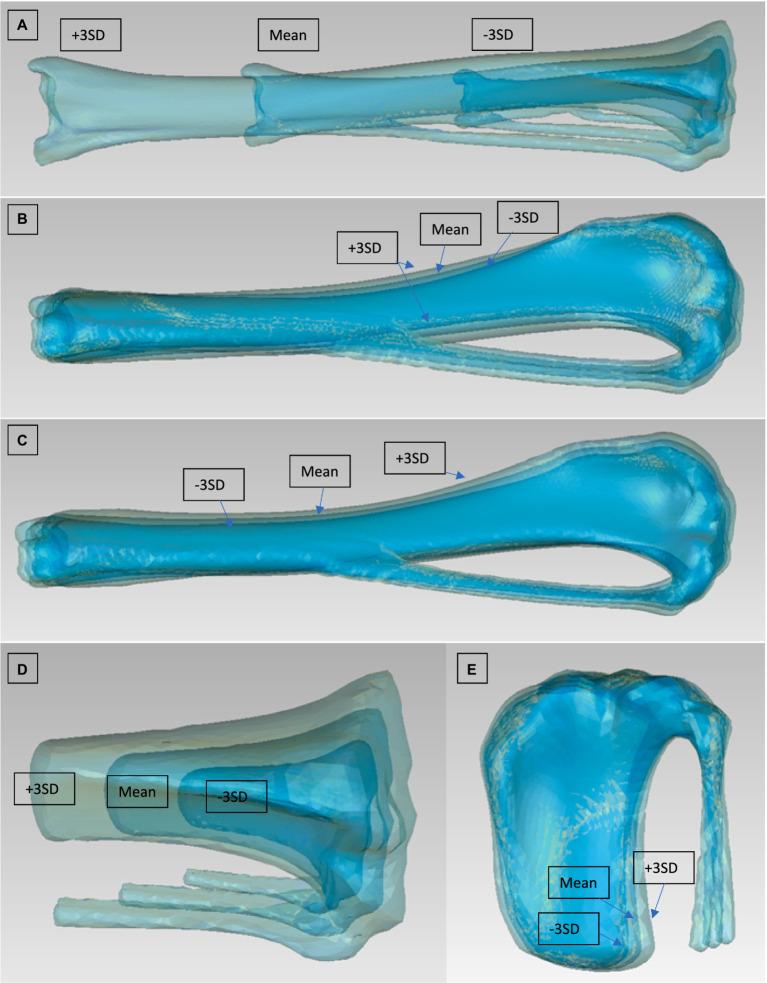
Bone morphometry varies among dogs of different sizes and breeds. Studying these differences may help understand the predisposition of certain breeds for specific orthopedic pathologies. This study aimed to develop a statistical shape model (SSM) of the femur, patella, and tibia of dogs without any clinical orthopeadic abnormalities to analyze and compare morphological variations based on body weight and breed. A total of 97 CT scans were collected from different facilities and divided based on breed and body weight. The 3D models of the bones were obtained and aligned to a coordinate system. The SSM was created using principal component analysis (PCA) to analyze shape variations. The study found that the first few modes of variation accounted for a significant percentage of the total variation, with size/scale being the most prominent factor. The results provide valuable insights into normal anatomical variations and can be used for future research in understanding pathological bone morphologies and developing 3D imaging algorithms in veterinary medicine.
不同体型和品种的犬类骨形态测量存在差异。研究这些差异可能有助于了解某些品种对特定骨科疾病的易感性。本研究旨在建立无任何临床骨科异常的犬类股骨、髌骨和胫骨的统计形状模型(SSM),以基于体重和品种分析和比较形态学变异。共从不同机构收集了97份CT扫描,并根据品种和体重进行了划分。获取了骨骼的3D模型并将其与坐标系对齐。使用主成分分析(PCA)创建SSM以分析形状变异。研究发现,最初的几种变异模式占总变异的很大比例,其中大小/比例是最突出的因素。研究结果为正常解剖变异提供了有价值的见解,可用于未来研究以了解病理性骨形态并开发兽医学中的3D成像算法。


 Zotero 插件