Kim Ki-Hong, Ko Inseok, Kim Jong-Yeup, Kim Dong-Kyu
Division of Cardiology, Konyang University Hospital, Daejeon 35365, Republic of Korea.
Department of Biomedical Informatics, College of Medicine, Konyang University, Daejeon 35365, Republic of Korea.
Clin Pract. 2024 Jul 15;14(4):1404-1416. doi: 10.3390/clinpract14040113.
The effectiveness of aspirin for the primary prevention of cerebro-cardiovascular diseases in Koreans remains unclear. Therefore, we evaluated the preventive effects of low-dose aspirin (equal or less than 100 mg) on cerebro-cardiovascular events.
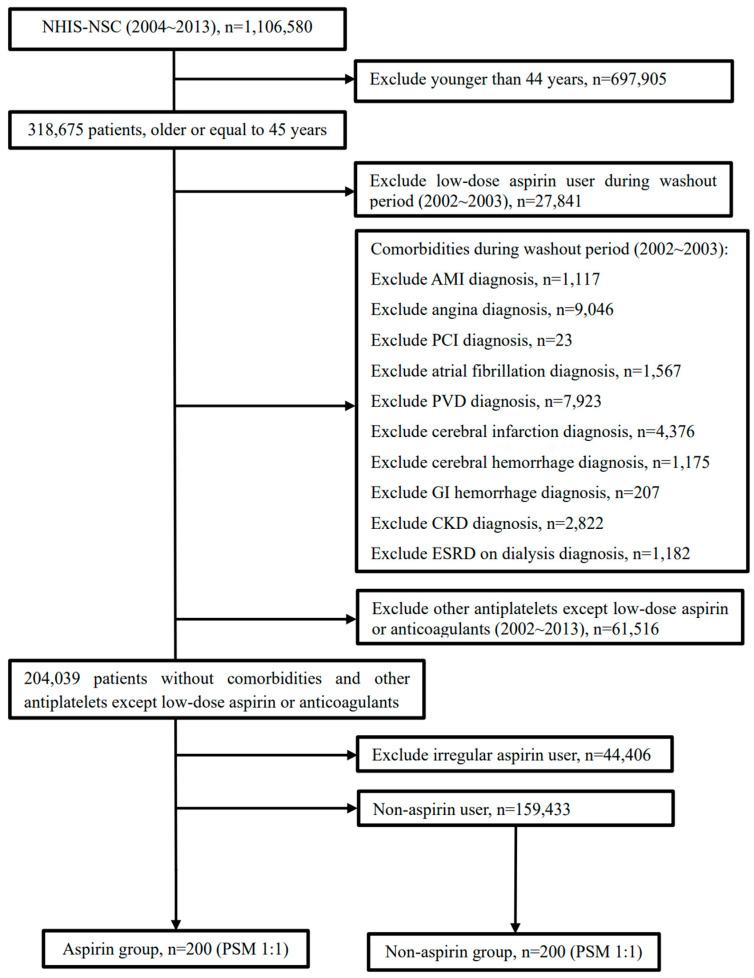
We conducted a retrospective cohort study using the National Sample Cohort dataset. From the 1,106,580 individuals eligible in 2004, we selected 200 individuals (47% male and 22.5% aged 65 or older) who consistently received low-dose aspirin from 2004 to 2013 for inclusion in the aspirin cohort. Participants for the control cohort, who did not use aspirin, were selected through propensity score matching based on variables.
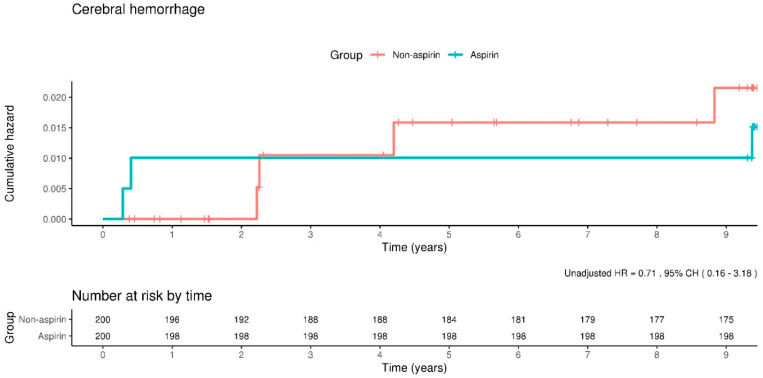
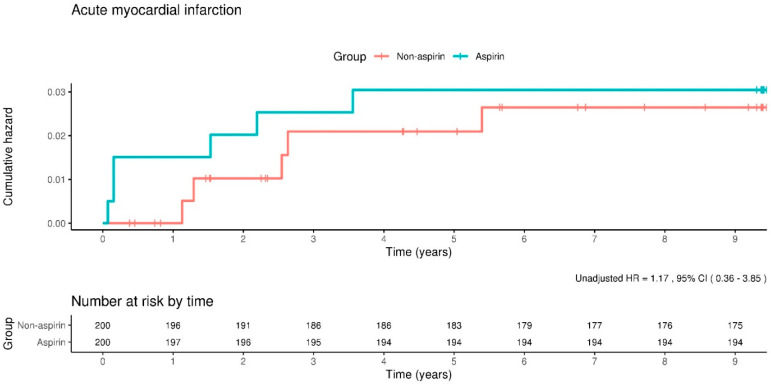
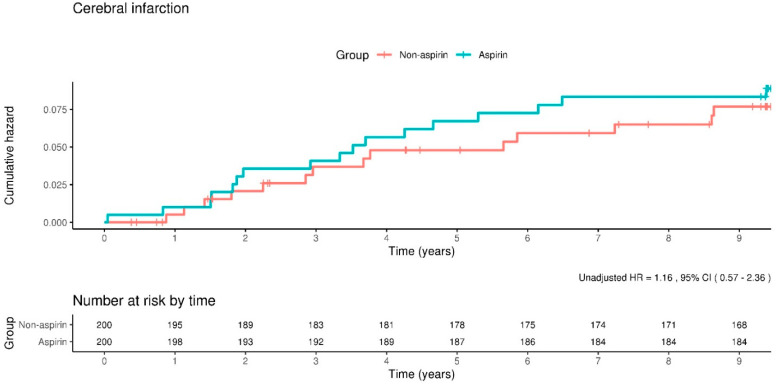
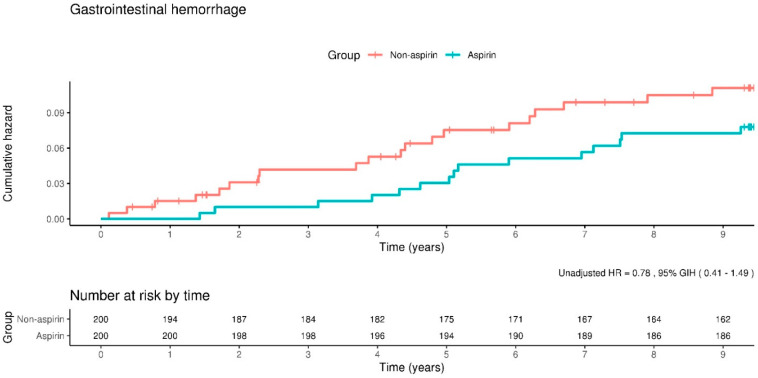
We compared the incidences of endpoints (acute myocardial infarction, cerebral infarction, gastrointestinal hemorrhage, and cerebral hemorrhage) between the aspirin group and the non-aspirin group over the 9-year follow-up period. There was no significant difference in the incidence rates of acute myocardial infarction, cerebral infarction, gastrointestinal hemorrhage, or cerebral hemorrhage between the aspirin and non-aspirin groups. Low-dose aspirin for primary prevention in Koreans did not reduce myocardial or cerebral infarctions and did not increase the risk of gastrointestinal or cerebral hemorrhage.
Therefore, we suggest that aspirin for primary prevention should be used cautiously and tailored to the individual's baseline cardiovascular risk.
阿司匹林对韩国人心脑血管疾病一级预防的有效性尚不清楚。因此,我们评估了低剂量阿司匹林(等于或小于100毫克)对心脑血管事件的预防作用。
我们使用全国样本队列数据集进行了一项回顾性队列研究。从2004年符合条件的1,106,580人中,我们选择了200人(47%为男性,22.5%年龄在65岁及以上),他们在2004年至2013年期间持续服用低剂量阿司匹林,纳入阿司匹林队列。通过基于变量的倾向得分匹配选择未使用阿司匹林的对照队列参与者。
我们比较了阿司匹林组和非阿司匹林组在9年随访期内终点事件(急性心肌梗死、脑梗死、胃肠道出血和脑出血)的发生率。阿司匹林组和非阿司匹林组在急性心肌梗死、脑梗死、胃肠道出血或脑出血的发生率上没有显著差异。韩国人使用低剂量阿司匹林进行一级预防并不能降低心肌梗死或脑梗死的发生率,也不会增加胃肠道或脑出血的风险。
因此,我们建议一级预防使用阿司匹林时应谨慎,并根据个体的基线心血管风险进行调整。